
China’s Carbon Emissions Fall at Fastest Pace Since Covid-19 Pandemic Amid Middle East Oil Disruptions

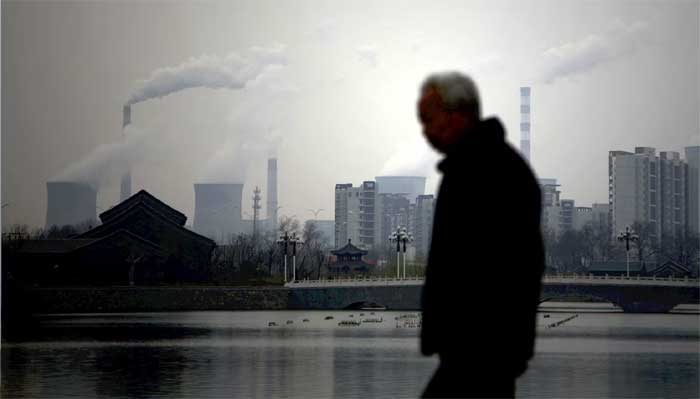
China’s carbon dioxide emissions declined by 3.1 percent in the third quarter, marking their sharpest drop since the Covid-19 pandemic, as disruptions to oil supplies caused by the Middle East conflict accelerated the country’s shift away from fossil fuels, according to a new think tank analysis.
The findings, published Friday by the Center for Research on Energy and Clean Air (CREA) through Carbon Brief, showed that emissions fell between July and September in the world’s second-largest economy.
Disruptions to shipping through the strategically important Strait of Hormuz have significantly affected oil supplies to China, the world’s largest crude oil importer.
China’s overall oil consumption declined by four percent year-on-year, while oil use in the transport sector dropped by nine percent, according to the CREA analysis, which drew on official statistics and commercial data.
“It’s clear there is going to be some kind of a rebound in oil consumption once, or if, prices come down,” CREA co-founder and lead analyst Lauri Myllyvirta told AFP.
However, he said China’s oil consumption had most likely already peaked before the latest supply shock.
“The shock has clearly accelerated the electrification trend and the shift away from oil,” Myllyvirta added.
Coal consumption also declines
China’s coal consumption fell by three percent year-on-year, despite the country continuing to expand its coal-fired power generation capacity through the construction of new plants.
Gao Yuhe, Beijing-based project lead at Greenpeace East Asia, said the continued decline in coal-fired power generation was important for expanding renewable energy.
“Coal power sustaining a downward trend is a key factor in the further development of renewable energy,” Gao said.
He also stressed the need to accelerate renewable energy adoption and improve market-based mechanisms for renewable power and energy storage systems.
China has rapidly expanded its renewable energy capacity in recent years, while coal’s share of the country’s overall energy mix has gradually declined.
China accelerates its green energy transition
China remains the world’s largest emitter of greenhouse gases, accounting for more than 30 percent of global emissions.
The country has pledged to strengthen efforts to cut carbon dioxide emissions and accelerate its transition towards cleaner energy sources, with a target of achieving carbon neutrality by 2060.
The latest decline in emissions highlights how disruptions to global energy supplies can influence consumption patterns and accelerate the adoption of alternative energy technologies.
However, analysts expect oil consumption could partially recover if international prices fall, leaving questions over how much of the emissions reduction will prove sustainable.
Comments are closed.