
Mohammed Shami: Virat Kohli’s trusted weapon at home and India’s second-innings specialist

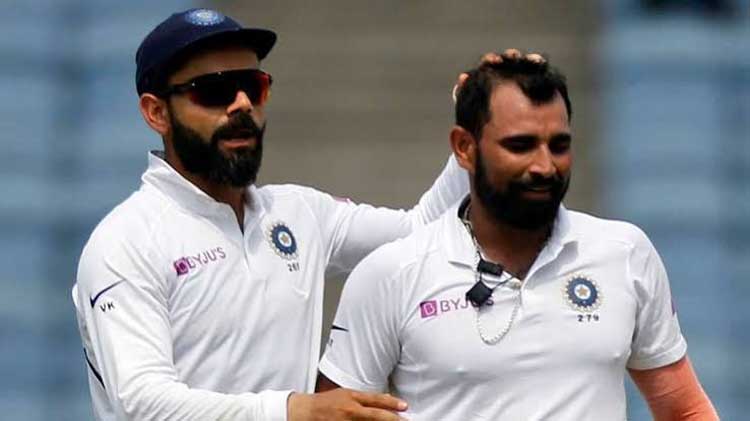
Mohammed Shami’s career is a story of pace, persistence and the ability to deliver when his team needs him most. A trusted weapon during Virat Kohli’s captaincy, the Bengal fast bowler built a reputation as one of India’s most dependable seamers, particularly in the second innings of Test matches. His ability to extract movement, maintain relentless accuracy and exploit tiring batters made him a special asset in the longest format.
With Shami announcing his retirement from Test cricket on November 6, 2026, his 13-year journey in the longest format has come to an end. However, the fast bowler has made it clear that he intends to continue playing white-ball cricket, including the IPL and domestic tournaments. His Test career may be over, but his contribution to Indian cricket deserves a closer look.
Virat Kohli’s trusted weapon
During the Virat Kohli-Ravi Shastri era, Shami emerged as one of the most reliable members of India’s pace attack. Kohli’s aggressive approach to Test cricket demanded fast bowlers who could maintain pressure, attack the stumps and deliver breakthroughs even when conditions were not particularly favourable.
Shami fitted that role perfectly. Alongside Jasprit Bumrah, Ishant Sharma, Umesh Yadav and Bhuvneshwar Kumar, he formed part of a formidable Indian pace battery that transformed the country’s overseas Test performances.
Interestingly, Shami once revealed that Kohli often left decisions about sharing the new ball to the fast bowlers themselves. The captain trusted the experience and understanding of his bowling unit rather than insisting on making every decision himself.
Shami was also comfortable bowling with a semi-new ball, allowing other pacers to take the first strike. His ability to adapt to different roles made him a valuable option for Kohli.
Why is Mohammed Shami called a second-innings specialist?
One of the most fascinating aspects of Shami’s bowling career was his remarkable ability to become more dangerous as a Test match progressed.
While many fast bowlers struggle with fatigue towards the latter stages of a five-day contest, Shami often appeared to find another gear. His second-innings performances earned him the popular tag of ‘Second Innings Shami’.
The numbers highlighted this special ability. According to statistics reported in June 2020, out of his first 180 Test wickets, 88 came in second innings at an impressive average of 21.98. In comparison, he had taken 92 wickets in first innings at an average of 32.50.
His performances during India’s 2017-18 tour of South Africa were particularly impressive, with 12 of his 15 wickets coming in second innings.
Explaining his approach in an interview, Shami said he tends to step up when other players begin to feel tired.
He also used an interesting comparison between diesel and petrol engines to explain his bowling philosophy. According to him, a diesel engine takes time to pick up speed, and he likes to wait patiently for the right moment before increasing his intensity.
Shami’s understanding of pitch conditions, changes in pace and the importance of building pressure helped him become particularly effective in the later stages of a Test match.
A master of seam movement and reverse swing
Shami’s biggest strength was not just his pace but his ability to make the ball move off the surface. His seam presentation, wrist position and consistent landing of the ball around the off-stump corridor made him difficult to negotiate.
He could bring the ball back into right-handed batters or move it away, forcing them to constantly adjust their technique.
Another important weapon in his bowling arsenal was reverse swing. On older pitches and with an ageing ball, Shami could generate movement at pace, making life difficult for even experienced batters.
He also had the ability to produce wickets in clusters. Once he dismissed a settled batter, he often increased his pace and attacked the opposition’s remaining batting order.
This combination of control, aggression and tactical awareness made him one of India’s most effective fast bowlers.
Mohammed Shami’s remarkable World Cup record
Shami’s contribution was not limited to Test cricket. He also established himself as one of India’s most successful fast bowlers in One-Day International cricket.
His performance in the 2023 ODI World Cup remains one of the highlights of his international career. Initially not part of India’s first-choice playing XI, Shami made his way into the team and went on to deliver a series of outstanding performances.
He finished the tournament with 24 wickets in just seven matches, becoming its leading wicket-taker. His best performance came against New Zealand in the semi-final, where he claimed seven wickets for 57 runs to help India reach the final.
According to the ICC, Shami is India’s leading wicket-taker in men’s 50-over World Cup history, with 55 wickets.
His ability to deliver under pressure and produce match-changing spells made him an important part of India’s bowling attack across major tournaments.
229 Test wickets in a 13-year journey
Shami made his Test debut against the West Indies in January 2013. Over the next 13 years, he became an integral part of India’s fast-bowling attack.
His Test career ended with 64 matches and 229 wickets, including six five-wicket hauls. His best bowling figures in an innings were 6/56.
However, injuries and fitness concerns affected the latter part of his international career. His last Test appearance came in the 2023 World Test Championship final against Australia. Although he continued playing limited-overs cricket, returning to the Indian Test side proved difficult.
On November 6, 2026, Shami announced his retirement from Test cricket, bringing an end to a memorable red-ball career.
What next for Mohammed Shami?
Shami has made it clear that retirement from Test cricket does not mean the end of his cricketing journey. He intends to continue playing white-ball cricket, including the Indian Premier League and domestic competitions.
He currently represents Bengal in domestic cricket and Lucknow Super Giants in the IPL.
At 36, Shami’s experience, ability to swing the ball and understanding of different match situations remain valuable assets in limited-overs cricket.
For Indian cricket, Shami will be remembered as a bowler who consistently delivered when the pressure was high. From being Virat Kohli’s trusted pace option to becoming a second-innings specialist and India’s most successful World Cup fast bowler, his journey has been defined by resilience and determination.
His Test chapter may have closed, but Mohammed Shami’s story in Indian cricket is not necessarily over.
Comments are closed, but trackbacks and pingbacks are open.