
US-China tensions spill into Argentina as Huawei dispute tests Milei’s diplomatic balancing act

A diplomatic row between the United States and China has intensified in Argentina after Beijing accused Washington of interfering in the country’s sovereign decisions over a partnership with Chinese telecom giant Huawei.
China’s embassy in Buenos Aires on Thursday criticised the United States after an electricity cooperative in Argentina’s Neuquén province alleged that US Embassy officials threatened to revoke the visas of its executives over a business agreement with Huawei.
Calling the reported move “arrogant” and “hypocritical,” the Chinese embassy said the United States was disrespecting Argentina’s sovereignty and undermining free-market principles. It urged Washington to abandon what it described as “hegemonic practices” and political interference.
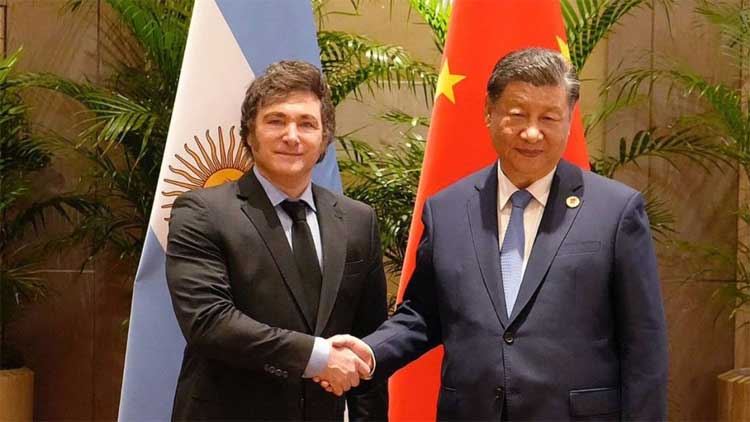
The dispute comes as Argentine President Javier Milei attempts to balance his close political relationship with US President Donald Trump while expanding economic ties with China, one of Argentina’s largest trading partners.
The controversy follows Argentina’s decision to renew its bilateral currency swap agreement with China for another five years, underscoring growing financial cooperation. Argentine Foreign Minister Pablo Quirno is also expected to visit China in the coming months to deepen trade and investment ties.
The dispute centres on CALF, the largest electricity distributor in southern Argentina, which announced plans in July to expand its strategic partnership with Huawei to strengthen digital connectivity in Neuquén. The cooperative claimed one of its executives received WhatsApp messages warning that those involved in Huawei’s expansion could face US visa restrictions.
US Ambassador Peter Lamelas did not directly address the allegations but said on X that every sovereign nation has the right to decide who may enter its territory, adding that visa denials or revocations are measures taken to protect national security and interests.
CALF later said the ambassador had requested a meeting to discuss technological alternatives from US companies and indicated that the visa warnings reflected official US policy.
The Argentine Federation of Electricity and Public Services Cooperatives (FACE) defended its members, saying they operate independently of geopolitical rivalries and urging disputes to be resolved through transparent institutional dialogue. The federation also announced plans to seek a meeting with the US ambassador.
The episode highlights Argentina’s increasingly delicate position amid intensifying US-China competition in Latin America. While the Trump administration has sought to curb Beijing’s growing regional influence, Milei has maintained strong ties with Washington even as trade and investment links with China continue to expand.
Chinese companies have significantly increased their presence in Argentina through investments in lithium mining, automobile sales and e-commerce platforms such as Shein, Temu and AliExpress.
Analysts say Huawei remains a particularly sensitive issue for Washington because of concerns over critical infrastructure and national security, making Argentina’s efforts to balance relations with both global powers increasingly challenging.
Comments are closed, but trackbacks and pingbacks are open.