
‘What’s all this about the Hinduja brothers and CBI?’: Supreme Court closes Bofors case, dismisses final appeal against 2005 acquittal

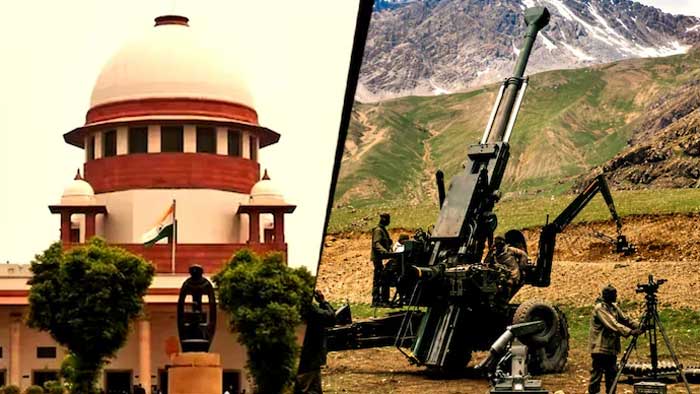
The Supreme Court on Thursday brought the decades-old Bofors pay-off case to its final legal conclusion by dismissing the last remaining appeal against the 2005 Delhi High Court judgment that quashed criminal proceedings against the Hinduja brothers and Swedish arms manufacturer AB Bofors.
A bench of Justices JB Pardiwala and K Vinod Chandran refused to grant additional time to advocate and BJP leader Ajay K. Agrawal, who had challenged the high court’s verdict. The court said it was not inclined to keep pending a matter that had remained unresolved since 2018, particularly after the CBI’s own appeal had already been dismissed.
End of one of India’s biggest political scandals
The ruling effectively ends one of India’s longest-running corruption cases, nearly four decades after allegations surfaced that kickbacks were paid in the ₹1,437-crore Bofors howitzer gun deal.
The scandal severely damaged the image of the Rajiv Gandhi government, dominated the 1989 general election campaign and is widely considered one of the key factors behind the Congress party’s electoral defeat.
What happened in court
During Thursday’s hearing, Agrawal, appearing virtually, sought four weeks to remove the names of deceased respondents Srichand P. Hinduja and Gopichand P. Hinduja from the case.
The bench questioned the purpose of continuing the proceedings, noting that the Delhi High Court had already quashed all criminal cases against the accused.
When Agrawal attempted to explain that the CBI’s separate appeal had earlier been dismissed while allowing the agency to argue in his petition, the bench declined to entertain further submissions and dismissed the appeal, observing that there was “no question of adjournment” in a matter pending since 2018.
The 2005 Delhi High Court verdict
The dismissal upholds the Delhi High Court’s May 31, 2005 judgment, which quashed all charges against Srichand, Gopichand and Prakash Hinduja, as well as AB Bofors, while sharply criticising the CBI’s investigation and noting that the prolonged prosecution had cost the public exchequer nearly ₹250 crore.
In 2018, the Supreme Court had already rejected the CBI’s own appeal after finding no satisfactory explanation for the agency’s delay of 4,522 days in challenging the High Court ruling.
Origins of the Bofors controversy
The controversy dates back to March 24, 1986, when India signed a ₹1,437-crore contract with Swedish arms manufacturer AB Bofors for the supply of 400 155-mm howitzer guns to the Indian Army.
The scandal erupted in April 1987 after Swedish Radio alleged that illegal commissions had been paid to influential Indian politicians and defence officials to secure the contract.
The CBI registered an FIR in 1990 and later filed charges against several accused, including alleged middleman Win Chadha, former Bofors chief Martin Ardbo, Italian businessman Ottavio Quattrocchi, and the Hinduja brothers.
Over the years, the case gradually collapsed. Former Prime Minister Rajiv Gandhi was cleared of criminal liability by the Delhi High Court in 2004, Quattrocchi was discharged in 2011 after failed extradition attempts, and several key accused died during the prolonged legal proceedings.
With the dismissal of Agrawal’s appeal, the final legal challenge to the 2005 acquittal has ended, bringing the Bofors prosecution to a definitive close nearly 40 years after the controversy first emerged.
Comments are closed.