
UN Chief Warns Poorest Nations Are Being Left Behind in Global AI and Clean Energy Investment Boom
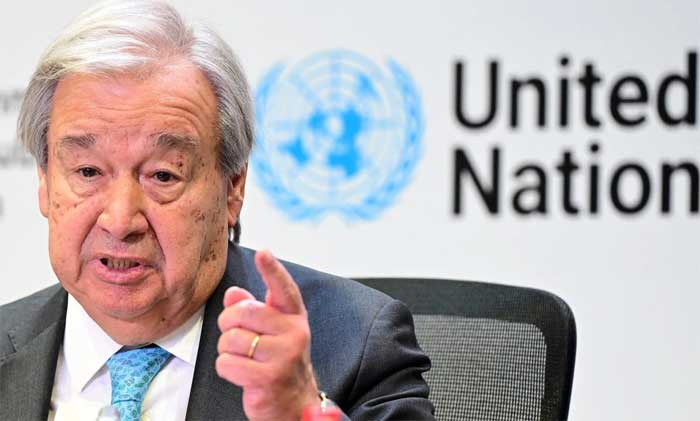
UN Secretary-General António Guterres has warned that the world’s poorest economies are receiving only a small share of investment flowing into artificial intelligence, semiconductors, clean energy and critical minerals, urging governments and investors to address a widening gap that threatens to exclude much of the Global South from future economic growth.
In a message to the 9th World Investment Forum, which opened in Doha on October 25, Guterres said these sectors and other advanced technologies now account for nearly half of all new greenfield investment worldwide.
“These and other sectors are expected to reshape economies and global production, creating significant opportunities to drive sustainable development,” he said.
However, he cautioned that only a fraction of the investment is reaching least-developed and lower-middle-income countries.
As global demand for capital intensifies, Guterres described the forum as an opportunity for governments, investors, businesses and development partners to forge partnerships that could help bridge the investment gap in strategically important sectors.
He urged private-sector investors to expand funding for developing economies, particularly in renewable energy, technology and critical minerals, while ensuring that investments generate “value that is widely shared by beneficiary communities.”
Guterres also called on participants to support the Sevilla Commitment, adopted at the UN financing-for-development conference in Spain in 2025. The agreement aims to expand global investment and mobilize development financing on a much larger scale.
“Investment is an expression of confidence that tomorrow can be better than today,” he said, expressing hope that the forum would build the ambition, solidarity and partnerships needed to turn technological advances into broadly shared prosperity.
Organized by UN Trade and Development (UNCTAD) in partnership with Qatar, the forum runs from October 25 to 27, 2026. Delegations from more than 100 countries are expected to participate, alongside more than 20 ministers and heads of international agencies who have confirmed their attendance.
The gathering follows UNCTAD’s World Investment Report 2026, which found that global foreign direct investment increased 6% to $1.6 trillion in 2025, ending two consecutive years of decline.
The recovery, however, was uneven. Investment in developed economies rose 11%, compared with a 2% increase in developing economies. The 20 largest recipient economies accounted for more than 80% of global investment inflows.
Although foreign investment in the least-developed countries climbed 21% to $43 billion, the amount remained a small fraction of the worldwide total.
The figures underscore the challenge facing policymakers: ensuring that the rapid expansion of emerging technologies and clean energy translates into investment, jobs and sustainable development in countries that need capital the most.
Comments are closed, but trackbacks and pingbacks are open.