Israel Elections 2026: Netanyahu Faces Tough Fight as Gadi Eisenkot Leads Opposition Challenge

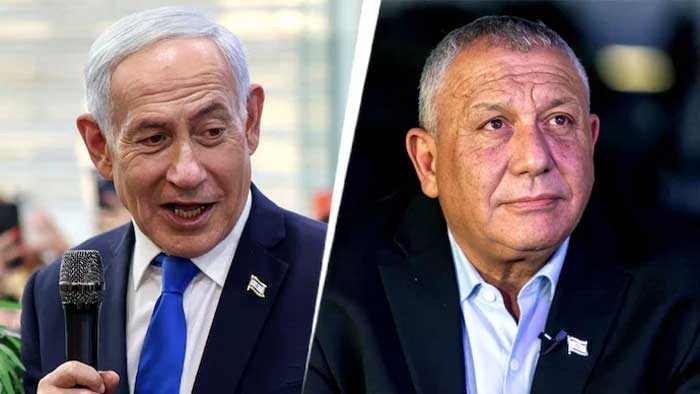
Israelis head to the polls on Tuesday, October 27, to elect all 120 members of the Knesset, in a closely contested election that could determine whether Prime Minister Benjamin Netanyahu remains in power after four turbulent years marked by war, security failures and deep political divisions.
Former military chief Gadi Eisenkot has emerged as a leading challenger, seeking to end Netanyahu’s tenure and assemble an alternative governing coalition. Neither political camp has a clear path to the parliamentary majority required to form a government, making smaller parties and post-election negotiations potentially decisive.
Why Are the 2026 Israeli Elections Important?
The election comes at a critical moment for Netanyahu, Israel’s longest-serving prime minister, whose political future has been shaped by the Hamas-led October 7, 2023, attacks, the subsequent wars and continuing disagreements over the country’s security and governance.
The vote will test public confidence in Netanyahu’s leadership and his handling of the security failures preceding the October 7 attacks. It will also determine whether his right-wing and religious coalition can retain enough parliamentary support to govern or whether opposition parties can negotiate an alternative arrangement.
Beyond the immediate question of leadership, the outcome could influence Israel’s military priorities, domestic reforms, relations with regional and international partners, and approach to the Israeli-Palestinian conflict.
Who Are the Main Candidates?
Benjamin Netanyahu
Netanyahu leads the right-wing Likud party and is seeking to remain prime minister. His political bloc includes far-right parties such as Otzma Yehudit and Religious Zionism, alongside ultra-Orthodox parties Shas and United Torah Judaism.
His supporters emphasize national security, a strong military and the continuation of his government’s political agenda. However, his coalition faces criticism over the October 7 security failures, disagreements about military-service exemptions for ultra-Orthodox men and controversies surrounding judicial reform.
The strength of his coalition will depend not only on Likud’s performance but also on whether its smaller political partners win enough seats to remain in parliament and participate in a governing alliance.
Gadi Eisenkot
Eisenkot, a former chief of staff of the Israel Defense Forces, leads the centrist Yashar party and is a central figure in the effort to replace Netanyahu.
His military background places national security at the centre of his political profile, while his campaign offers voters an alternative to Netanyahu’s right-wing and religious coalition.
However, the opposition is not a unified bloc. It includes centrist, left-wing and secular right-wing parties with differing priorities. Eisenkot would therefore need to negotiate with other political leaders and secure sufficient parliamentary backing to form a government.
Other prominent opposition figures include former prime minister Naftali Bennett, opposition politician Yair Lapid and Avigdor Liberman, leader of Yisrael Beiteinu.
What Are the Key Issues in the Election?
1. Accountability for the October 7 attacks
The Hamas-led attacks of October 7, 2023, and the security failures that preceded them remain central to the political debate.
Voters are weighing questions about responsibility, intelligence failures, military preparedness and the government’s response to the attacks. The election could influence whether demands for greater accountability lead to significant political changes.
2. Military service for ultra-Orthodox Jews
Exemptions from compulsory military service for many ultra-Orthodox Jewish men have become a major source of tension.
Supporters of reform argue that military obligations should be distributed more equally across Israeli society, particularly during a period of prolonged military mobilisation. Ultra-Orthodox parties, meanwhile, have sought to protect the religious community’s traditional arrangements.
The issue has also strained Netanyahu’s coalition and could complicate efforts to form a government after the election.
3. Judicial reform and democratic institutions
Disputes over judicial reform have divided Israeli society for several years. Proposals to change the balance of power between the judiciary, parliament and executive have generated widespread political debate and public demonstrations.
The next government will face pressure over the future of these reforms and the broader relationship between elected officials and the courts.
4. National security and regional conflict
Security remains a major concern following the wars and regional confrontations that have shaped Israel since 2023.
Voters are likely to assess the government’s approach to military operations, deterrence, hostage-related negotiations and regional diplomacy. The next administration’s decisions could also affect relations with the United States and other international partners.
How Does Israel’s Electoral System Work?
Israel operates a parliamentary system in which voters choose political parties rather than directly electing the prime minister.
The Knesset has 120 seats, and a party must receive at least 3.25% of the national vote to qualify for parliamentary representation. Because seats are distributed proportionally, multiple parties typically enter parliament.
To govern, a political bloc generally needs the support of at least 61 lawmakers, an absolute majority of the Knesset.
The leader of the largest party does not automatically become prime minister. Instead, the process of forming a government depends on which political leader can assemble sufficient parliamentary backing.
This makes coalition negotiations particularly important when no single bloc commands a majority. Smaller parties can gain considerable influence if their support determines whether a government can be formed.
What Do the Opinion Polls Indicate?
Pre-election polling points to a fragmented political landscape, with neither Netanyahu’s governing bloc nor the opposition assured of the 61 seats needed to form a government.
The results also highlight the distinction between winning the largest number of seats and securing a viable parliamentary majority. Even if Eisenkot’s party performs strongly, the broader opposition would still need to coordinate with other parties and negotiate a workable coalition.
Arab-led parties could also influence the parliamentary arithmetic, although disagreements over whether mainstream Jewish opposition parties would cooperate with them could limit the options available for government formation.
Polling figures remain estimates rather than final results. The distribution of seats among smaller parties, including those close to the electoral threshold, could substantially affect the balance of power.
What Happens If Neither Bloc Wins a Majority?
If neither political camp secures 61 seats, negotiations among party leaders will determine the next steps.
Possible outcomes include a coalition assembled through agreements among parties with different ideological priorities, a minority government that relies on outside parliamentary support, or a prolonged political stalemate if the parties cannot agree on a governing arrangement.
The results could also leave Netanyahu in a position to seek another term if he can assemble sufficient support, even if his party does not finish first in the vote.
For Eisenkot, the challenge will be to turn opposition support into a viable coalition rather than simply increase the number of seats held by parties opposed to Netanyahu.
What Is at Stake for Israel?
The October 27 election will determine more than the composition of the next Knesset. It will shape the country’s political leadership at a time of heightened security concerns, unresolved domestic disputes and continuing regional uncertainty.
For Netanyahu, the vote is a test of whether his coalition can retain power despite the controversies and divisions of recent years. For Eisenkot and other opposition leaders, it is an opportunity to build a parliamentary alternative, but one that will require cooperation among parties with different priorities.
With neither side assured of a governing majority, the election result may be only the first stage of a longer political process. The final outcome will depend on both the votes cast and the coalition agreements negotiated in the days and weeks that follow.
Comments are closed, but trackbacks and pingbacks are open.