
Trump-Xi Summit: Trade Truce, Taiwan And Iran Top Agenda As Expectations For Breakthrough Fade

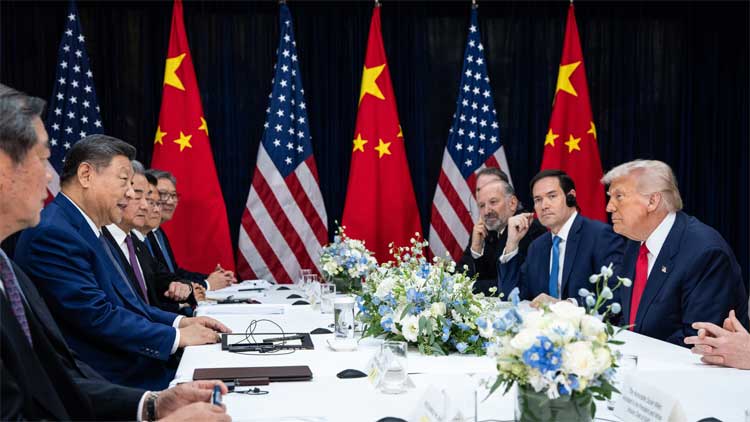
Four months after Donald Trump and Xi Jinping last met, the balance of circumstances surrounding their upcoming summit has shifted, analysts say, with China’s global trade continuing to expand while Trump faces declining approval ratings at home.
The two leaders are scheduled to meet in Washington on September 24, with expectations for a major breakthrough remaining limited. Xi is seen as having little incentive to make significant concessions, while Trump is dealing with the political and economic costs of the war with Iran.
The central issue is expected to be whether the two leaders extend a trade truce agreed last year that helped prevent a major disruption to the global economy.
“Xi is not really looking for anything tangible. He wants to extend the gentleman’s agreement with Trump so that China has time to fortify itself,” said Jon Czin, a foreign policy expert at the Brookings Institution and former China director at the US National Security Council.
US-China Talks Ahead Of Trump-Xi Meeting
White House officials have played down expectations of major agreements during the summit. US Treasury Secretary Scott Bessent and Chinese Vice Premier He Lifeng held preparatory talks in New York on Sunday, focusing on potential agreements covering AI safeguards and trade in non-sensitive products.
The limited scope of the discussions contrasts with Trump’s earlier pledge, after returning to office in 2025, to use tariffs to tackle what he described as a trade imbalance with China that was “killing” the United States.
Since reaching the trade truce with Xi in October last year, however, Trump’s attention has also been consumed by conflicts and disputes involving Iran, Ukraine and Europe.
China has meanwhile faced weak domestic demand and a prolonged property crisis, but its export sector has continued to expand. Economists have increasingly described the trend as “China Shock 2.0”.
China’s global trade surplus is on track to exceed $1 trillion for a second consecutive year.
Although US measures targeting the low-value shipments used by online retailers such as Shein and Temu have had an impact, more than half of roughly 6,500 product categories China has sold to the US so far this year have recorded growth compared with 2025.
A group of Chinese business leaders, potentially including companies facing US regulatory scrutiny, is also expected to accompany Xi during his Washington visit.
“The Trump administration thought they could use massive unilateral pressure to force China to make concessions, and that did not occur,” said Scott Kennedy, an expert on US-China economic relations at the Center for Strategic and International Studies.
Taiwan Could Feature In Trump-Xi Talks
Taiwan is also expected to be a sensitive issue during the summit.
China claims Taiwan as part of its territory, while the United States maintains longstanding ties with the island and provides it with military equipment.
Xi repeatedly raised the Taiwan issue during his May meeting with Trump in Beijing, including questions over US arms sales and Washington’s commitment to Taiwan, Trump has said.
Trump has described a pending $14 billion US arms package for Taiwan as a potential “negotiating chip” with Beijing.
Officials in Taipei and Tokyo are concerned that Trump could seek concessions from China on other issues in exchange for adjustments to US policy toward Taiwan.
Potential Chinese commitments could include purchases of Boeing aircraft and US agricultural products, as well as measures to restrict the supply of chemicals used to produce fentanyl.
“China-US ties have become more transactional,” said Wu Xinbo, a professor at Shanghai’s Fudan University who advises China’s foreign ministry.
For Beijing, Wu said, Washington’s approach to Taiwan could be central to the negotiations.
Trump Looks To Xi For Help On Iran
The Iran war is another issue where Washington is seeking Chinese influence.
The Trump administration views Xi as having significant leverage with Tehran and potentially being able to help bring an end to the conflict, which has contributed to a sharp decline in Trump’s approval ratings.
Beijing, however, has shown little indication that it intends to put substantial pressure on Iran.
Reuters reported earlier this month that China was selling billions of dollars worth of goods to Iran through a sanctions-evasion scheme. China’s foreign ministry said it was unaware of such a scheme.
US threats of secondary sanctions against countries doing business with Iran have also not yet been directed at China, Tehran’s largest trading partner.
Analysts say the approach reflects a shared interest in keeping US-China relations stable while both leaders focus on other priorities.
“Both Xi and Trump feel it’s quite helpful to have stability in the relationship so that they can focus on more pressing things,” said Ruby Osman, senior geopolitical researcher at the Tony Blair Institute for Global Change.
“For Trump, that is Iran. For Xi, that is building out China’s domestic resilience for whatever comes after Trump.”
Comments are closed, but trackbacks and pingbacks are open.