
World Leaders Gather At UN Amid Wars, Global Divisions, AI Risks And Climate Crisis

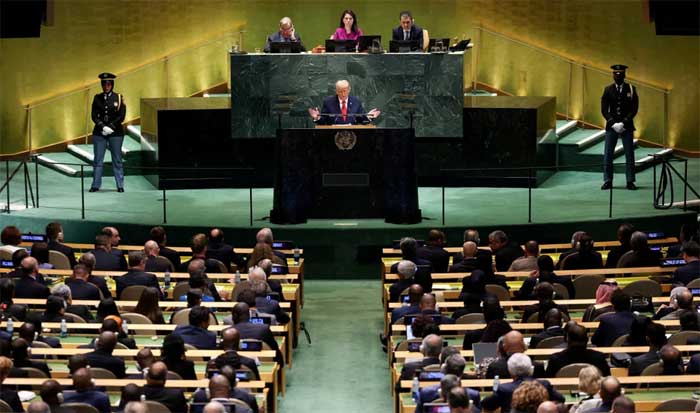
World leaders are gathering at the United Nations this week amid wars, deepening geopolitical divisions and growing concerns over artificial intelligence, climate change and the global cost-of-living crisis.
The annual high-level session of the UN General Assembly is expected to focus heavily on conflicts in Iran, Gaza, Ukraine, Sudan, the Democratic Republic of Congo and Myanmar, as leaders confront the question of whether diplomacy can help bring an end to the fighting.
Climate change, rising inequality and economic pressures caused by disrupted shipping routes and supply chains will also feature prominently.
UN Reform In Focus
The future of the United Nations itself is expected to be a major issue at the gathering.
The UN, now 81 years old, continues to operate with a Security Council structure largely shaped by the post-World War II order. The five permanent members — the United States, Russia, China, Britain and France — hold veto power.
The UN’s 193 member states have agreed to a broad reform package that includes changes to key institutions such as the Security Council. However, implementing those reforms remains a major challenge.
There will also be speculation over the next UN secretary-general. Antonio Guterres’ second five-year term ends on December 31, and no clear successor has yet emerged.
Trump, Macron, Zelenskyy Among Key Speakers
Despite its challenges, the UN General Assembly remains the principal forum where representatives of its 193 member states gather for high-level diplomacy.
Around 130 heads of state and government are expected to address the assembly from Tuesday, alongside dozens of ministers.
US President Donald Trump and French President Emmanuel Macron are among the prominent speakers scheduled for Tuesday, following Guterres’ opening address.
Ukrainian President Volodymyr Zelenskyy and Iranian President Masoud Pezeshkian are scheduled to speak on Wednesday, while Israeli Prime Minister Benjamin Netanyahu is expected to address the assembly on Thursday.
Palestinian President Mahmoud Abbas is not travelling to New York after the United States refused to issue him a visa. He is expected to address the assembly by video on Thursday.
Chinese President Xi Jinping is also skipping the gathering as he prepares to meet Trump in Washington and will send a vice president instead. Russian President Vladimir Putin is not attending, while Indian Prime Minister Narendra Modi has also withdrawn from the event.
French UN Ambassador Jerome Bonnafont stressed the importance of maintaining the UN as a forum for dialogue at a time of growing international polarization.
“We believe in multilateralism,” he said, arguing that the high-level week should be an opportunity for countries to reaffirm cooperation and dialogue over confrontation.
UN Faces Financial And Political Pressure
The UN has endured a difficult year, with its ability to address major conflicts weakened and its finances under severe pressure.
The United States has accumulated billions of dollars in outstanding payments to the organization, contributing to financial difficulties that have forced reductions in peacekeeping and humanitarian operations.
The US recently paid $725 million toward its contributions to the UN’s regular operating budget for the year, enough to prevent Washington from losing its vote in the General Assembly.
International Crisis Group analyst Richard Gowan said the UN was no longer “in freefall” but remained in a prolonged crisis.
Former UN deputy secretary-general Mark Malloch-Brown said the organization continued to enjoy global trust but faced strong public demand for change.
AI Moves To Centre Of Global Debate
Artificial intelligence is emerging as one of the most consequential issues on the UN agenda.
Rapid advances in AI have raised concerns over the lack of effective industry controls and internationally agreed safeguards for technology whose benefits, risks and long-term consequences remain uncertain.
The UN Security Council has scheduled a high-level meeting on AI for Wednesday afternoon, underscoring the growing importance of the issue. The council is also scheduled to hold a separate high-level meeting on Ukraine earlier that day with Zelenskyy.
Several major AI executives recently called for a pause over concerns that increasingly powerful systems could escape human control. Trump has dismissed such concerns while calling for continued US advances in AI to maintain an edge over China.
Guterres Calls For Greater International Cooperation
For Guterres, the gathering will be his final UN General Assembly session as secretary-general.
He has described the current period as an “era of deep uncertainty” and warned that international cooperation is more important than ever as the world confronts major existential threats.
Beyond the headline issues, governments and diplomats will hold hundreds of bilateral meetings on subjects ranging from rising sea levels and education funding to gender equality.
Esther Brimmer, a senior fellow in global governance at the Council on Foreign Relations, said face-to-face diplomacy can help countries develop ideas that may eventually translate into policy.
She described the international environment in 2026 as more serious and complex than in previous decades, while maintaining that there remains scope for effective international cooperation.
Comments are closed, but trackbacks and pingbacks are open.