
Not Kohli, not Gayle, not Warner: Why Vaibhav Sooryavanshi’s 2026 season stands apart

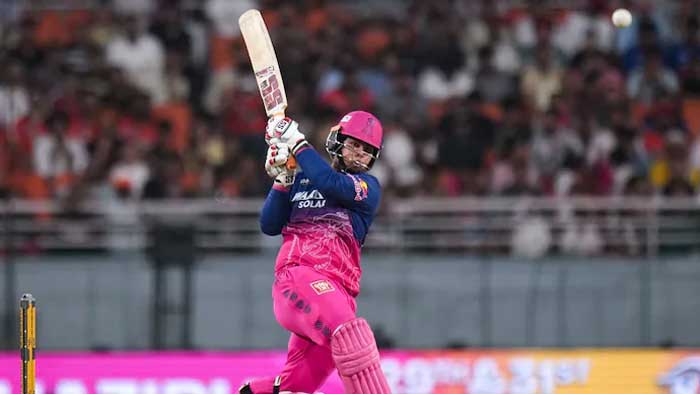
The IPL has produced seasons that have entered cricketing folklore.
Chris Gayle turned batting into intimidation in 2011. Virat Kohli rewrote run-scoring records in 2016 with an astonishing 973-run campaign. David Warner powered Sunrisers Hyderabad to the title through relentless consistency, while Ruturaj Gaikwad announced himself with the Orange Cap, Emerging Player award and a championship-winning season.
Now, Vaibhav Sooryavanshi’s IPL 2026 demands a place alongside them. The real debate is whether it deserves to stand above them all.
The numbers make that conversation unavoidable.
Sooryavanshi finished the season with 776 runs in 16 innings at a staggering strike rate of 238. He smashed 63 fours and 72 sixes while collecting the Orange Cap, Emerging Player award, Most Sixes award, Super Striker award and the MVP trophy.
This was not merely a breakout campaign. It was a season that bent the limits of what seemed possible in T20 cricket.
A strike rate that changes the conversation
The defining feature of Sooryavanshi’s season was not just how many runs he scored, but how quickly he scored them.
Kohli’s iconic 2016 campaign yielded 973 runs at a strike rate of 152.03. Warner’s title-winning season brought 848 runs at 151.42. Jos Buttler’s brilliant 2022 effort produced 863 runs at 149.05, while Shubman Gill’s 890-run season in 2023 came at 157.80.
Sooryavanshi operated in a different universe.
An Orange Cap winner maintaining a strike rate of 238 across an entire season is unprecedented. Even the most explosive campaigns in IPL history struggle to match that combination of volume and destruction.
Gayle’s fearsome 2011 season produced 608 runs at 183.13. Andre Russell’s extraordinary 2019 campaign yielded 510 runs at 204.81. Both seasons were devastating. Neither combined such extreme scoring rates with more than 750 runs.
That is what separates Sooryavanshi’s season from the rest.
More sixes than peak Gayle
The six-hitting numbers only strengthen the argument.
Gayle’s celebrated 2012 season produced 59 sixes, a benchmark that stood as a symbol of batting dominance for years.
Sooryavanshi cleared that mark with 72 sixes, striking one every 4.53 deliveries.
He scored 776 runs while maintaining a level of power-hitting that exceeded even the most feared six-hitters the league has seen. This was not aggressive batting. It was sustained destruction.
Beyond the Powerplay
One easy explanation for such a strike rate would be Powerplay exploitation. The numbers reject that theory.
Sooryavanshi scored 521 runs in the first six overs at a strike rate of 233.63. That alone would have ranked among the best attacking Powerplay seasons in IPL history.
Yet the acceleration never stopped.
Between overs 7 and 11, he scored 157 runs at 234.33. Between overs 12 and 16, he blasted 85 runs at 265.63. Even in the limited opportunities he received at the death, he struck at 325.
Many openers dominate when fielding restrictions are in place before slowing down against spread fields. Many finishers thrive at the back end without carrying top-order responsibility.
Sooryavanshi somehow combined both roles in a single batting position.
His boundary frequency underlined that dominance. He struck 135 boundaries in just 326 balls, meaning a boundary arrived every 2.41 deliveries. More than 41 percent of the balls he faced ended at or beyond the rope.
Delivering when it mattered
The impact extended beyond aesthetics.
In Rajasthan Royals victories, Sooryavanshi scored 441 runs from 168 balls at a strike rate of 262.50. Even in defeats, he amassed 335 runs from 158 deliveries at 212.03.
Those figures suggest a batter who was not merely accumulating runs but directly influencing outcomes.
The playoffs added further weight to his case.
His 97 against Sunrisers Hyderabad in the Eliminator was among the defining innings of the tournament. He followed it with another match-shaping knock, scoring 96 against Gujarat Titans in Qualifier 2.
Many extraordinary league-stage seasons lose momentum once the knockout rounds arrive. Sooryavanshi became even more central to his team’s campaign.
Sustained excellence, not isolated brilliance
What makes the season particularly remarkable is its consistency.
He recorded six fifties, five scores above 75 and four scores in the 90s. He crossed a strike rate of 200 in 11 of his 16 innings, exceeded 250 six times and breached 300 on three occasions.
The numbers show a season built on repeated dominance rather than one or two spectacular innings inflating the overall record.
The case for the legends
There are, of course, counterarguments.
Kohli’s 2016 remains the benchmark for batting control and accumulation. No one has yet challenged his tally of 973 runs at an average above 80.
Warner’s 2016 campaign carries the weight of a title-winning season and leadership responsibilities. Gaikwad’s 2021 remains one of the most complete young-player seasons in IPL history, combining individual honours with team success.
Gayle’s 2011 campaign also deserves consideration in its historical context. A strike rate above 183 in that era was a shock to the system.
Sooryavanshi’s season was not flawless. He registered four single-digit scores, averaged around 48.50 and carried a dot-ball percentage of 32.82, reflecting the risks embedded in his ultra-aggressive approach.
Yet those imperfections do little to diminish the scale of what he achieved.
Verdict
If the benchmark is pure run accumulation, Kohli’s 2016 remains unmatched.
If championships and leadership carry the greatest weight, Warner and Gaikwad possess compelling claims.
But if the question is which batter produced the most ruthless, explosive and overwhelming season the IPL has ever witnessed, Vaibhav Sooryavanshi’s 2026 campaign has a strong case for the top spot.
He won the Orange Cap without batting like a conventional Orange Cap winner. He hit more sixes than Gayle at his peak. He scored faster than Russell while producing significantly more runs. He dominated every phase of the innings and carried that dominance into the playoffs.
The IPL has seen bigger aggregates. It has seen cleaner and more controlled seasons. It has seen title-winning campaigns built on sustained excellence.
What it has never seen before is an Orange Cap season this brutally destructive.
Comments are closed, but trackbacks and pingbacks are open.