
Chhattisgarh’s Sirpur Archaeological Site Enters UNESCO Tentative World Heritage List

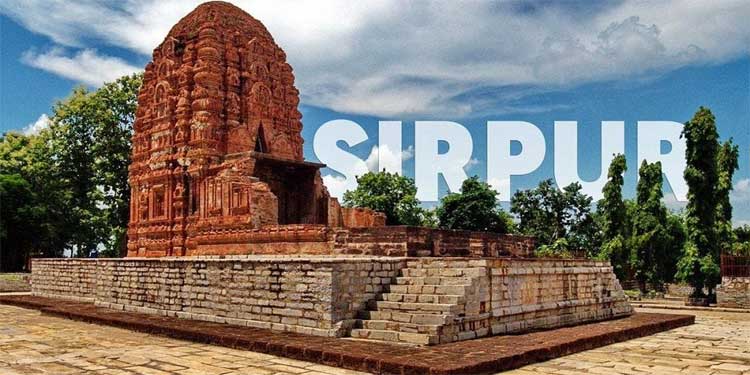
Sirpur, a historic archaeological site in Chhattisgarh featuring Hindu, Buddhist and Jain monuments dating from the 5th to the 12th century CE, has been added to UNESCO’s Tentative List of World Heritage Sites, bringing it a step closer to securing the prestigious international recognition.
Located on the eastern banks of the Mahanadi River in Mahasamund district, around a two-hour drive from state capital Raipur, Sirpur is renowned for its rich religious, cultural and architectural heritage.
The next step for authorities is to prepare and submit a detailed nomination dossier to UNESCO. A key requirement for World Heritage status is demonstrating the site’s Outstanding Universal Value (OUV).
Confirming the development, Dhammshil Ganvir, Chief Executive Officer of the Special Area Development Authority (SADA), Sirpur, said the inclusion would help increase tourism and bring the archaeological site to global attention.
“Sirpur has made it to the Tentative list of UNESCO. The development will help boost tourism at the site and put it on the global map,” Ganvir said.
M Kalimuthu, Superintending Archaeologist at the Archaeological Survey of India’s (ASI) Raipur circle, said authorities now had one year to prepare and submit the detailed nomination dossier.
“Now that we have made it to the tentative list, we have one year to prepare and submit a detailed nomination dossier to the UNESCO,” Kalimuthu said.
How Sirpur Can Get UNESCO World Heritage Status
Being included on UNESCO’s Tentative List is a preliminary step in the World Heritage nomination process. Authorities must now establish the site’s significance and demonstrate how it meets the organisation’s criteria.
An ASI official said the dossier would cover buffer zones, conservation plans, management systems, the justification for Outstanding Universal Value, authenticity and integrity.
After the dossier is submitted, India may invite an advisory mission from UNESCO’s expert bodies, including the International Council on Monuments and Sites (ICOMOS) and the International Union for Conservation of Nature (IUCN), to assess Sirpur.
Public engagement and consultations with stakeholders would also help strengthen the nomination. Following technical reviews in India, the dossier would be forwarded to UNESCO’s World Heritage Centre for evaluation by a specialised committee.
Why Sirpur Is Historically Significant
Sirpur is among the few archaeological landscapes in India where Hindu, Buddhist and Jain monuments coexist within a unified urban setting.
The site contains 22 Shiva temples, five Vaishnava temples, 10 Buddhist viharas and three Jain viharas. Its most prominent structures include the Lakshmana Temple, dedicated to Lord Vishnu and built around the 7th century. The brick temple is considered one of India’s finest examples of its kind.
Sirpur was also a flourishing capital of Dakshina Kosala under the Panduvanshi dynasty and, later, the Somavamshi rulers. Its archaeological remains include palace complexes, marketplaces, residential quarters, brick and stone temples, Buddhist viharas, stupas, meditation cells and water-management systems.
Together, these structures offer insights into the region’s religious diversity, urban planning and architectural traditions across several centuries.
Chhattisgarh Government, ASI Working To Improve Heritage Site
The Chhattisgarh government and the ASI have been undertaking several initiatives to strengthen Sirpur’s prospects of receiving World Heritage status.
These efforts include developing pathways linking monuments and restricting vehicles within the premises to battery-operated options.
Officials have identified four thematic clusters across the town: the Buddhist monastic cluster, Hindu temple cluster, civic-administrative cluster and Riverine Sacred Landscape.
A primary pathway is planned to connect all four clusters, while secondary routes will link the main corridor to individual monuments.
“To make them visitor-friendly, all four thematic clusters are proposed to be integrated through a coherent system of heritage pathways, designed to connect the principal monuments with the existing main approach roads and internal circulation routes. The secondary pathway will serve as the last-mile connector from the primary corridor to each monument,” Kalimuthu said.
Rahul Tiwari, Assistant Superintending Archaeological Engineer, said the plans also included eco-friendly lawns, gardens and tree-lined avenues, alongside efforts to promote local art forms, crafts and cultural performances.
The initiatives aim to improve visitor access while preserving the site’s archaeological character and encouraging sustainable tourism.
Sirpur’s inclusion on UNESCO’s Tentative List marks an important milestone in these efforts. Its eventual World Heritage designation will depend on the preparation and evaluation of a comprehensive nomination demonstrating the site’s global cultural significance.
Comments are closed, but trackbacks and pingbacks are open.