
UN Inquiry Says Russian Attacks on Ukraine’s Energy Infrastructure Constitute War Crimes

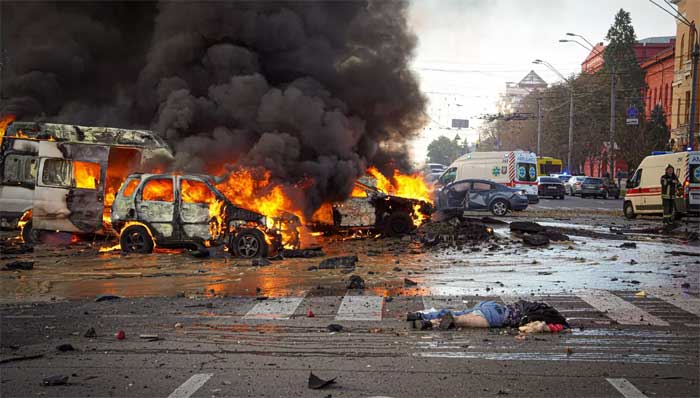
A UN-backed inquiry has concluded that Russia committed war crimes and crimes against humanity by deliberately attacking Ukraine’s energy infrastructure, leaving millions of civilians without electricity and heating during freezing winter conditions.
The independent Commission of Inquiry on Ukraine also found evidence that men from 29 countries were recruited into Russia’s armed forces through deception or coercion, in violation of international law.
The findings were presented Monday to the UN General Assembly’s human rights committee. The Geneva-based Human Rights Council established the commission shortly after Russia launched its full-scale invasion of Ukraine in February 2022.
According to the report, attacks on energy infrastructure have exposed civilians to severe hardship, leaving elderly people unable to use elevators to reach shelters during missile and drone strikes and hospital patients without electricity for life-sustaining medical equipment.
The commission determined that the attacks constituted war crimes because they were intentionally directed against civilian objects. It also concluded that they amounted to crimes against humanity by “inflicting great suffering to civilians,” commission chair Erik Mose said during a UN news conference held by video.
Mose, a former Norwegian judge, warned that the intensification of attacks ahead of another winter raised serious concerns about the risks facing civilians.
The inquiry based its findings on testimonies from 255 Ukrainians who experienced winter conditions in Kyiv and eight other regions during 2025–26, alongside information from government officials, medical professionals and civil society organizations.
Mose said Russian authorities had not responded to requests for comment on the commission’s reports, including the latest findings.
Russia’s UN Mission said Monday that Moscow did not recognize the commission’s mandate and dismissed its findings as being based on “falsified data.”
Throughout the war, Russia has maintained that its forces target military or military-related facilities and sites used by Ukraine’s armed forces, despite reports documenting damage to civilian infrastructure.
Men from 29 Countries Recruited Through Deception or Coercion
The report also documented the recruitment of foreign nationals into the Russian military through deceptive and coercive practices.
The commission investigated recruitment involving nationals from 48 countries and found evidence that men from 29 of them had been recruited through such methods. The men, aged between 18 and 60, mostly came from economically disadvantaged and marginalized communities and had limited formal education.
The countries identified were Azerbaijan, Bangladesh, Belarus, Bolivia, Brazil, Botswana, Cameroon, Colombia, the Dominican Republic, El Salvador, Ghana, Honduras, India, Jordan, Kenya, Morocco, Nigeria, Peru, the Philippines, South Africa, Somalia, Sri Lanka, Tajikistan, Tunisia, Türkiye, Uganda, Uzbekistan, Yemen and Zimbabwe.
According to the inquiry, recruitment agents operating in other countries presented themselves as legitimate businesses endorsed by governments. They arranged visas and, in some cases, accompanied recruits to Russia.
After arriving, the men were allegedly forced to sign documents in Russian with the Defense Ministry without understanding their contents.
“The recruits were shocked to discover that they would be serving for the Russian armed forces,” the report said.
Foreign Recruitment Practices Under Scrutiny
Russian authorities have publicly recruited foreign nationals by offering incentives, including accelerated citizenship, while military service has also been made mandatory for certain foreigners seeking permanent residency. Official statements generally describe such enlistment as voluntary.
The commission’s findings, however, raise concerns about recruitment practices involving deception, coercion and the exploitation of vulnerable individuals.
The report comes as Russia’s attacks on Ukraine’s energy infrastructure continue to pose risks to civilian life and essential services ahead of winter. The inquiry warned that further strikes could deepen the humanitarian consequences for people already facing electricity and heating shortages.
Comments are closed, but trackbacks and pingbacks are open.