
ECI Tells Supreme Court SIR Is Legal, Says Individual Commissioners’ Remarks Do Not Reflect Commission’s Decisions

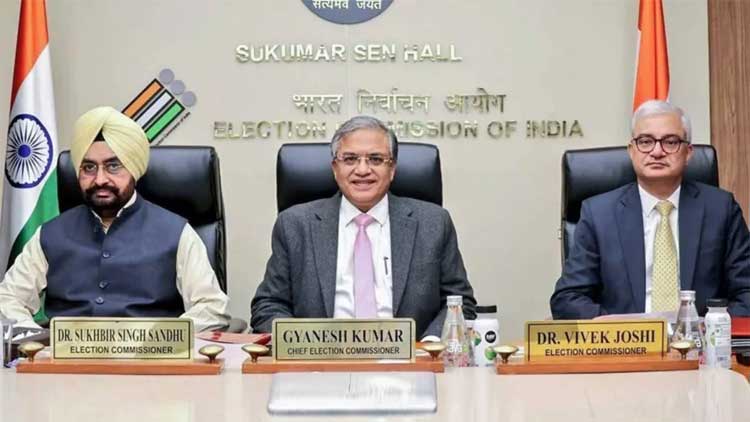
The Election Commission’s affidavit says the Special Intensive Revision of electoral rolls is legally valid and its procedures are justified, dismissing the petitioner’s allegations as misconceived.
The Election Commission of India (ECI) has told the Supreme Court that observations, suggestions and questions raised by individual Election Commissioners should not be construed as decisions of the Commission, asserting that the Special Intensive Revision (SIR) of electoral rolls is legal and its process justified.
In an affidavit filed in response to a petition by social activist Rakesh Kumar Singh, the ECI rejected allegations concerning changes to voter registration procedures and the decision-making process, describing the claims as misconceived.
The Commission also stated that the affidavit had been approved for filing through a unanimous decision of all three members — Chief Election Commissioner Gyanesh Kumar and Election Commissioners Sukhbir Singh Sandhu and Vivek Joshi.
The affidavit comes in the wake of a September 23 report by The Indian Express that highlighted file notings by Sandhu and Joshi raising questions about aspects of the SIR process.
According to the report, the two Election Commissioners had flagged concerns that access to electoral rolls was becoming restricted for officers statutorily responsible for maintaining voter lists. They had also questioned changes to Form 6, which is used by first-time voters to register, describing the changes as “unauthorised/illegal”.
The ECI’s affidavit seeks to distinguish individual commissioners’ internal observations from formal decisions taken by the Commission as a collective body. By emphasising unanimous approval of the affidavit, the poll panel has reiterated its institutional position on the legality and implementation of the SIR exercise.
The dispute centres on the procedures governing the revision of electoral rolls, access to voter registration records and the authority under which changes to registration forms can be made.
The Supreme Court petition and the ECI’s response bring renewed attention to questions surrounding the administration of electoral rolls and the decision-making processes within the constitutional body responsible for conducting elections in India.
Comments are closed, but trackbacks and pingbacks are open.