
Four New Ministers Join Omar Abdullah’s J-K Cabinet

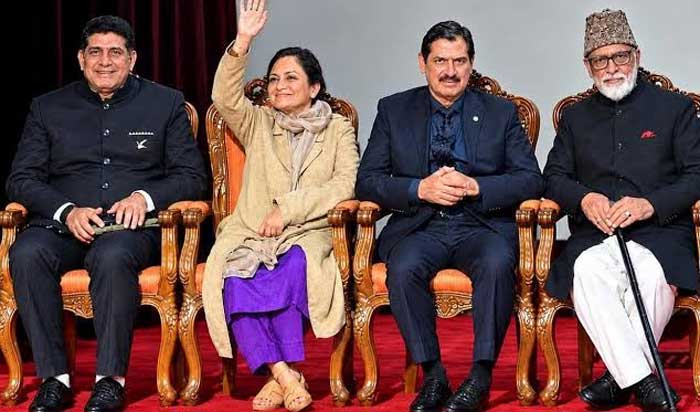
Jammu and Kashmir Chief Minister Omar Abdullah expanded his Council of Ministers on Tuesday, inducting four legislators into the National Conference-led government in a major Cabinet reshuffle. Lieutenant Governor Manoj Sinha administered the oath of office and secrecy to the new ministers at Lok Bhavan in Srinagar.
The four new ministers are Ali Mohammad Sagar, Mir Saifullah, Shameema Firdous and Altaf Ahmad Kaloo. The expansion marks the first major restructuring of the Cabinet since the Omar Abdullah-led government took office in October 2024.
Who are the four new ministers?
The incoming ministers represent different constituencies across the Kashmir Valley and bring experience from the National Conference’s political organisation and the Jammu and Kashmir Legislative Assembly.
- Ali Mohammad Sagar: A senior National Conference leader and seven-time MLA from Khanyar in Srinagar, Sagar is among the party’s most experienced legislators.
- Mir Saifullah: A four-time MLA from the Kupwara area in north Kashmir, he returns to the centre of the party’s legislative leadership.
- Shameema Firdous: A three-time MLA from Habba Kadal in Srinagar, Firdous becomes the second woman in the Cabinet after Sakina Itoo.
- Altaf Ahmad Kaloo: A two-time MLA from Pahalgam in south Kashmir, Kaloo is among the legislators inducted into the government for the first time as a minister.
The appointments are expected to help the National Conference accommodate senior leaders and address demands for representation across constituencies.
Cabinet reaches maximum strength of nine
With the four inductions, the Council of Ministers has reached its maximum permitted strength of nine members, including the Chief Minister. Under Section 53 of the Jammu and Kashmir Reorganisation Act, 2019, the ministry cannot exceed 10% of the Assembly’s total membership. With 90 elected seats, the limit is nine ministers.
The reshuffle is intended to accommodate more legislators and address considerations such as seniority, regional representation and the distribution of administrative responsibilities. Changes to existing ministers’ portfolios are also part of the wider restructuring, though the final allocation of departments should be confirmed through official announcements.
Congress stays out of the Cabinet
The Cabinet expansion has taken place without the Congress, despite the party having contested the 2024 Assembly elections in alliance with the National Conference.
The Congress has maintained that it will not join the government until statehood is restored to Jammu and Kashmir. It has instead continued to support the government from outside. The party’s position meant the National Conference leadership proceeded with its own ministerial appointments.
First major reshuffle since October 2024
Omar Abdullah took office as Chief Minister in October 2024 after the National Conference emerged as the largest party in the Jammu and Kashmir Assembly elections. The Cabinet had remained relatively small, with six members including the Chief Minister, leaving room for additional appointments.
The latest expansion is the first major restructuring of the ministry since the government was formed. The inclusion of four new ministers brings additional legislators into the executive and sets the stage for a revised distribution of responsibilities.
The impact of the reshuffle will depend on the portfolios assigned to the incoming ministers and how the expanded Cabinet addresses the administration’s priorities across Jammu and Kashmir.
Comments are closed, but trackbacks and pingbacks are open.