
Amid Brics Summit all-vegetarian fare row, what new book says about banquets

What India serves its guests at official dinners has long reflected the tastes, personalities and politics of its prime ministers. Fresh attention to the subject followed the all-vegetarian menu served at this month’s BRICS Summit, which sparked debate over the nature of official hospitality.
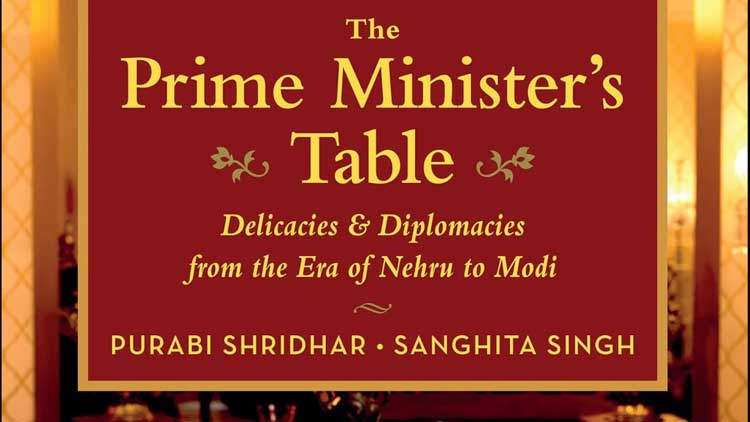
A new book, The Prime Minister’s Table: Delicacies and Diplomacies from the Era of Nehru to Modi, traces how food at state banquets has evolved since Jawaharlal Nehru began reshaping official hospitality in the late 1940s.
Written by journalists Purabi Shridhar and Sanghita Singh, the book is based on more than seven years of interviews with prime ministers’ families, friends, staff and chefs. Across 14 chapters, the authors examine how food became intertwined with diplomacy and political personalities.
Nehru Brings Indian Food To State Banquets
After Independence, Nehru changed the format of state banquets, replacing bouquets with garlands and introducing more Indian dishes to official menus. Toasts were sometimes raised with orange juice, according to an account by artist Anjolie Ela Menon cited in the book.
Tara Ali Baig, the wife of Nehru’s chief of protocol, helped Indira Gandhi develop the new style of official hospitality. A 1956 government note recorded that Nehru was “not used to spice and chillies at all.”
In 1962, Uttar Pradesh Chief Minister Chandra Bhanu Gupta requested an entirely vegetarian menu for a reception in Lucknow. Chef Imtiaz Qureshi created dishes that resembled non-vegetarian food, including bottle gourd “fish”, jackfruit “murgh musallam” and brinjal shaped like chicken legs.
Nehru reportedly teased Gupta about the names before telling Qureshi: “Imtiaz, you truly broke the record.”
Indira Gandhi Took Personal Interest In Menus
Indira Gandhi was closely involved in finalising menus and guest lists. Chef Sudhir Sibal recalls an occasion in 1983 when a turkey roast appeared on the proposed menu for the Commonwealth Heads of Government Meeting.
“Why cannot you give them biryani?” Gandhi asked, according to Sibal. The kitchen subsequently changed the menu.
She also arranged small scissors for guests to cut grapes and sent young lawmakers for dining etiquette lessons. Former Union minister Margaret Alva describes Gandhi as “a great host”.
Rajiv Gandhi Introduced Nouvelle Cuisine
During Rajiv Gandhi’s tenure, official banquets moved toward plated nouvelle cuisine, with dishes assembled in the kitchen before being served.
Chefs Sudhir Sibal and M S Gupta underwent three months of training in Britain. State dinners began featuring items such as baby naans with chicken liver pâté, tomato-coconut soup and carrot-orange soup.
Sibal says Sonia Gandhi also supervised details ranging from crockery to flowers.
Shastri, Desai And Other Prime Ministers
Lal Bahadur Shastri, a strict vegetarian, once remarked at a dinner in Kerala that his son Anil Shastri would enjoy his meal if he ate with his hands.
Morarji Desai’s teetotalism also influenced official hospitality abroad. Former foreign secretary K Raghunath recalls that at a 1977 dinner hosted by Soviet leader Leonid Brezhnev, toasts were raised with mineral water and no alcohol was served for Desai.
Charan Singh’s meals were known for their use of bottle gourd, while banquets during Chandrashekhar’s tenure for the Special Protection Group did not include alcohol.
Rao, Deve Gowda And The Prime Minister’s Personal Preferences
P V Narasimha Rao’s doctor advised him to eat dal and phulka, and his usual food was reportedly served even at state banquets. A cook was assigned to prepare fresh phulkas at Hyderabad House.
H D Deve Gowda also avoided alcohol at official functions abroad. At a lunch hosted for IMF chief Michael Camdessus, Gowda reportedly ate a ragi ball with water, an act his aide Kunwar Danish Ali described as being “against dining etiquette.”
Vajpayee Brings Street Food To The Table
Atal Bihari Vajpayee introduced a more informal touch to prime ministerial hospitality, with street food such as chaat and jalebi from Delhi’s Chandni Chowk served at private gatherings, according to former The Ashok Hotel general manager Rajiv Makin.
Vajpayee reportedly asked that golgappas be served with the flavoured water in a separate pot, asking: “How do I have them?”
During Pervez Musharraf’s visit for the Agra summit, Musharraf’s wife reportedly asked for the recipe of the mulligatawny soup served at the banquet.
Different Menus Under Gujral And Manmohan Singh
I K Gujral’s wife Sheila, known for hosting, preferred food with less ghee and oil. At official banquets, however, guests were served richer food while the prime minister was offered lighter versions, according to M S Gupta.
Manmohan Singh’s wife Gursharan Kaur also played an active role in menu planning. She invited chefs home to demonstrate how dishes such as ghiya koftas should be prepared.
“How could I expect my guests to be happy?” she is quoted as saying about serving food she did not like herself.
Singh made 73 foreign trips during his 10 years as prime minister, including a 2009 state dinner at the White House where green prawn curry was served.
Modi’s Vegetarian Menus
Prime Minister Narendra Modi’s official menus reflect his vegetarian diet. During his 2017 visit to Israel, he was served an Indian vegetarian dinner, while chef Sanjeev Kapoor prepared menus for his 2015 UAE visits.
“To know a country’s culture, you’ve to eat its food,” Kapoor quotes Modi as saying.
The book also describes Modi as preferring simple meals.
Despite the personal preferences of prime ministers, chefs say official hospitality remains tightly governed by protocol. Sibal describes state banquets as “all regimental and protocol bound”, underscoring how menus at the prime ministerial table combine personal tastes with the formal demands of diplomacy.
Comments are closed, but trackbacks and pingbacks are open.