
UN Human Rights Council Delays Review of US Rights Record Until January Amid Washington’s Boycott

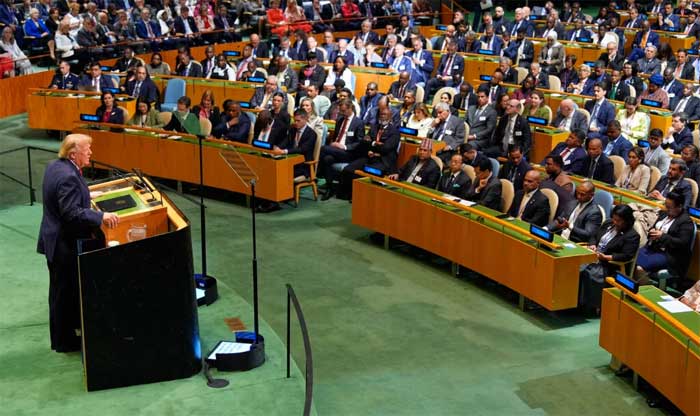
The United Nations Human Rights Council on Tuesday postponed its scheduled review of the United States’ human rights record until January, seeking to give the Trump administration another opportunity to reconsider its decision to boycott the international monitoring process.
The decision gives the Geneva-based body additional time to persuade Washington to participate after the United States became the first government to refuse to take part in the review.
The council’s 47 member states adopted the postponement without a vote, citing the US government’s continued non-cooperation.
The Universal Periodic Review (UPR) is a mechanism through which the council examines the human rights records of all 193 UN member states, generally every four to five years. The process is intended to encourage governments to address rights concerns and improve their policies through international scrutiny and recommendations.
Trump Administration Rejects UN Review
The administration of US President Donald Trump withdrew the country from the Human Rights Council last year, accusing the organisation of displaying anti-American and anti-Israeli bias and failing to uphold the principles it promotes.
Washington had already skipped its scheduled review a year ago. The assessment, originally planned for November 2025, was subsequently postponed until Tuesday in the hope that the administration might reconsider its position. However, the US again refused to participate.
The State Department reiterated its rejection of the process before and after Tuesday’s decision.
“We give no credibility to the agency,” the department said in a statement, describing the council as an organisation that undermines human rights through what it called consistent failures to uphold its own values.
It also accused the body of persistently failing to condemn serious human rights violations.
The council’s review mechanism requires the participation of the country being examined. During the process, national delegations present their records, respond to questions and receive recommendations from representatives of other countries.
The exercise is designed to provide a comprehensive assessment of national human rights policies and encourage constructive improvements.
EU Defends Universal Human Rights Scrutiny
The European Union and other supporters of the review process have defended its importance in ensuring that all countries are held accountable for their human rights records.
Speaking after Tuesday’s decision on behalf of EU council members, Dutch envoy Simone van der Post expressed regret over Washington’s continued refusal to participate.
“The EU regrets any situation in which full engagement with the mechanism does not occur, including the decision by the United States again not to participate in their review today,” she said.
“All states are subject to the scrutiny of their human rights situation by the international community,” she added.
The United States has faced international criticism over several policies, including aggressive deportation measures and targeted killings of individuals suspected of involvement in drug trafficking in the Caribbean and Pacific. The Trump administration has defended these actions as necessary to protect American workers and national security.
Rights Groups Call for Accountability
Human rights organisations have warned that Washington’s refusal to participate could weaken the credibility of the UN review mechanism and encourage other governments to avoid international scrutiny.
Phil Lynch, executive director of the International Service for Human Rights, said the United States should face scrutiny over its record on migration, LGBT rights, racial discrimination and civic freedoms, including the right to protest.
He also raised concerns about conflicts in the Middle East and alleged extrajudicial killings in the Caribbean and Pacific.
“What has Washington got to hide?” he asked.
Jamil Dakwar, director of the American Civil Liberties Union’s human rights programme, criticised the administration’s position, saying it demonstrated disregard for international accountability.
He said the ACLU and partner organisations had urged the UN human rights chief to publish an assessment of the human rights situation in the United States early next year.
Concerns Over Credibility of UN Review Mechanism
The US decision has also raised questions about the effectiveness and credibility of the Universal Periodic Review, particularly given Washington’s influence in international affairs and its longstanding claims of support for human rights principles.
Eric Tistounet, a visiting professor at the Geneva Graduate Institute and the council’s first secretary, warned that the boycott could undermine confidence in the system.
He said the refusal of a major global power to participate, or even provide what he considered a convincing justification, created serious challenges for the council.
The postponement until January gives the United Nations additional time to seek US participation. However, Washington’s repeated rejection of the process leaves uncertainty over whether the review will eventually take place.
The dispute has highlighted broader tensions between national sovereignty, international human rights monitoring and the accountability of governments under the UN system.
Comments are closed, but trackbacks and pingbacks are open.