
US-Led Ukraine-Russia Talks in Abu Dhabi Focus on New European Security Framework
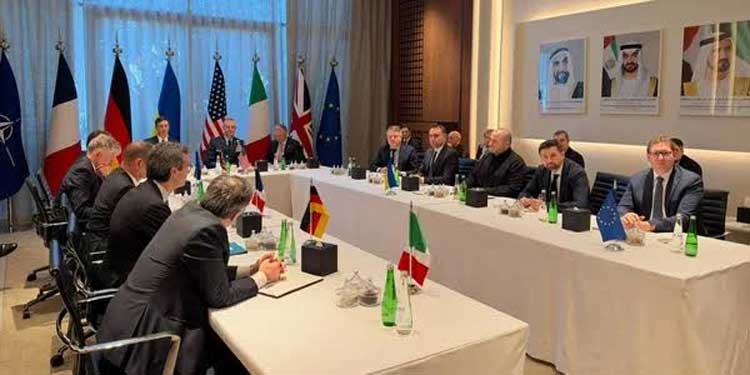
The United States has called for a “new” security framework for Ukraine, Russia and Europe as US-led negotiations between Moscow and Kyiv began in Abu Dhabi, with Ukrainian President Volodymyr Zelensky expressing satisfaction with what he described as a change in approach by American mediators.
US President Donald Trump’s envoys, Jared Kushner and Steve Witkoff, brought representatives of the two warring countries together for several hours of discussions on Tuesday. Negotiations are scheduled to continue on Wednesday.
Kushner told delegates that Washington had “narrowed the gaps” between the two sides, although he did not provide specific details. He said the United States hoped to move the discussions towards a solution to Europe’s deadliest conflict since World War II.
Speaking in Paris, US Secretary of State Marco Rubio described the negotiations as “very productive” and said European countries should eventually be included at the negotiating table because they were also essential to resolving the conflict.
Zelensky subsequently described the discussions as “constructive and quite substantive”. He said Ukrainian negotiators had briefed him on discussions involving humanitarian concerns and security guarantees.
Speaking in Copenhagen, the Ukrainian president also called on European countries to select a representative for future negotiations.
He added that negotiators were working towards a large-scale prisoner exchange and that US officials would travel to Russia for further discussions on the matter.
Zelensky Welcomes Changes in US Approach
Asked about the negotiating approach adopted by Kushner and Witkoff, Zelensky said he had noticed changes and was pleased with what he was hearing from the American representatives.
The negotiations come amid growing European concerns over Trump’s willingness to pursue a settlement with Moscow that could reshape Europe’s post-war security arrangements. There are also fears that Washington could pressure Kyiv into accepting territorial concessions that would amount to a de facto defeat.
Kushner said the US administration wanted to establish a new security framework involving Ukraine, Russia and Europe that could guarantee “decades, if not centuries, of peace”.
Moscow has also made changes to Europe’s existing security arrangements a longstanding priority. Before launching its full-scale invasion of Ukraine, Russia demanded that Western countries reverse NATO’s military expansion and withdraw forces from parts of Eastern Europe.
Kyiv has strongly opposed any arrangement that would allow major powers to determine Europe’s security without the participation of affected countries. Zelensky has warned against a potential “Yalta 2.0”, referring to the 1945 conference at which the Allied powers discussed Europe’s post-war order.
“Putin wants the USSR back,” Zelensky told Danish media.
The European Union has maintained that broader security arrangements should be discussed only after a ceasefire is established.
Moscow Seeks Wider European Security Discussions
Russia’s delegation included diplomat Sergei Ryabkov, who was involved in communicating Moscow’s demands for NATO to withdraw from Eastern Europe before the invasion.
The inclusion of Ryabkov indicates that Russia intends to raise wider questions about Europe’s security architecture alongside negotiations over the war in Ukraine.
A source within the Russian delegation said resolving the conflict was only one item on the agenda, adding that Moscow wanted to discuss security arrangements across the entire continent.
Before the Abu Dhabi negotiations, Ukraine’s chief negotiator Rustem Umerov met US representatives and officials from European countries, the European Union and NATO.
Alexus Grynkewich, the top US general and NATO commander in Europe, is also participating in the discussions.
In a joint statement, representatives of European countries, Ukraine, the United States and NATO reaffirmed their shared commitment to establishing a strong post-war European security architecture.
Ukraine Prioritises Ceasefire and Security Guarantees
Umerov said Ukraine’s main objectives remained securing a ceasefire and obtaining reliable security guarantees.
“Our people are waiting to end this war,” he said.
Meanwhile, the Ukrainian and French foreign ministers, meeting in Paris, welcomed US efforts to negotiate partial truces. They described such arrangements as a possible first step towards a complete and unconditional ceasefire.
Last month, a local ceasefire in Ukraine’s Kherson region, reportedly brokered by US First Lady Melania Trump, became the longest pause in fighting during the conflict.
Kyiv is also seeking long-term international assistance to maintain its military capabilities after the war.
A senior Ukrainian source told AFP that Ukraine wanted at least 10 years of financial support to sustain an army of approximately 800,000 personnel, which Kyiv considers necessary to deter another Russian attack.
Territorial Disputes Remain a Major Obstacle
Despite the diplomatic efforts, territorial concessions remain one of the most contentious issues in negotiations.
Trump suggested before the Abu Dhabi talks that Ukraine might eventually have to surrender territory, saying the country would end up with a “little bit different shape”.
Russian forces continue to occupy large areas of Ukrainian territory but have not captured the entire Donetsk region. Moscow is demanding that Kyiv surrender the remaining parts of the region under Ukrainian control.
Danish Prime Minister Mette Frederiksen, who hosted Zelensky in Copenhagen on Tuesday, warned against allowing Moscow to determine Europe’s borders.
“Allowing Russia to decide the borders of Europe will be a huge mistake,” she said.
Meanwhile, Russian forces continued attacks on Ukrainian cities and energy infrastructure overnight, disrupting electricity supplies to thousands of people as temperatures fell.
Local authorities reported that Russian strikes killed four people in Ukraine on Tuesday. Continued attacks on the country’s energy network have intensified concerns about another winter in which millions could face shortages of electricity, heating and running water.
With territorial disputes, security guarantees and Europe’s future defence arrangements still unresolved, the Abu Dhabi negotiations face the challenge of turning diplomatic engagement into a ceasefire and a lasting settlement.
Comments are closed, but trackbacks and pingbacks are open.