
What is Article 5 of the US-Iran MoU, and how it triggered the latest strikes?

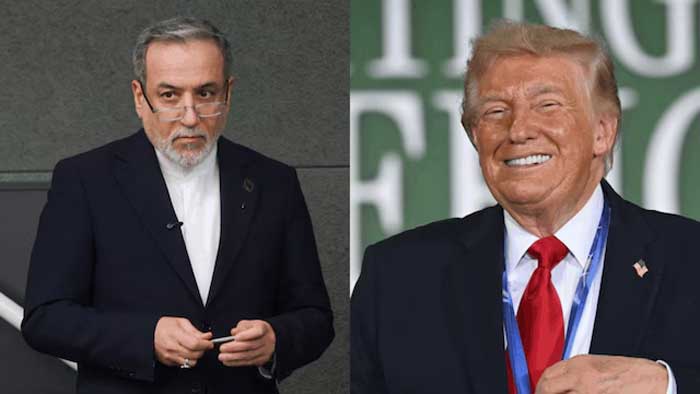
A fragile ceasefire between the United States and Iran has come under renewed pressure after both sides exchanged attacks in the Persian Gulf just days after signing a Pakistan-brokered Memorandum of Understanding (MoU) on June 17.
The latest dispute centres around Article 5 of the agreement, which outlines the reopening and management of the Strait of Hormuz — one of the world’s most important shipping routes. Washington and Tehran have accused each other of violating the clause, exposing major differences over how the agreement should be implemented.
The escalation involved attacks on commercial vessels, US strikes on Iranian targets and Iran’s retaliatory actions against American positions in the Gulf, raising questions over whether the MoU can survive.
What Article 5 of the US-Iran MoU says
Article 5 focuses on restoring commercial movement through the Strait of Hormuz, a key waterway through which around one-fifth of global oil and liquefied natural gas supplies pass during normal operations.
Under the agreement, Iran agreed to ensure the safe passage of commercial vessels without transit charges for 60 days. Tehran also committed to removing military and technical barriers, including mines, within 30 days to help restore shipping activity.
The clause further states that Iran would hold talks with Oman and other Gulf coastal nations on the future administration and maritime services of the strait, while respecting international law and the rights of neighbouring states.
Why the agreement has become controversial
Despite signing the same document, Iran and the US now have conflicting interpretations of Article 5.
Iran’s position
Tehran argues that the agreement gives Iran the primary responsibility for reopening and managing the Strait of Hormuz. Iranian officials insist that commercial ships should follow a northern route closer to Iran’s coastline and have rejected efforts to create alternative routes near Oman.
However, several ships have recently used the southern side of the waterway near Oman instead. Iran claims such moves violate the spirit of the agreement and could delay the full reopening of the strait.
Iranian Foreign Minister Abbas Araghchi warned that creating separate arrangements would increase tensions.
“Any attempt to adopt new or separate arrangements compared to what is underway by the Islamic Republic of Iran will only lead to more complicated situations and delays in the reopening of the Strait of Hormuz,” he said.
Araghchi also said that responsibility for managing the waterway belongs only to Iran.
“This responsibility rests on the Islamic Republic of Iran. There is no other party or state in this respect,” he said, adding that outside intervention could worsen the situation.
US position
The United States, according to analysts, appears to be attempting to reduce Iranian control over the process.
Hassan Ahmadian, an associate professor at the University of Tehran, said Washington was seeking a different arrangement despite having signed the MoU.
“The United States wants different arrangements in place as opposed to the MoU that it itself signed,” Ahmadian said.
He accused Washington of trying to move away from the agreement while still expecting Iran to fulfil its commitments.
How the latest escalation started
Tensions increased after commercial ships came under attack in the Strait of Hormuz.
A Singapore-flagged vessel, Ever Lovely, was targeted on Friday, followed by an attack on the Panama-flagged Kiku the next day.
The US blamed Iran for threatening commercial shipping and carried out strikes on Iranian military facilities.
Iran denied responsibility for the initial attacks but later retaliated by targeting US military locations in Kuwait and Bahrain.
Iran’s Revolutionary Guard said only the northern shipping route through Iranian waters was authorised. Maritime monitoring reports indicated that several tankers changed course or turned back following the warning, contributing to a major drop in shipping activity through the strait.
Araghchi accused the US strikes of violating both the United Nations Charter and the MoU.
US President Donald Trump defended the operation, saying American forces targeted Iranian missile, drone and radar facilities after Tehran allegedly breached the ceasefire.
The dispute over Article 5 has now become the biggest test of the US-Iran agreement, with the future of one of the world’s most critical energy routes hanging in the balance.
Comments are closed.