
Sonia Gandhi’s memoir offers rare personal insights but takes a guarded approach to political controversies

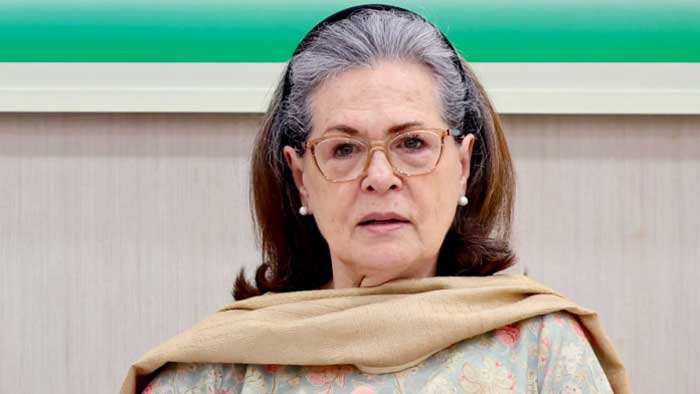
Since arriving in India on a cold January morning nearly six decades ago and marrying Rajiv Gandhi the following month, Sonia Gandhi’s life within the Nehru-Gandhi family has attracted considerable public curiosity. Yet, apart from carefully chosen glimpses shared by her and the family, she has largely kept her private life away from public scrutiny.
In her recently released memoir, Belonging: A Journey of Love, the 79-year-old Italian-born politician offers an unusually intimate account of her personal journey. The daughter-in-law of former Prime Minister Indira Gandhi, who made India her home and eventually became one of the country’s most influential political figures, has long been both admired and criticised.
The memoir, however, appears to be divided into two distinct narratives. One is a warm, candid and accessible account of her personal life, while the other is a cautious and selective retelling of her political journey.
Her recollections of growing up in a middle-class family in Orbassano, Italy, appear aimed at presenting herself as an ordinary and vulnerable woman rather than an entitled outsider. For the first time, she also opens up about her battle with cancer.
But when addressing politics, Sonia, the Congress party’s longest-serving president, remains guarded. Several episodes are presented selectively, with uncomfortable silences and accounts that sometimes offer only one perspective.
Emergency: Sanjay Gandhi’s influence and Indira’s decisions
Sonia reveals that Rajiv Gandhi had favoured Indira Gandhi resigning as prime minister and seeking a fresh mandate after the Allahabad High Court invalidated her election. However, Indira chose to follow the advice of her younger son, Sanjay Gandhi, who opposed her resignation.
Sonia’s account largely places responsibility for the excesses of the Emergency on Sanjay, arguing that he wielded considerable influence despite holding no constitutional position.
She writes that Sanjay “had a significant role in decision-making during the Emergency period, despite lacking a constitutional locus standi for some of his political interventions”.
According to Sonia, Rajiv repeatedly tried to alert his mother to public dissatisfaction. As an airline pilot, he would share complaints and feedback he heard from passengers during his journeys.
She recalls that Rajiv believed his mother was increasingly influenced by Sanjay’s aggressive political approach and felt isolated and politically cornered.
On one occasion, Indira reportedly rebuked Rajiv for being naive in trusting the complaints he brought to her.
Sonia also recounts a family confrontation following the Congress party’s crushing defeat in the 1977 Lok Sabha elections.
During a discussion in Sanjay’s room, Rajiv reportedly confronted his younger brother, saying: “I cannot forgive you, Sanjay — you have brought Ma to this pass.”
Indira reportedly agreed, accusing Sanjay of issuing orders without her knowledge. Sanjay’s wife, Maneka Gandhi, intervened, prompting an angry response from Indira.
However, Sonia makes no reference to Sanjay’s contribution to the Congress party’s sweeping return to power in the 1980 general elections.
1984 anti-Sikh riots: Sonia defends Rajiv’s role
Sonia’s account of the anti-Sikh violence that followed Indira Gandhi’s assassination in 1984 is another significant section of the memoir.
Rajiv Gandhi’s infamous remark that “when a big tree falls, the earth shakes” has remained controversial. Sonia, however, highlights his televised appeal for peace.
She insists that Rajiv could not have authorised the violence against innocent Sikhs.
“One thing I am certain of: Rajiv himself, just and compassionate to his core, could not in any way have authorised those heinous acts on innocent men, women, and children,” she writes.
At the same time, she acknowledges that the country’s governance machinery was under severe strain following Indira’s assassination.
She concedes that some officials may have deliberately ignored the violence, while others may even have encouraged angry crowds.
Her account states that the government machinery had undergone “a time of cataclysmic upheaval in which the structure of government had come under strain — perhaps even broken down”.
The admission acknowledges serious administrative failures, even as she seeks to distance Rajiv personally from the violence.
Bhopal gas tragedy and Bofors: Significant omissions
The memoir is notably silent on the Bhopal gas tragedy and the controversial departure of Warren Anderson, then chief executive of Union Carbide, from India. The episode continues to feature in political attacks against Rajiv Gandhi by the BJP.
On the Bofors controversy, Sonia does address allegations of bribery against her husband but makes no mention of Italian businessman Ottavio Quattrocchi, whose alleged links with the Gandhi family have remained politically contentious.
She refers to Rajiv’s explanations and the Delhi High Court’s 2004 decision dismissing the charges against him.
However, she argues that repeated appeals kept the controversy alive.
“Bofors” remains a convenient political slogan for the Congress’s opponents, particularly during election campaigns, she writes.
Shah Bano and Babri Masjid: Sonia’s account of two contentious decisions
Sonia provides a personal account of the Shah Bano controversy, revealing that she had strongly questioned Rajiv over his government’s handling of the issue.
She recalls confronting him after newspaper reports accused him of compromising Muslim women’s interests.
“I argued with him (Rajiv) and questioned him: ‘The papers are accusing you of sacrificing Muslim women’s interests. What’s going on? Why are you letting this happen?’”
Rajiv reportedly responded that he was attempting to handle a complicated situation fairly and questioned whether she doubted his commitment to women’s rights.
According to Sonia, her husband wanted to protect Shah Bano and other Muslim women without undermining the broader framework of Muslim Personal Law.
She defends the eventual compromise, arguing that it balanced religious considerations with gender justice and provided Muslim women with a more reasonable financial settlement than the monthly Rs 179.20 awarded to Shah Bano by the court.
On the Babri Masjid controversy, Sonia offers a different account of the events surrounding the opening of its locks in February 1986.
While some Congress leaders have acknowledged the Rajiv government’s role in allowing the locks to be opened, Sonia attributes the decision to the Faizabad district court.
She writes that the court “suddenly altered the status quo and ordered the unlocking of the gates”.
She also describes the speed with which the mosque was opened and worshippers were allowed inside as suspicious.
Notably, the Congress was in power both at the Centre and in Uttar Pradesh at the time.
Narasimha Rao and Sitaram Kesri: A selective account of Congress history
Sonia also offers limited insights into her relationships with two senior Congress leaders: former prime minister P V Narasimha Rao and former party president Sitaram Kesri.
Rao became the first prime minister outside the Nehru-Gandhi family to complete a full five-year term after Rajiv Gandhi’s assassination.
Sonia rejects suggestions that their relationship was consistently hostile. She says their only significant disagreement concerned her public dissatisfaction with the slow progress of the investigation into Rajiv’s assassination.
However, the memoir does not address the controversial circumstances surrounding Rao’s funeral in December 2004, when his body was not allowed inside the Congress headquarters at 24, Akbar Road in New Delhi. His cortege reportedly had to wait outside the premises.
Her account of Kesri’s departure from the Congress presidency in 1998 is similarly restrained.
Kesri was replaced after the Congress leadership decided that a change was necessary. Sonia writes that the Congress Working Committee unanimously supported the decision and that Kesri “was made to step down”.
She recalls that after taking over as party president on March 14, 1998, she immediately drove to Kesri’s residence and touched his feet as a mark of respect.
Kesri was reportedly taken aback but blessed her with tears in his eyes.
The episode is presented as a personal gesture of respect, with little discussion of the political circumstances surrounding his removal.
The Rahul Gandhi episode: Another conspicuous silence
Another significant omission concerns the controversy surrounding Rahul Gandhi in 2013, which became a major embarrassment for the Manmohan Singh-led UPA government.
At the time, the government had introduced an ordinance seeking to overturn the consequences of a Supreme Court judgment that disqualified convicted lawmakers from holding their seats.
Rahul publicly opposed the ordinance and dramatically tore up a copy of it at a press conference, undermining his own government’s position.
Sonia makes no mention of the episode in the memoir.
Ultimately, Belonging: A Journey of Love offers a rare window into Sonia Gandhi’s private world, her relationship with Rajiv and her experiences within one of India’s most prominent political families.
But its treatment of political controversies is considerably more restrained. While it revisits several defining moments in the Congress party’s history, important questions remain unanswered, and some episodes receive explanations that largely reflect the Gandhi family’s perspective.
Comments are closed, but trackbacks and pingbacks are open.