
Modi’s office summons telecom secretary over fake court orders used to block 129 websites

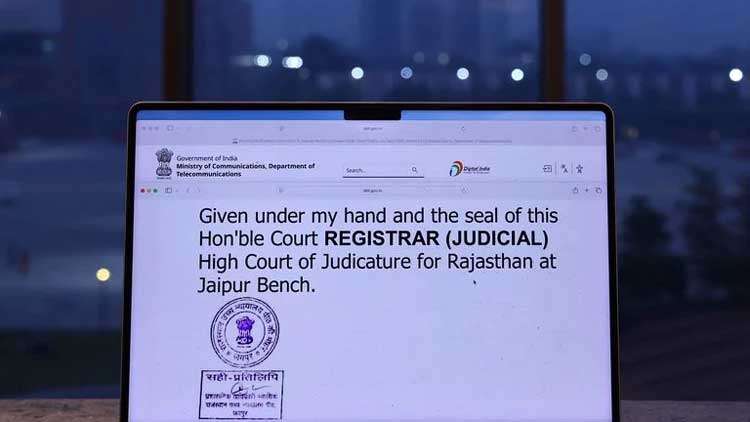
Indian Prime Minister Narendra Modi’s office summoned Telecommunications Secretary Amit Agrawal on Saturday to seek an explanation over the blocking of more than 100 websites on the basis of fraudulent court orders, two government sources told Reuters.
The move signals growing government scrutiny after Reuters reported on Wednesday that telecommunications officials had instructed internet service providers to block 129 illegal betting websites using fake High Court orders emailed by individuals posing as lawyers.
Although online betting is illegal in India, the revelations have raised concerns about weaknesses in the country’s website-blocking system and the possibility of fabricated court documents being used to censor legitimate online platforms.
The incident has prompted a criminal investigation by state police into suspected forgery and cheating by unidentified individuals.
According to the two government officials, Modi’s office asked Agrawal to appear and explain the lapse, cutting short his visit to another state.
Agrawal is the senior-most bureaucrat in the Department of Telecommunications, which oversees major telecom operators and internet service providers.
“The action taken by the Department of Telecommunications against betting accounts was carried out through the relevant field officers,” one of the officials said.
Agrawal and the telecommunications ministry did not respond to Reuters’ requests for comment. Modi’s office also did not respond.
Fake court documents raise concerns
The controversy comes amid growing international concerns about fabricated legal judgments and citations, including those generated using artificial intelligence.
In July, India’s Supreme Court overturned tribunal orders that had relied on non-existent judicial precedents. In the United States, a judge recently disqualified lawyers over the use of fabricated legal citations.
On Friday, Reuters reported that the telecommunications ministry had launched an internal investigation into the suspected fraud. Police have also sought records from the ministry as part of their criminal investigation.
Reuters found that two purported state High Court orders were fraudulent, according to police statements and the relevant court registry.
The documents contained fabricated court logos, seals and QR codes.
For several months, the orders were publicly available on the Department of Telecommunications’ website, alongside correspondence showing officials instructing internet providers to take down the targeted websites.
As of Saturday, one of the fake court orders remained accessible on the government website, while the other had been removed.
Comments are closed, but trackbacks and pingbacks are open.