
US raises alarm after China’s Pacific missile test, says Beijing’s nuclear buildup threatens global stability

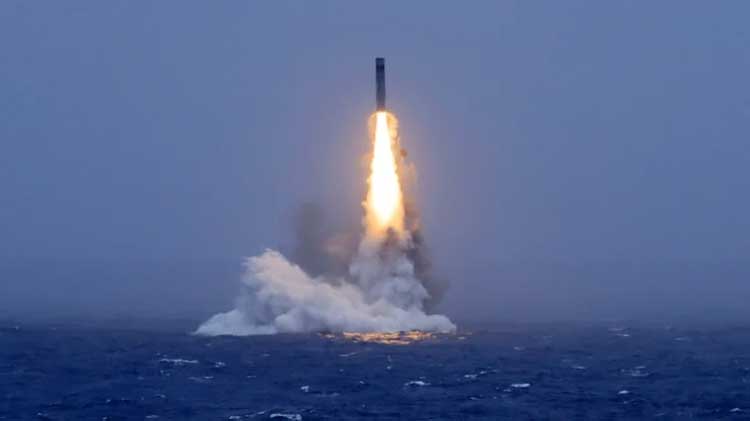
The United States has expressed serious concern over China’s latest missile test, warning that Beijing’s rapidly expanding nuclear arsenal is undermining global non-proliferation efforts and raising security risks across the Indo-Pacific.
China test-fired a dummy warhead into the Pacific Ocean on Monday, marking its second known intercontinental ballistic missile (ICBM) launch over international waters in two years. Analysts say the test highlights Beijing’s growing ability to strike the US mainland as part of its accelerated military modernization.
US State Department spokesperson Tommy Pigott accused China of moving in the opposite direction from global efforts to curb nuclear proliferation, calling its “rapid and opaque” nuclear weapons expansion a matter of concern for the region and the world.
Washington also urged Beijing to join meaningful arms control talks and establish a regular notification system for intercontinental ballistic missile and space launches. The appeal comes after the US allowed the New START treaty with Russia to lapse earlier this year while seeking a broader arms control framework that includes China.
According to New Zealand, China notified Pacific nations about the launch roughly two hours before the test, though it remains unclear whether the US received advance notice. Beijing described the launch as a routine part of its annual military training and said relevant countries had been informed beforehand.
Missile underscores China’s growing sea-based nuclear capability
Monitoring groups said the missile, reportedly launched from a nuclear submarine, landed near the Solomon Islands, a strategically important Pacific nation that signed a controversial security pact with China in 2022.
Experts said the test signals a significant leap in China’s sea-based nuclear deterrent. Lyle Morris of the Asia Society Policy Institute said the launch suggests China is moving toward a more survivable, longer-range submarine-based nuclear force capable of targeting the continental United States from waters close to China.
The test coincided with Australia and Fiji signing a new defence treaty aimed at strengthening regional security, though analysts believe the timing was likely coincidental.
Australia described the missile launch as destabilising, while Japan—having received prior notification—said it had urged China to reconsider the test and reiterated concerns over Beijing’s expanding military activities. Relations between Tokyo and Beijing have remained strained amid tensions over Taiwan.
Russia, meanwhile, defended China’s missile launch as a sovereign right, arguing that Beijing was not threatening any country through the test.
Comments are closed, but trackbacks and pingbacks are open.