
US-Iran Peace Deal Hinges on UN Sanctions Battle as 60-Day Clock Starts

The memorandum of understanding signed by the United States and Iran on June 14, ending more than three months of conflict and opening a 60-day negotiating window, was welcomed internationally as a breakthrough. Yet a central question remains unresolved: can Tehran secure the economic relief it seeks, and who has the authority to deliver it?
Under the agreement, both sides committed to an immediate and permanent cessation of military operations, including in Lebanon, with a formal signing ceremony scheduled for June 19 in Switzerland. Iran agreed to halt uranium enrichment, while Washington pledged sanctions relief and access to billions of dollars in frozen Iranian assets, though most provisions remain contingent on a final accord.
Iranian media has reported a 14-point draft framework that includes the release of $24 billion in frozen assets during the negotiation period, although neither Tehran nor Washington has publicly confirmed the details.
The real challenge lies beyond bilateral commitments. Iranian officials have made clear that a key objective of the talks is the removal of all UN and International Atomic Energy Agency restrictions on the country. Achieving that goal would require navigating the contentious issue of UN “snapback” sanctions.
The mechanism, embedded in UN Security Council Resolution 2231 that endorsed the 2015 nuclear deal, allows previous UN sanctions to be automatically restored if Iran is found in significant violation of its commitments. France, Germany and the United Kingdom invoked the provision in August 2025, leading to the automatic reimposition of sanctions a month later after the Security Council failed to preserve sanctions relief.
The restored measures target Iran’s nuclear and missile programs, impose asset freezes and travel bans, and restrict Iranian banks’ access to the global financial system. Crucially, these sanctions remain unaffected by the new US-Iran agreement.
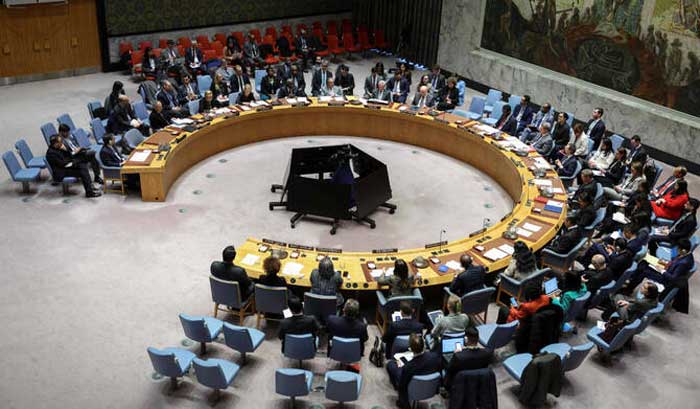
Analysts note that only the UN Security Council can reverse sanctions reimposed through the snapback process. While Washington can independently ease its own sanctions, lifting UN restrictions requires broad international consensus, including support—or at least no veto—from the council’s five permanent members.
That consensus appears distant. Russia and China have long argued that the European powers lacked the legal authority to trigger the snapback mechanism, maintaining that Resolution 2231 and the 2015 nuclear agreement effectively expired in October 2025. Western governments reject that interpretation and continue to treat the sanctions as fully restored.
The dispute has created a fragmented sanctions regime. While some countries continue trade with Iran without observing the reimposed restrictions, many Western nations enforce them, limiting Tehran’s access to global markets and investment.
As negotiations continue, the scope of economic relief Iran can realistically obtain remains one of the most significant unresolved issues. Although the US may have room to ease bilateral sanctions and unlock frozen funds, broader relief from UN restrictions would require a diplomatic breakthrough at the Security Council.
Iran has already indicated it wants any final agreement to be endorsed by a new Security Council resolution, seeking stronger international guarantees than those provided under the 2015 accord. Such a resolution could also remove the snapback sanctions, but only if major powers can bridge their deep legal and political divisions.
For now, the success of the peace process may depend not only on negotiations between Washington and Tehran, but also on whether the UN Security Council can find common ground on one of the most divisive issues in international diplomacy.
Comments are closed, but trackbacks and pingbacks are open.