
UN Rights Council Urges Taliban To End Restrictions On Women And Girls

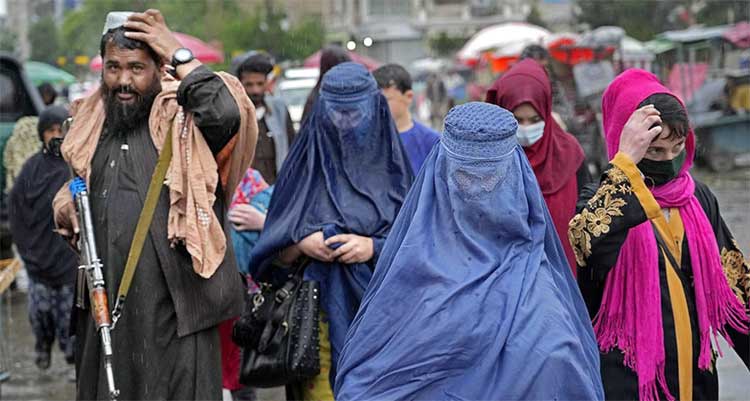
The UN Human Rights Council on Monday unanimously called on the Taliban to repeal policies and practices restricting the fundamental rights and freedoms of women and girls in Afghanistan, warning that the country’s institutionalised discrimination should “shock the conscience of humanity”.
The 47-member UN rights body adopted the resolution without a vote, expressing serious concern over what it described as the “grave, worsening, widespread and systematic oppression” of women and girls under Taliban rule.
The council condemned the Taliban’s institutionalisation of discrimination, segregation, domination and exclusion, saying the policies had caused widespread harm and entrenched restrictions on women’s rights.
The Taliban returned to power in Afghanistan in 2021 and introduced a strict interpretation of Islamic law. Its government remains largely isolated internationally amid criticism over its human rights record.
Women and girls have been particularly affected by the restrictions. Women are barred from many workplaces and public spaces, including parks, while girls are prohibited from continuing their education beyond the age of 12.
‘Conformity, Fear And Exclusion’
The council expressed deep concern over the “continuing, systematic, systemic and all-encompassing erosion” of women’s rights in Afghanistan.
It said human rights had come under sustained pressure in the country over the past five years, with the Taliban imposing an expanding network of edicts and institutional controls that has affected almost every aspect of public and private life.
According to the council, the measures have contributed to a society based on “ideological conformity, fear and exclusion”.
The resolution called on the Taliban to repeal policies and practices restricting the human rights and fundamental freedoms of women and girls, including their rights to peaceful assembly, education, employment and political participation.
The council also urged the international community to take human rights and fundamental freedoms into account when further engaging with stakeholders in Afghanistan.
It condemned discrimination against women and girls and reiterated that sexual slavery of boys, child marriage and forced marriage constitute human rights abuses.
The council also expressed concern over the suffering of the Afghan population and what it described as deeply entrenched impunity in the country.
The resolution was sponsored by 37 European countries, along with Canada and Chile. The council also extended the mandate of the UN independent special rapporteur on human rights in Afghanistan for another year.
Comments are closed, but trackbacks and pingbacks are open.