
Trump’s Russia Sanctions Waiver Sparks Bipartisan Backlash in Congress

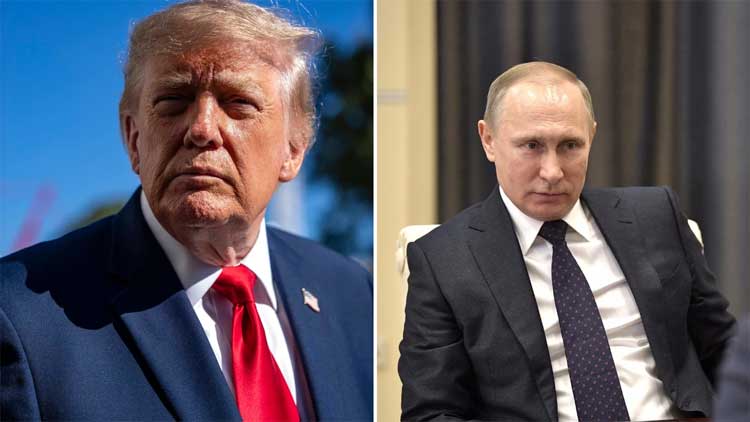
US President Donald Trump’s decision to indefinitely waive sanctions on Russia just days before they were due to take effect has triggered criticism from lawmakers across party lines, raising questions about Washington’s commitment to supporting Ukraine in its war against Moscow.
The executive order, issued late Friday, came after Congress overwhelmingly approved the bipartisan Lindsey Graham Russian Sanctions Act. The legislation was designed to increase economic pressure on Russia and penalise countries importing large quantities of Russian oil and energy products.
Republican and Democratic lawmakers criticised Trump’s decision, accusing the administration of undermining congressional authority and weakening efforts to curb Russian President Vladimir Putin’s war effort.
“I think it’s clear Russia is the aggressor, and we’ve got to do everything we can to put economic pressure on Russia,” Republican Senator Rick Scott of Florida told The Associated Press, adding that lifting the sanctions was not the first step he would have taken.
Senator Thom Tillis, a Republican from North Carolina, described the decision as “beyond irresponsible”. He questioned why the administration was not enforcing legislation that had passed the Senate by an 86-11 vote.
“It’s unconscionable that this administration is capitulating to a Russian dictator who illegally invaded Ukraine,” Tillis said in a social media post.
Republican Senator John Cornyn of Texas also criticised the move, saying the late Senator Lindsey Graham, who championed the sanctions legislation before his death earlier this summer, would have been appalled.
Senate Democratic leader Chuck Schumer accused Trump of providing economic relief to Moscow, while Democratic Senator Elizabeth Warren said the president was “thumbing his nose” at Congress and enabling Putin to continue Russia’s military campaign. Warren urged lawmakers to take action to reverse the decision.
Trump’s Diesel Deal With Putin Adds to Concerns
The sanctions controversy comes amid Trump’s announcement of a diesel supply deal with Russia, which he has presented as an effort to bring down sharply rising fuel prices in the United States.
The agreement has intensified concerns among lawmakers who believe Washington should be increasing economic pressure on Moscow rather than pursuing energy arrangements with it.
The issue has taken on added political significance ahead of the November 3 midterm elections, as affordability and fuel prices remain major concerns for American voters.
Trump said he was waiving the sanctions indefinitely, citing national security concerns. However, the decision has left lawmakers with limited immediate options because the House of Representatives and Senate are in recess until after Election Day.
Ukrainian President Volodymyr Zelensky, who has maintained ties with US lawmakers despite a difficult relationship with Trump, expressed hope that the sanctions could still be revived. He urged supporters to speak out in favour of maintaining pressure on Russia.
Ukraine is preparing for another difficult winter as Russian attacks on its energy infrastructure threaten electricity supplies and heating for households.
Congress Warned Trump Could Ignore the Law
The sanctions legislation took nearly a year of negotiations before Graham secured Trump’s agreement to the package. It was intended to impose steep tariffs on countries purchasing significant quantities of Russian oil and energy products, restricting revenue that helps finance Moscow’s war against Ukraine.
Zelensky watched from the Senate visitor gallery as lawmakers advanced the legislation following Graham’s death. However, critics had warned that Trump might not implement the law even after signing it a month earlier.
Last week, a bipartisan group of senators called on the administration to intensify enforcement against Russia, particularly targeting the so-called “shadow fleet” of tankers Moscow uses to transport oil and circumvent sanctions.
The lawmakers pointed out that most of the legislation’s provisions were scheduled to take effect on Sunday. Trump’s decision to waive the measures instead has prompted fresh demands for congressional intervention.
Representative Gregory Meeks of New York, the ranking Democrat on the House Foreign Affairs Committee, introduced legislation on Friday seeking to block the diesel deal with Putin.
Meeks had previously opposed the Graham sanctions bill, warning that Trump could disregard its provisions.
“At a time when the United States should be increasing pressure on the Kremlin, Donald Trump is cozying up to Putin and striking self-enriching deals instead of standing with Ukraine,” Meeks said.
He described the agreement as “corrupt” and argued that it contradicted American principles.
On Saturday, Meeks reiterated that Congress had options to challenge the administration’s approach, saying lawmakers were “not helpless”.
Lindsey Graham’s Legacy Becomes Part of the Debate
The dispute has also drawn attention to the political legacy of Lindsey Graham, whose sanctions legislation was named after him.
Graham’s sister, Darline Graham of South Carolina, helped secure Senate passage of the bill after being appointed to fill her late brother’s seat by the state’s governor. She is now running against Democrat Annie Andrews in a closely contested race, with Trump expected to visit South Carolina next week to campaign.
Speaking at a campaign stop on Saturday, Darline Graham said she and Trump shared the goal of ending the war and reducing fuel prices.
She described the sanctions legislation as one of the tools available to achieve those objectives but said the decision to use it rested with the president.
“Personally, I would choose to keep the pressure on Russia,” she said, adding that she did not trust Putin or the Russian government.
Darline Graham also acknowledged that she and Trump could disagree on policy while maintaining their political relationship, drawing a parallel with her brother’s history of occasionally differing with the president.
The sanctions waiver now leaves the administration facing criticism from lawmakers in both parties, while congressional efforts to challenge the decision are likely to remain constrained until the House and Senate return from recess.
Comments are closed, but trackbacks and pingbacks are open.