
Bangladesh Battles World’s Worst Measles Outbreak, With Over 1,100 Deaths Reported

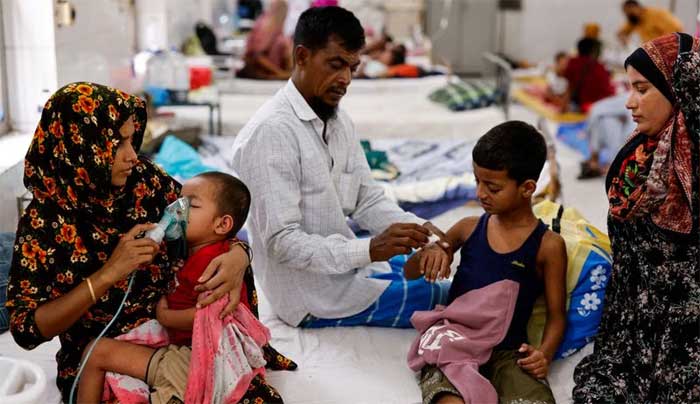
Bangladesh is struggling to contain the world’s worst measles outbreak, with more than 1,100 reported deaths, as declining vaccination coverage, gaps in health data and shortcomings in emergency immunisation efforts leave millions of children vulnerable.
The World Health Organization (WHO) reported 202,000 suspected measles cases in Bangladesh between mid-March and October 9, including 22,000 laboratory-confirmed infections. The country recorded more suspected cases than any other nation during the period, according to the agency.
At least 1,147 people have died, with children under five accounting for 94% of reported deaths, the WHO said.
The outbreak has highlighted the dangers of vaccination coverage falling below the 95% threshold that the WHO says is needed to prevent measles outbreaks. Bangladesh had made substantial progress in routine immunisation in previous years, but coverage declined in 2025.
A Reuters review of WHO documents, alongside interviews with scientists, healthcare workers and officials, found that the country’s response was hampered by incomplete data, inadequate preparedness and difficulties reaching parents and children in remote communities.
“This is a real warning to every country,” said Mark Jit, a WHO vaccine adviser and professor at New York University’s School of Global Public Health.
He said preventing an outbreak through vaccination was easier, cheaper and safer than responding after infections had spread.
“The response will stop the outbreak eventually, but in the meantime, many will have had measles, and some will have died,” he added.
Ziauddin Hyder, special assistant on health affairs to Prime Minister Tarique Rahman, told Reuters in September that the government was doing everything possible to end the outbreak. The government did not respond to further questions sent in October.
Children Die as Vaccination Efforts Fail to Reach Remote Villages
The northeastern Sylhet region, one of Bangladesh’s worst-affected areas, has witnessed the devastating consequences of gaps in immunisation.
Two-year-old Arman Hossain died in July after being admitted to hospital for measles treatment. His family sold its three-wheeled auto-rickshaw to pay for his care. Arman had not been vaccinated, although his four-year-old sister survived the infection.
His father, Amin Mia, 26, said health workers had failed to visit their remote village in time to offer vaccinations.
“They came only after I buried my son,” he said.
In Chhatak, another town in Sylhet, nine-month-old Labiba Akter died of measles in June without having been vaccinated. She could have received a dose in April, when an emergency campaign lowered the eligible vaccination age from nine months to six months.
“No health worker came to tell us,” her father, carpenter Humayun Rashid, said.
Measles typically kills two or three people per 1,000 cases, according to the WHO. The risk can be considerably higher in poorer countries, where malnutrition and limited access to healthcare can worsen outcomes.
Despite an emergency vaccination drive, infections continued to rise. In May, Health Minister Sardar Md. Sakhawat Husain said cases in outbreak hotspots had fallen “almost to zero”.
However, Bangladesh recorded an average of 1,198 new measles cases daily in September, the highest level since May.
Political Turmoil Contributed to Falling Vaccination Coverage
Bangladesh had previously been considered a vaccination success story. Estimates from the WHO and UNICEF put first-dose measles vaccination coverage at 96% in 2024, while second-dose coverage stood at 93%.
The second dose is important because a small proportion of children do not develop immunity after their first vaccination.
However, political upheaval following protests that ended Sheikh Hasina’s 15-year rule disrupted healthcare services. Health workers went on strike, vaccine orders were delayed and follow-up vaccinations linked to routine immunisation programmes were interrupted.
A WHO and UNICEF report published in July estimated that first-dose coverage fell to 90% in 2025, while second-dose coverage declined to 86%.
Both figures were below the 95% coverage level associated with preventing measles outbreaks.
The report also raised concerns about the reliability of official vaccination data between 2023 and 2025. Preliminary figures sometimes indicated that the number of children vaccinated exceeded 100% of the target population, suggesting possible errors in counting doses or estimating the number of eligible children.
While vaccine hesitancy is increasing in some wealthier countries, experts said Bangladesh faces more immediate challenges involving access to vaccination services, public awareness and gaps in healthcare delivery.
Emergency Vaccination Campaign Missed Millions of Children
Bangladesh initially appeared to be making progress after launching an emergency vaccination programme in April. Nearly 20 million children received vaccinations in April and May, and the government said it had covered all children aged six months to five years in the target group.
However, subsequent data suggested that millions of children may have been missed.
A separate routine health intervention in June had a target list containing four million more children than the measles campaign, despite covering the same age group.
Hyder acknowledged the discrepancy in an interview with Reuters on September 14, attributing missed vaccinations partly to parental reluctance and children being unwell.
Documents reviewed by Reuters also revealed concerns about the campaign’s preparation.
Meeting minutes from April 19 showed that the government conducted only one round of readiness checks before launching the emergency programme, rather than the four rounds typically undertaken. The checks assess vaccine storage facilities, cold-chain capacity and estimates of the number of children requiring immunisation.
The decision to conduct fewer checks was attributed to time constraints. The single round suggested that most, but not all, districts were ready for the campaign.
Professor Mahmudur Rahman, an epidemiologist and chair of Bangladesh’s National Verification Committee for Measles and Rubella Elimination, warned that inadequate preparation disproportionately affects vulnerable communities.
“When preparedness checks are not done properly, it is often the poorest and hardest-to-reach children who miss out on vaccination and pay the price,” he said.
Hyder said the April campaign had been launched within four weeks. Tajul Islam Abdul Bari, who led Bangladesh’s immunisation programme until 2017, said such campaigns generally require months of planning.
Health Officials Identify Persistent Vaccination Gaps
By August, officials had identified continuing weaknesses in the emergency campaign.
Minutes from a meeting involving the government, the WHO and other health partners showed that the proportion of children with confirmed measles infections who had not been vaccinated remained virtually unchanged before and after the campaign.
The figure increased from 82% before the campaign to 85% afterwards, highlighting persistent gaps in coverage.
The WHO did not respond to questions about the April and August meetings. However, its deputy representative to Bangladesh, Dr Rajesh Narwal, said the organisation remained committed to helping the government vaccinate every child at risk.
“Routine immunization must become more effective and resilient so that these gaps do not develop again,” he said.
In Sylhet, where official records show 180 child deaths, eight of 16 families interviewed by Reuters in September said they had not seen health workers offering vaccinations. At least six families said health workers visited their communities only after a child had died of measles.
At the end of September, the government launched another vaccination campaign targeting 3.4 million children who had previously been missed.
“We will involve people across villages so that no child is left behind,” the health minister said at a news conference.
Unregistered Children and Staff Shortages Complicate Response
Reaching every eligible child remains a major challenge for Bangladesh’s healthcare system.
UNICEF and the Bangladesh Bureau of Statistics estimate that as many as 40% of children are not registered. Government data also indicate that roughly one-third of health worker positions remain vacant.
These gaps make it harder for authorities to identify eligible children, track immunisation coverage and ensure that vaccines reach remote communities.
Health experts have also called for vaccination efforts to be expanded to children older than five. According to the WHO, this age group accounts for about one-third of measles cases.
Meanwhile, Bangladeshi scientists are investigating why immunity appears to wane faster than expected in infants up to around six months old, who are generally protected initially by antibodies received from their mothers.
Hospitals Struggle as Measles and Dengue Put Pressure on Healthcare
Alongside vaccination, the WHO has stressed the importance of timely medical treatment for infected children.
However, Bangladesh’s healthcare system is under additional pressure from a dengue epidemic.
During a September visit by Reuters to Shahid Shamsuddin Ahmed Hospital in Sylhet, a 100-bed facility treating measles patients, every ward appeared overwhelmed. The hospital had 178 patients admitted on the day of the visit.
The situation underscores the challenges facing Bangladesh as it attempts to control the outbreak while providing care for critically ill children.
The country’s experience also highlights a broader public health lesson: high vaccination coverage, reliable population data, adequate staffing and effective outreach are essential to preventing outbreaks of diseases that can be controlled through immunisation.
Comments are closed, but trackbacks and pingbacks are open.