
Trump’s IMEC Endorsement: Why India-Middle East-Europe Corridor Faces A Geopolitical Test

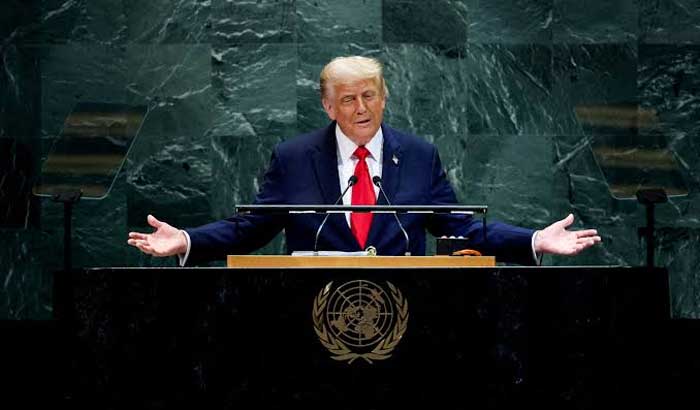
US President Donald Trump’s endorsement of the India-Middle East-Europe Economic Corridor (IMEC) on the sidelines of the ongoing United Nations General Assembly comes about 20 days after he praised a media report suggesting that Syria could emerge as a route for transporting Gulf oil and gas to the Mediterranean.
The renewed focus on IMEC comes amid continuing efforts to develop alternative trade and energy routes across West Asia, where geopolitical tensions have repeatedly exposed the vulnerabilities of traditional chokepoints.
IMEC Vs Syria Corridor
Some Western analysts and think tanks have viewed Syria as a potential alternative route for moving Gulf energy supplies towards the Mediterranean. However, IMEC offers a broader connectivity framework linking India, the Gulf, the Middle East and Europe.
The proposed corridor would connect energy-producing Gulf states with Indian refineries and consumers in India and Europe. A major question surrounding any Syria-based route, meanwhile, is the political and security stability required to support large-scale cross-border infrastructure.
How IMEC Is Planned To Work
The IMEC plan envisages a multimodal network connecting India with Europe through the Gulf and West Asia.
The proposed route would connect India’s Mundra port with the UAE’s Fujairah port by sea. From the Gulf, the network would extend through Saudi Arabia and Jordan to Israel, with rail infrastructure forming a key component before goods and potentially energy supplies move towards Europe through Mediterranean ports.
Ships from Haifa would connect the network with European destinations, including Naples and Marseille.
One of the corridor’s strategic attractions is its potential to provide an alternative to established routes through the Strait of Hormuz and the Suez Canal-Red Sea corridor.
Fujairah is located outside the Strait of Hormuz on the Gulf of Oman, giving it particular strategic importance for efforts to diversify Gulf energy and trade routes. The UAE port has also been targeted amid regional tensions.
Saudi Arabia Is Central To IMEC
Saudi Arabia remains a crucial component of the IMEC framework because of its geographic position between the Gulf and the Mediterranean.
The wider geopolitical relationship between Saudi Arabia and Israel has also been closely linked to discussions about regional connectivity. The Abraham Accords, which normalised relations between Israel and several Arab states, have raised expectations about further regional economic integration.
Trump has previously sought closer Saudi-US ties, including discussions involving civil nuclear cooperation and defence arrangements.
The October 7, 2023 Hamas attack on Israel and the subsequent Gaza war, however, dramatically altered the regional diplomatic environment and complicated prospects for further normalisation between Saudi Arabia and Israel.
New Geopolitical Challenge
IMEC also faces a changing regional security landscape.
Saudi Arabia has strengthened its defence relationship with Turkey and Pakistan, while both Ankara and Islamabad have maintained positions critical of Israel. The emerging security arrangements involving the three countries have added another dimension to the geopolitical calculations surrounding regional connectivity.
For Washington, maintaining cooperation among key Gulf states while managing relations involving Israel, Iran and other regional powers remains an important strategic challenge.
The broader contest for influence in West Asia also involves China, which has expanded its economic and diplomatic engagement across the region.
India-UAE Ties Strengthen IMEC’s Eastern Leg
India’s expanding relationship with the UAE is another important element in the IMEC equation.
New Delhi and Abu Dhabi have deepened cooperation in trade, investment, energy, defence and food security. The UAE has also invested in India’s strategic oil reserves, while both countries have expanded economic cooperation and explored greater use of local currencies in bilateral trade.
Defence ties have also grown, with the two countries increasing cooperation and working with compatible military platforms.
The close political relationship between the leaderships of India and the UAE has further strengthened bilateral ties.
IMEC’s Road Ahead
IMEC was conceived as a major connectivity initiative linking India, the Middle East and Europe, but turning the vision into an operational corridor will require sustained political cooperation, infrastructure investment and regional security.
Saudi Arabia’s role will be particularly important, given its geographic position and relationship with both the Gulf and the wider Arab world.
At the same time, the corridor will have to navigate tensions involving Iran and its regional allies, including the Houthis and Hezbollah, as well as the unresolved Israeli-Palestinian conflict.
Trump’s endorsement has therefore brought renewed attention to IMEC at a time when the security of energy and trade routes across West Asia remains a major international concern. Whether the project progresses rapidly will depend not only on infrastructure but also on the region’s evolving diplomatic and security landscape.
Comments are closed, but trackbacks and pingbacks are open.