
Trump Eases Beef Import Tariffs as Ranchers, GOP Senators Push Back

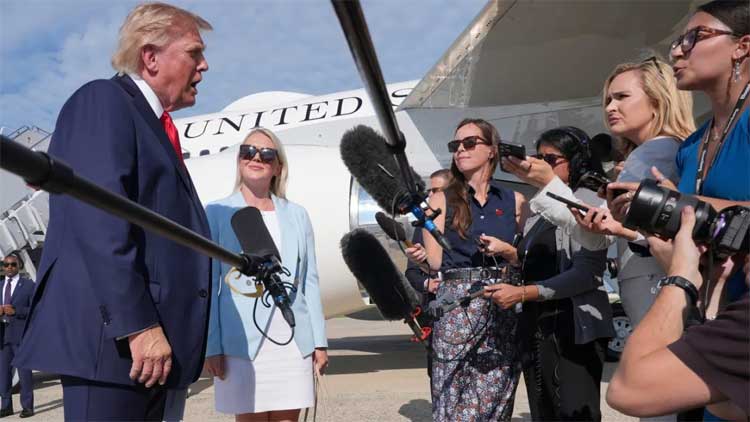
President Donald Trump on Friday announced plans to temporarily allow more beef imports into the US without triggering higher tariffs, drawing immediate criticism from cattle producers and Republican lawmakers from rural states.
US beef prices have reached record levels as the domestic cattle herd has fallen to its lowest level in decades, while consumer demand remains strong. Restrictions on cattle imports from Mexico, where livestock are facing a flesh-eating pest, have further tightened supplies. Trump has also imposed a 50% tariff on beef from Brazil, another major exporter.
The move comes as Trump faces mounting pressure to lower grocery costs ahead of November’s midterm elections. Ranchers, however, have warned that cheaper imported beef could drive down cattle prices and weaken incentives to rebuild the US herd.
“We all want lower grocery prices, but as I’ve said for months, we cannot do it at the expense of American producers,” Republican Senator Deb Fischer of Nebraska said, warning that a surge in foreign beef imports could hurt the livestock industry.
Senator Tim Sheehy of Montana said Trump’s “heart is in the right place,” but cautioned that imports could harm ranching families. Nebraska Senator Pete Ricketts also said short-term policy changes were not a substitute for long-term solutions.
Under Trump’s plan, up to 300,000 metric tons of ground beef could be imported over the next 90 days without triggering an additional “out of quota” tariff. Trump said the imported beef would be sold at 25% below current market prices, although he did not identify the countries involved.
A White House official said the imports would primarily consist of lean beef trimmings used in ground beef. The official, speaking anonymously because the plan has not yet been finalized, said Trump is expected to sign an executive order within two weeks.
Industry groups strongly opposed the move. US Cattlemen’s Association President Justin Tupper said the policy would weaken domestic cattle markets, while National Cattlemen’s Beef Association CEO Colin Woodall accused the administration of prioritising short-term messaging over long-term market stability.
Some agricultural economists, however, said the impact could be limited. Kansas State University professor Glynn Tonsor noted that 300,000 metric tons represents roughly 3% of annual US beef consumption, making the volume relatively small. Texas A&M professor David Anderson also questioned whether foreign suppliers could redirect such a large quantity of beef to the US within 90 days.
Trump said the measure would ultimately help expand the US cattle supply. Cattle industry representatives, however, argued that increased imports could have the opposite effect.
“Imports have been a major contributor to the decline in the US cattle inventory,” said Bill Bullard, CEO of R-CALF USA. “Using more imports today will exacerbate that decline and will prevent herd expansion.”
Comments are closed, but trackbacks and pingbacks are open.