
Thailand’s new long-stay visa is catching Indian attention — here’s what the DTV offers

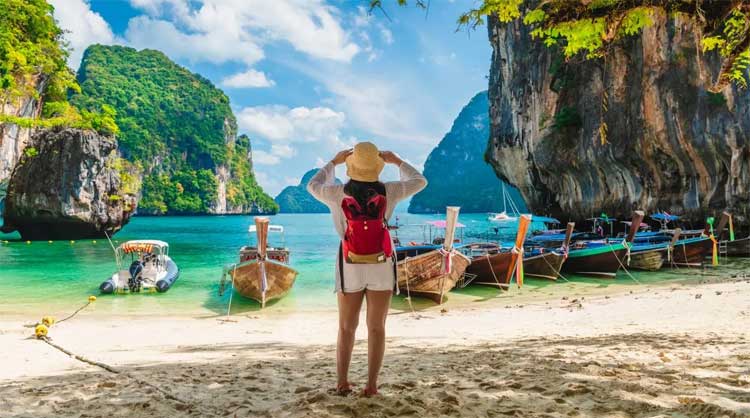
For Indians increasingly eyeing Southeast Asia for extended stays, remote work and affordable living, Thailand’s new Destination Thailand Visa (DTV) is fast becoming one of the most discussed travel options online.
Designed for digital nomads, remote workers, freelancers and long-term learners, the visa offers a legal pathway to live in Thailand for extended periods without relying on repeated tourist visa runs.
What is the Destination Thailand Visa?
The Destination Thailand Visa, or DTV, is a long-term multiple-entry visa that allows eligible foreigners to stay in Thailand for up to five years.
Unlike a standard tourist visa, it is specifically aimed at people who want to spend longer stretches in the country while working remotely, learning new skills, training or participating in approved cultural and lifestyle programmes.
The visa allows stays of up to 180 days per entry, with the option to extend for another 180 days — meaning a single stay could last nearly a year.
Because it is multiple-entry, holders can leave and re-enter Thailand several times during the five-year validity period.
Who can apply?
Thailand has opened the DTV to applicants from several countries, including India.
It is aimed at:
- Digital nomads and remote workers
- Freelancers serving overseas clients
- Entrepreneurs running foreign businesses
- Students in long-term courses or training programmes
- Wellness and medical tourists
- Participants in Thai cultural programmes
A key restriction: visa holders can work remotely for foreign employers or overseas clients, but cannot work for a Thai-registered company without obtaining a separate work permit.
Thailand’s ‘soft power’ strategy
One of the most talked-about aspects of the visa is Thailand’s use of “soft power” activities as an eligibility route.
Instead of limiting access only to remote workers, the country has widened the visa to include programmes that promote Thai culture and tourism.
Eligible activities include:
- Muay Thai training programmes
- Thai cooking courses
- Sports and fitness academies
- Wellness retreats and medical programmes
- Cultural workshops
- Certain conferences and organised events
That means applicants could qualify by enrolling in a long-term Muay Thai camp in Phuket or joining a culinary school in Bangkok.
Financial requirement
Applicants must demonstrate financial stability.
The benchmark is generally 500,000 Thai Baht in liquid funds — roughly ₹14–15 lakh depending on exchange rates.
Acceptable proof usually includes:
- Bank statements from the last 3–6 months
- Salary slips
- Employment contracts
- Fixed deposits or savings certificates
Thai authorities typically require official bank documentation.
Cryptocurrency holdings, stock portfolios and available credit limits are generally not accepted.
Documents needed
Requirements may vary slightly by embassy, but applicants usually need:
- A passport valid for at least six months
- Passport-sized photographs
- Financial proof
- Proof of remote work or overseas employment
- Documents related to Thai courses or programmes
- Accommodation proof
- Health insurance
- Police clearance certificate (in some cases)
Applicants joining specific programmes may also need confirmation letters or invitations.
How to apply
The process usually involves:
1. Check eligibility
Applicants must generally be at least 20 years old and meet financial and category requirements.
2. Gather documents
Prepare financial, employment and accommodation paperwork.
3. Apply online or through authorised centres
Applications can be submitted through Thailand’s e-visa system or authorised visa processing centres.
4. Pay the visa fee
For Indian applicants, the cost is typically around ₹25,000, subject to exchange rates and local charges.
5. Attend verification if required
Some applicants may be asked to visit a Thai visa centre for document checks or a brief interview.
6. Wait for processing
Processing times can range from a few business days to over a week.
After arriving in Thailand
Visa holders may need to comply with local immigration reporting rules, including residence registration requirements.
Those wishing to stay beyond the first 180 days can apply for an extension, usually for an additional fee of around 1,900 Thai Baht.
Why it matters for Indians
For many Indians, Thailand is already a preferred destination because of affordable flights, relatively low living costs, vibrant food culture, beaches and established remote-work communities.
The DTV changes the equation by offering something many long-stay travellers lacked before: a legitimate long-term legal framework to live in Thailand without repeated short-term visa renewals.
Comments are closed.