
Cameron Green’s steady hand helps KKR win, but ₹25.20 crore price tag keeps him in the red

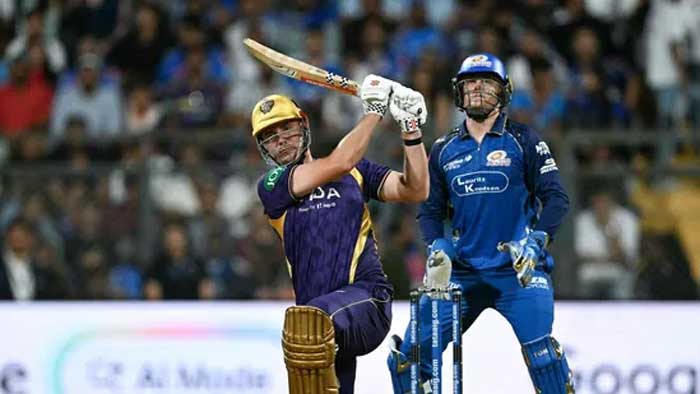
Finn Allen stole the spotlight with a stunning unbeaten century, powering Kolkata Knight Riders to a crushing eight-wicket win over Delhi Capitals.
His blistering 100 off 47 balls made light work of the 143-run target, with KKR reaching 147 for 2 in just 15 overs to strengthen their playoff push.
But beneath Allen’s fireworks was another story — the quieter yet revealing performance of Cameron Green.
The Australian all-rounder played a composed supporting role, finishing unbeaten on 33 off 27 balls while adding two sixes, bowling an over, and contributing in the field.
It was a solid all-round outing in cricketing terms.
Financially, however, it once again highlighted the challenge of justifying his massive ₹25.20 crore price tag.
Useful performance, narrow loss
According to the match valuation model, Green’s contribution in Match 51 generated an estimated worth of ₹1.67 crore.
His per-match cost, based on his season price, stood at ₹1.80 crore.
That left him with a marginal match loss of ₹0.13 crore.
The figures do not suggest a poor performance.
They underline the burden created by elite pricing.
For lower-cost players, a contribution like Green’s would likely generate healthy surplus value.
For a player carrying a ₹25.20 crore valuation, even productive performances must cross a much steeper break-even line.
Why his innings mattered
Green walked in at 31 for 2 during the chase.
While Allen launched a relentless assault from the other end, Green provided stability and ensured there was no collapse.
The pair’s unbeaten 116-run stand gave KKR complete control.
His innings was not flashy, but it was crucial.
A third wicket at that stage could have introduced pressure into what should have been a routine chase.
Green absorbed that risk and allowed Allen to continue attacking freely.
Season numbers still under pressure
Before Match 51, Green had generated ₹7.73 crore in value across nine matches against a charged cost of ₹16.20 crore.
That left him with:
- Season P/L: –₹8.47 crore
- Recovery rate: 47.69%
After the Delhi game:
- Total value rose to ₹9.39 crore
- Charged cost increased to ₹18 crore
- Season P/L slipped to –₹8.61 crore
The positive: his recovery rate improved to 52.17%
His average loss per match also narrowed from ₹0.94 crore to ₹0.86 crore.
The performance slowed the damage, but it did not reverse the season’s financial deficit.
One standout night still defines his season
Green’s best outing remains Match 25, where he generated ₹4.51 crore in value and delivered ₹2.75 crore in profit.
It remains his only clear surplus performance.
The rest of his campaign has consisted largely of useful contributions that fall short of fully repaying his cost.
Across 10 appearances, Green has scored 232 runs from 157 balls.
His batting has been his strongest area, while fielding has added consistent value.
Bowling, despite occasional contributions, remains his weakest return stream.
The real issue: cost conversion
KKR are not carrying an underperformer.
They are carrying a premium asset whose returns have not matched the scale of investment.
That distinction matters.
Against Delhi, Green helped shape the win.
He gave structure to the chase, ensured calm after early wickets, and contributed across departments.
Yet even that all-round effort could not push his ledger into profit.
Allen vs Green: two sides of KKR’s auction story
Allen’s century represented a valuation windfall — explosive returns on relatively low cost.
Green’s contribution was balance-sheet repair.
One player produced a dramatic surplus.
The other improved recovery metrics while remaining deep in negative territory.
For Green to reshape the season narrative, KKR will need more than support acts.
They need another performance closer to Match 25 — the kind that delivers undeniable, high-impact surplus.
His Delhi outing helped the team.
It improved his numbers.
But the ₹25.20 crore question remains unanswered.
Comments are closed.