
Syria secures first Green Climate Fund project to address water scarcity

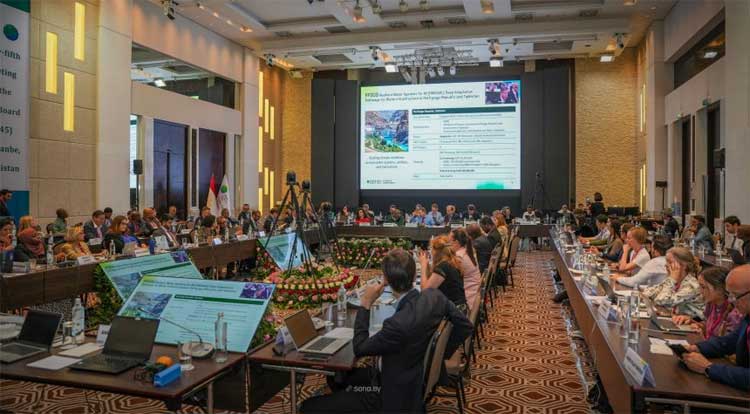
The Green Climate Fund (GCF) has approved $27.7 million in funding for Syria’s first national climate project, marking the country’s inaugural access to the global climate financing mechanism and targeting water scarcity in regions most vulnerable to climate change.
The funding was approved during the GCF’s 45th Board meeting in Dushanbe, Tajikistan, held from June 29 to July 3, Syria’s Ministry of Local Administration and Environment said on Friday.
A Syrian delegation, led by Deputy Minister for Environmental Affairs Youssef Sharaf, attended the meeting. According to the ministry, the project was developed over six months through technical studies conducted by its central directorates in coordination with development partners before being presented to the GCF Board.
Officials described the approval as a milestone that ends Syria’s absence from the Fund’s financing portfolio and opens a new phase of cooperation on climate action and sustainable development. They said it would also lay the groundwork for future nationally driven climate initiatives.
The project is designed to improve the management of scarce water resources, strengthen water security in both urban and rural communities, safeguard agriculture and livelihoods in the regions most affected by climate change, and enhance Syria’s ability to adapt to future climate-related shocks.
The ministry said the funding forms part of broader efforts to expand Syria’s access to international climate finance while strengthening partnerships with global institutions to support environmental recovery, climate adaptation and reconstruction.
Established in 2010 under the UN Framework Convention on Climate Change, the Green Climate Fund is the world’s largest financing mechanism for climate adaptation and mitigation projects in developing countries. Since its launch, it has approved more than $20 billion for projects across over 130 countries.
Syria’s successful application builds on earlier capacity-building efforts, including a 2021 programme implemented with the Food and Agriculture Organization (FAO) that strengthened the country’s National Designated Authority and helped prepare its climate profile. Syria’s Green Climate Fund Country Programme, published in 2023, identified agriculture, resilient cities, sustainable infrastructure and water security as key priorities.
Water scarcity has become one of Syria’s most pressing environmental challenges, driven by prolonged drought, declining rainfall and the increasing impacts of climate change.
Comments are closed, but trackbacks and pingbacks are open.