
Supreme Court Rejects Trump Administration’s Bid to Set Aside 20,000 California Mail Ballots

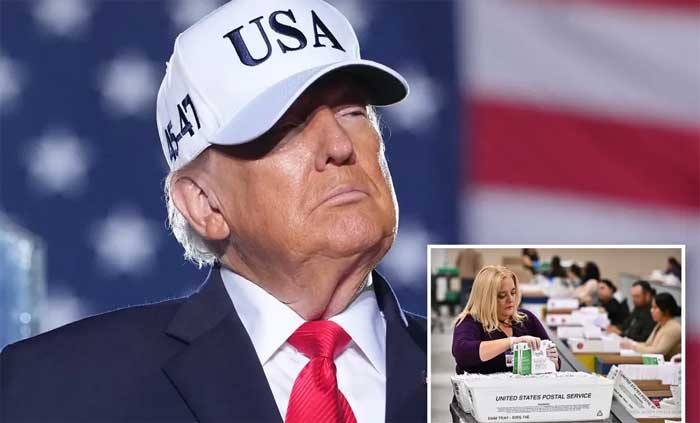
The US Supreme Court on Monday rejected the Trump administration’s emergency request to set aside roughly 20,000 mail ballots in California from voters it suspects may be noncitizens, delivering another legal setback to the administration on the eve of the final day of voting in the crucial midterm elections.
The administration had asked the justices to intervene while the citizenship status of the flagged voters was verified. California officials, however, argued that the federal government’s list contained significant inaccuracies and that separating the ballots could disenfranchise eligible voters.
The Supreme Court rejected the request without explaining its reasoning. No justice publicly dissented. The decision follows another setback for Trump in September, when the court declined to restrict mail-in voting nationwide.
The dispute is part of the administration’s broader effort to identify and remove suspected noncitizens from voter registration lists, despite noncitizen voting being extremely rare.
Lower courts have repeatedly sided with California. A district court judge previously rejected the Justice Department’s request, warning that setting aside the ballots could undermine the election and disenfranchise American citizens.
In a separate ruling on Monday, US District Chief Judge James Boasberg found that the administration’s last-minute demands of California election officials likely violated the Constitution’s Elections Clause, which gives states and Congress authority over election rules.
The administration maintained that temporarily segregating the ballots was a limited measure that would allow legitimate votes to be counted after verification. However, its efforts have faced mounting legal opposition, particularly over concerns about the reliability of the data and the timing of its demands.
During a court hearing, District Judge Trina Thompson questioned Justice Department attorney Kenneth Kao about reports of widespread inaccuracies in the federal government’s voter data.
“Would you agree there’s a high error rate?” Thompson asked.
“That’s a fair statement,” Kao responded, adding that the department wanted local election officials to help verify the voters’ eligibility.
Meanwhile, Bill Essayli, the federal prosecutor overseeing the Justice Department’s Los Angeles office, expressed confidence that the individuals identified on the list were not eligible to vote, while acknowledging that some errors might exist.
California has conducted early voting since October, with ballots mailed to all of its approximately 23 million registered voters. Hundreds of thousands have already been processed, making it practically impossible for election officials to identify and separate the disputed ballots at this late stage.
California Attorney General Rob Bonta described the administration’s appeal as an attempt to undermine elections and disregard the rule of law.
Earlier, US District Judge David O. Carter warned that allowing the federal government to discount votes based on unverified allegations would threaten democratic principles and public confidence in elections.
A 2-1 appeals court panel upheld Carter’s order. Two judges, appointed by Trump and former President Joe Biden respectively, supported California, while a third Trump-appointed judge dissented, arguing that the state’s refusal to separate the ballots could encourage violations of federal law.
The latest Supreme Court decision adds to a growing series of courtroom defeats for the administration’s efforts to challenge California’s handling of voter eligibility shortly before the midterm elections.
Comments are closed, but trackbacks and pingbacks are open.