
Spain builds 1,600-foot sea barrier after Ceuta migrant crisis kills 67

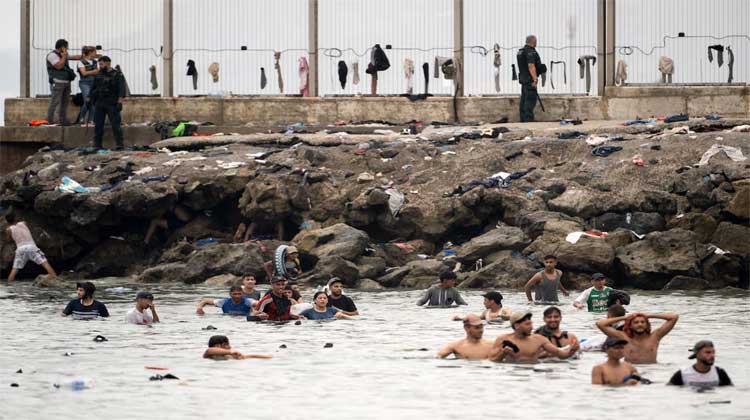
Spain has begun installing a 500-metre floating containment barrier along the maritime border between its North African enclave of Ceuta and Morocco after an estimated 50,000 to 60,000 migrants crossed into the territory earlier this week, triggering one of the largest migration crises in recent years.
The inflatable pneumatic barrier, positioned near the Tarajal breakwater, extends 500 metres across the coastline. It rises 30 to 70 centimetres above the water and reaches one metre below the surface. Reinforced by anchored buoys supplied by the Spanish Navy, the structure includes a patrol channel that allows Guardia Civil vessels to continuously monitor the sea border.
The Spanish government said the death toll from the Ceuta crisis has climbed to 67, with victims dying from drowning and a stampede during attempts to cross the frontier.
Spain defends Morocco, rejects criticism
Spanish Prime Minister Pedro Sánchez criticised calls by some European leaders to suspend Spain from the Schengen zone, describing such demands as being driven by “prejudice, fake news, ignorance or political interest.”
Italian Prime Minister Giorgia Meloni has threatened to suspend Italy’s participation in the Schengen Agreement with Spain, while Italy has reintroduced border checks on travellers arriving from Spain by air and sea.
Spain’s Interior Ministry said most of the migrants who entered Ceuta have already returned to Morocco.
“We are relentless against those who break the law,” Interior Minister Fernando Grande-Marlaska said during a visit to Ceuta. He stressed that Morocco remains “a reliable partner” and insisted the neighbouring country does not pose a threat to Ceuta or Spain, adding that close cooperation between Madrid and Rabat helped restore control of the situation within 24 hours.
EU leaders seek common strategy
Leaders of 22 European Union countries have called for an urgent, coordinated response to the crisis.
In a joint letter to senior EU officials, the countries urged the Irish presidency of the Council of the EU to convene an emergency videoconference of interior ministers. The leaders warned that uncontrolled mass migration and the “instrumentalisation of migration” must not create the impression that illegal entry into the European Union can ultimately lead to legal residence.
Sánchez also backed the proposal for an emergency meeting, arguing that protecting the EU’s external borders is a shared responsibility of all member states, not just those located on the bloc’s front line.
Comments are closed, but trackbacks and pingbacks are open.