
Rupee at Record Low: RBI’s Proposed Curbs on Overseas Dollar Outflows Raise Concerns Amid Currency Pressure

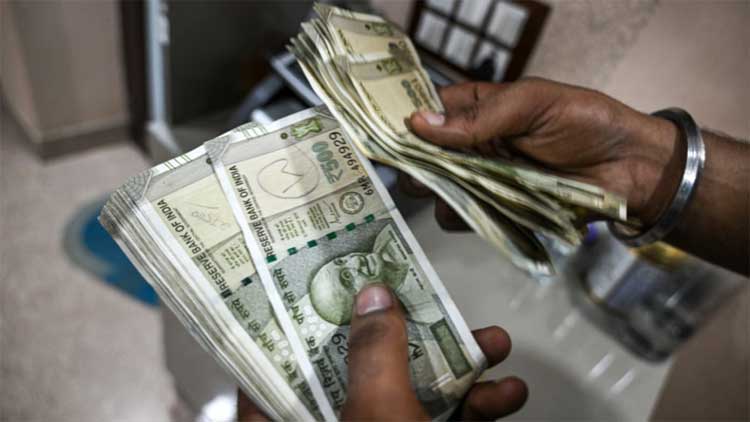
Concerns over the Indian rupee’s rapid depreciation have intensified in policy circles in New Delhi, with the Reserve Bank of India (RBI) reportedly considering restrictions on overseas money transfers under the Liberalised Remittance Scheme (LRS). However, the proposed measures have raised concerns in financial markets, with experts questioning whether restricting dollar outflows would help stabilise the currency or further unsettle investors.
According to reports, the RBI has discussed proposals to prohibit resident individuals from using the LRS to purchase overseas real estate and shares, undertake overseas direct investments, open foreign bank accounts and provide loans to relatives living abroad.
The central bank has also reportedly suggested reducing the annual LRS limit for current account transactions, including overseas travel, from $250,000 to $50,000. Transactions related to healthcare and education would remain exempt.
The proposals represent a significant potential tightening of overseas remittance rules and reflect growing concerns about the pressure on India’s foreign exchange market.
The underlying challenge is straightforward: a currency can be supported either by attracting more foreign exchange inflows or by reducing the demand for dollars. With global financial uncertainty discouraging foreign investors, the RBI appears to be considering the second option, which falls more directly within its regulatory control.
LRS remittances amounted to approximately $29 billion in 2025-26, making them a potential target for measures aimed at conserving foreign exchange.
Why Is the Rupee Under Pressure?
The Indian rupee has depreciated sharply over the past year, losing nearly 7 per cent of its value against the US dollar. It has fallen from around Rs 88.84 to Rs 94.95 per dollar.
A weaker rupee makes imports more expensive, particularly crude oil, which India purchases in large quantities from international markets.
For instance, a barrel of crude oil priced at $100 would cost approximately Rs 9,495 at the current exchange rate, compared with Rs 8,884 a year earlier.
The depreciation also increases the cost of overseas education, foreign travel and imported commodities such as gold.
Prime Minister Narendra Modi has urged citizens to conserve foreign exchange by reducing fuel consumption, avoiding unnecessary gold purchases and postponing overseas travel.
The RBI has also intervened in the foreign exchange market by selling dollars and purchasing rupees to support the domestic currency. It has additionally raised interest rates in an effort to make rupee-denominated assets more attractive to foreign investors.
However, these measures have so far failed to reverse the market’s expectations of further rupee depreciation.
Global Uncertainty Adds to India’s Currency Challenges
International developments have played a significant role in increasing pressure on the rupee.
Crude oil prices have crossed $115 per barrel amid continuing geopolitical tensions, including the Russia-Ukraine conflict and the conflict involving Israel, the United States and Iran.
Uncertainty surrounding US trade and foreign policy under President Donald Trump, along with China’s strategic influence over manufacturing, rare earth minerals, electric vehicle batteries and solar panels, has further complicated the global economic environment.
Meanwhile, rising US government borrowing has pushed bond yields higher, strengthening the appeal of dollar-denominated investments.
The yield on 10-year US Treasury bonds is around 5 per cent, while comparable Indian government securities offer approximately 7.5 per cent. However, the difference between the two yields has narrowed to roughly 2-2.5 percentage points, among the lowest levels in around two decades.
For international investors, US bonds offer the additional advantage of avoiding exposure to rupee depreciation.
The growing demand for dollars from American companies investing heavily in artificial intelligence and large language models has also intensified competition for global capital. India’s relatively limited presence in this investment segment adds to the challenge of attracting foreign funds.
Consequently, India, like several other emerging economies, is facing pressure from shifting international investment flows.
RBI Has Spent Billions Defending the Rupee
Despite the pressure on the currency, India’s broader macroeconomic indicators remain relatively stable.
Economic growth continues to be strong, inflation remains under control and the government has maintained fiscal discipline. However, weak private-sector investment, stagnant wages and inadequate job creation continue to weigh on economic sentiment.
The RBI is estimated to have sold between $75 billion and $80 billion in foreign exchange between June and October to support the rupee.
Its outstanding net forward dollar sales, representing contracts to sell dollars at predetermined exchange rates on future dates, stood at approximately $239 billion at the end of September.
India’s foreign exchange reserves remain substantial at around $720 billion, providing an important buffer against external shocks.
Nevertheless, continued intervention raises questions about how much of the country’s reserves should be used to defend the rupee and how much depreciation the central bank is prepared to tolerate.
Conflicting Signals Could Increase Market Anxiety
The central concern is not simply the rupee’s depreciation but the apparent lack of a clearly communicated strategy to address it.
Financial markets are receiving two seemingly contradictory signals from policymakers. On one hand, concerns over the falling rupee have prompted discussions about restricting overseas dollar transfers and questions about the use of foreign exchange reserves.
On the other hand, the RBI has also indicated that the currency should be allowed to find its own market-driven level rather than being defended at a particular exchange rate.
The reported proposal to tighten LRS rules could create further uncertainty among investors and individuals who regularly transfer money overseas.
Restricting legitimate dollar outflows may conserve foreign exchange in the short term, but it could also affect confidence if markets interpret the move as a sign of heightened economic pressure.
Markets Seek a Clear Policy Direction
India’s economic fundamentals provide some protection against external financial volatility, but they cannot completely shield the country from global capital movements, geopolitical uncertainty and changing investor preferences.
The challenge for policymakers is to strike a balance between preventing excessive currency volatility and allowing market forces to determine the rupee’s value.
Rather than relying primarily on restrictions, financial markets are likely to look for consistent communication from the government and the RBI about the country’s foreign exchange strategy.
A credible policy approach that acknowledges external vulnerabilities, explains the role of currency intervention and provides clarity on the RBI’s priorities could help reduce uncertainty.
Ultimately, the debate is not just about defending the rupee against the dollar. It is also about maintaining investor confidence while navigating an increasingly unpredictable global financial environment.
Comments are closed, but trackbacks and pingbacks are open.