
Delhi’s Vehicle Restrictions May Push Bus Fares Up 20%, Disrupt Essential Goods Supply: Transporters

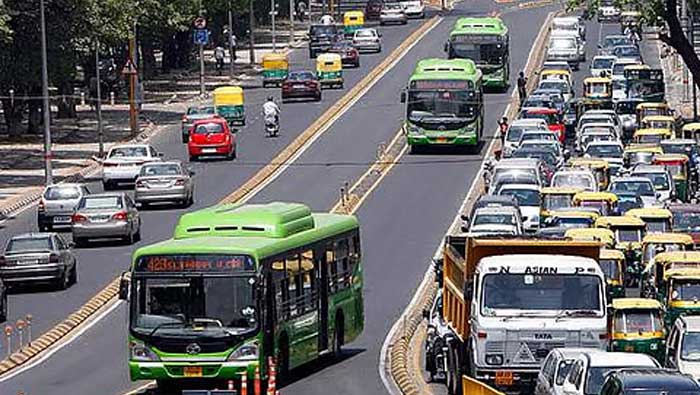
Bus fares in Delhi could rise by 15-20 per cent, while the supply of essential commodities may face disruptions after the Capital barred the entry of non-BS-VI petrol and diesel vehicles registered outside the city from Sunday under its Winter Action Plan.
Transporters have warned that the restrictions could cause significant financial losses, increase transportation costs and affect the movement of passengers and essential goods during the busy festive and tourist season.
Gurmeet Singh, owner of Highway Travels, said the restrictions would also apply to buses operating with tourist permits, unlike in previous years.
“This ban will lead to enormous losses for us, as these three months are the tourist season. Many foreign tourists also visit different cities of North India,” said Singh, who operates a fleet of 450 buses. Around 50 of his vehicles will be unable to enter Delhi.
Anil Dixit, owner of Noida-based Skyline Motors, said the timing of the restrictions was particularly challenging as the festive season typically witnesses increased travel demand, with people visiting their hometowns and relatives in other cities.
“Almost everyone takes these buses on loans. How are we supposed to pay EMIs when these buses cannot ply for the three months when the earnings were supposed to be maximum?” he asked.
Bus Fares May Increase Amid Shortage of Vehicles
Bus operators believe the reduction in the number of vehicles allowed to operate in and out of Delhi could lead to a shortage of seats and push ticket prices up by 15-20 per cent.
A fleet owner said buses generally operate at full capacity during this period, making seats difficult to secure because of the festive rush.
“There will be a severe shortage this time,” the operator said.
While large private operators and state-run transport services may be able to shift older vehicles to routes outside Delhi, smaller operators are expected to face greater difficulties.
Singh said operators might have to arrange alternative transportation, including tempo travellers, to ferry passengers from Delhi’s borders to their final destinations.
“We will have to arrange tempo travellers or other modes of transport for passengers to reach the drop-off site from the border. Auto and cab drivers will benefit from this,” he said.
Around 2.5 Lakh Goods Carriers May Be Affected
The restrictions could also affect approximately 2.5 lakh goods carriers, according to the All India Motor Transport Congress (AIMTC).
Gunjeet Singh, owner of Sangha Freight, said he operates around 50 trucks, including 35 BS-IV vehicles purchased between 2018 and 2020.
He said he had been trying to sell the older vehicles to avoid losses from keeping them idle. However, their resale value has already declined significantly.
“I can’t keep them sitting idle, as that will mean losses for me. But even their resale value has fallen from Rs 15 lakh to Rs 9 lakh,” he said.
Transporters have also raised concerns about potential disruptions to the supply of perishable commodities, a substantial portion of which reaches Delhi through road transportation from different parts of the country.
Essential Goods Supply Could Face Disruptions
Delhi receives apples primarily from Himachal Pradesh and Jammu and Kashmir, while potatoes are transported from Uttar Pradesh, Punjab and Haryana. Onions largely arrive from Maharashtra, Madhya Pradesh and Rajasthan.
Milk supplies come mainly from Haryana, Uttar Pradesh and Rajasthan, while poultry products and eggs are transported from Haryana, Punjab and western Uttar Pradesh.
Transporters warned that restrictions on goods vehicles could delay deliveries to major wholesale markets, including Azadpur and Ghazipur.
Such delays could increase freight charges and transportation costs, potentially pushing up prices of essential commodities for consumers.
Transporters Raise Concerns Over Financial Losses
AIMTC president Harish Sabharwal said the transport sector was already facing mounting operational expenses, including higher taxes and toll charges.
He warned that suddenly restricting vehicle operations for three months would place additional financial pressure on transport businesses.
“A sudden restriction on vehicle operations for three months would severely affect their earnings, while loan instalments, insurance premiums, other financial liabilities and household expenses would continue,” Sabharwal said.
Transporters have argued that the restrictions could particularly hurt small fleet owners, who depend on regular vehicle operations to repay loans and meet operating expenses.
With the festive and tourist seasons coinciding with the implementation of the restrictions, the transport industry has warned of possible consequences for passenger fares, freight costs and the availability of essential goods in the national capital.
Comments are closed, but trackbacks and pingbacks are open.