
Ranabaali Movie Review: Vijay-Rashmika’s History Lesson Chooses Violence Over Emotion

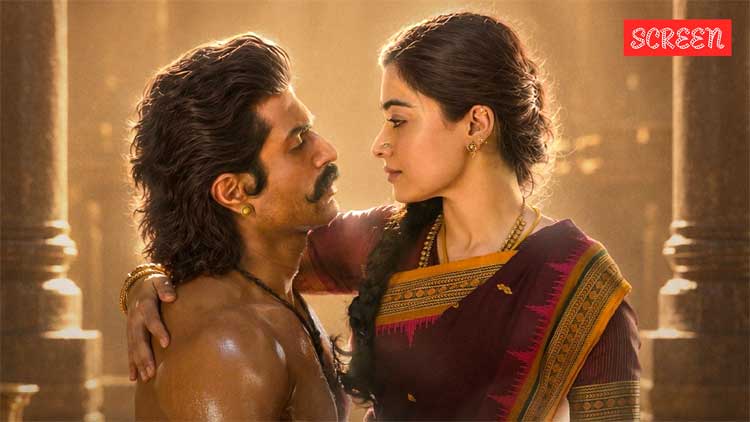
Vijay Deverakonda and Rashmika Mandanna’s Ranabaali attempts to combine a historical narrative with intense action and a story of resistance against colonial oppression. However, the film’s emphasis on brutality and large-scale confrontations often comes at the cost of emotional depth, leaving its powerful premise only partially realised.
Directed by Rahul Sankrityan, the period drama brings together history, romance and revenge against the backdrop of British colonial rule. While Vijay’s commanding screen presence and Rashmika’s emotional performance provide some engaging moments, the film struggles to maintain a balance between spectacle and storytelling.
Ranabaali Movie Review: Plot And Historical Context
Set in the 19th century, Ranabaali follows its titular protagonist as he confronts British colonial exploitation and fights for his people amid widespread suffering. The narrative draws on the historical devastation associated with the Great Madras Famine of 1876–78, a period marked by drought, food shortages and a devastating humanitarian crisis.
The film attempts to turn this historical backdrop into a dramatic story of resistance, presenting its central character as a figure who refuses to accept the oppression of his community.
Its premise offers considerable scope for exploring the human consequences of colonial rule. However, the screenplay frequently shifts towards revenge and violent confrontations, leaving less room to examine the everyday struggles, personal sacrifices and emotional conflicts that could have given the story greater depth.
Vijay Deverakonda Brings Intensity To The Lead Role
Vijay Deverakonda plays Ranabaali, a character defined by courage, anger and a determination to stand up against injustice. The actor commits himself to the physically demanding role, bringing intensity to the action sequences and giving the protagonist a formidable screen presence.
The performance is most effective when the film allows Ranabaali to emerge as more than a warrior. His relationships and quieter moments offer glimpses of the person behind the rebellion.
However, the character’s emotional development takes a back seat as the story becomes increasingly focused on violence. The film repeatedly returns to his anger and determination without fully exploring the internal conflicts that might have made his journey more compelling.
Rashmika Mandanna Provides Emotional Depth
Rashmika Mandanna brings warmth and sincerity to her role opposite Vijay. Her character provides an emotional counterpoint to the film’s aggression, grounding the story in personal relationships and the human cost of conflict.
The chemistry between the lead actors adds appeal to the romantic portions. These moments also offer a welcome contrast to the film’s relentless action, reminding viewers of the lives and relationships threatened by the surrounding violence.
Yet, the screenplay does not always give the emotional side of the story enough space to develop. Rashmika’s performance brings sensitivity to the material, but the film’s larger narrative often prioritises action over the characters’ emotional journeys.
Violence Overshadows The Historical Message
One of the film’s biggest weaknesses is its reliance on graphic violence to communicate the brutality of colonial oppression. The suffering of ordinary people provides the story with a serious historical foundation, but repeated violent sequences risk making the experience exhausting rather than emotionally powerful.
A historical drama about famine, exploitation and resistance has the potential to explore grief, survival, solidarity and the moral complexities of rebellion. Ranabaali touches upon these themes but often chooses spectacle over reflection.
The result is a film in which the scale of the violence is more apparent than its emotional consequences. More restrained storytelling and greater attention to the lives of those affected could have made its message more impactful.
Direction, Cinematography And Music
Rahul Sankrityan attempts to give Ranabaali the scale of an epic period drama, using its historical setting to create a world of political conflict and personal suffering. The period atmosphere and visual presentation help establish the film’s ambitions.
However, the narrative would have benefited from tighter editing and a more consistent pace. When action sequences repeatedly take precedence over character development, the story loses some of its emotional momentum.
The music and background score contribute to the film’s dramatic atmosphere, although the overall impact depends heavily on the intensity of individual scenes. The technical elements support the scale of the production but cannot fully compensate for the screenplay’s uneven balance between action and emotion.
Final Verdict: An Ambitious History Lesson That Lacks Emotional Balance
Ranabaali has the ingredients of an engaging historical drama: a turbulent period, a protagonist challenging injustice, a romantic relationship and a story rooted in human suffering. Vijay Deverakonda brings intensity to the lead role, while Rashmika Mandanna adds emotional warmth.
However, the film’s persistent focus on violence prevents several of its strongest themes from receiving the attention they deserve. Its historical backdrop raises important questions about oppression and resistance, but the storytelling does not always translate those ideas into a deeply moving cinematic experience.
Verdict: Ranabaali delivers action and historical spectacle but struggles to match its violence with emotional depth. Vijay and Rashmika remain its key attractions, even as the film’s ambitious premise is undermined by uneven storytelling.
Comments are closed, but trackbacks and pingbacks are open.