
Climate Change Could Displace 40.5 Million People In South Asia By 2050, UN Migration Chief Warns

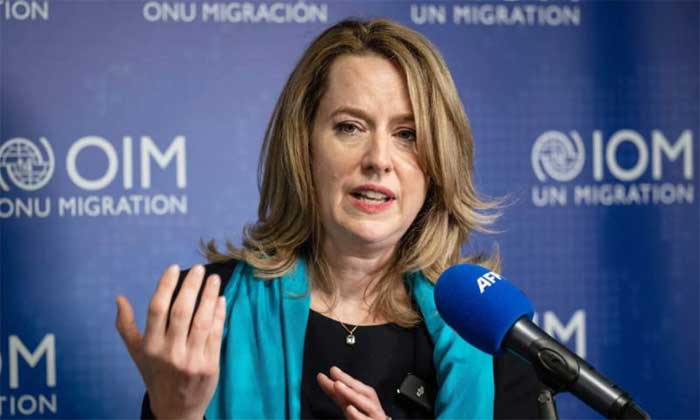
Climate change is threatening livelihoods and forcing people from their homes across South Asia, with as many as 40.5 million people potentially facing displacement by 2050 under a worst-case scenario, the head of the United Nations’ migration agency has warned.
Amy Pope, Director General of the International Organization for Migration (IOM), said rising sea levels, floods, droughts and extreme heat were putting homes, farmland and livelihoods at risk across the region. Speaking to AFP during a visit to New Delhi on Friday, she stressed that technology, better disaster preparedness and government action could help reduce the impact.
“When they can’t produce food, when they can’t feed their livestock, it increases the likelihood of displacement,” Pope said. “The first adaptation is often for people to move.”
Climate Disasters Increase Displacement Risks
South Asia is particularly vulnerable to climate-related displacement because of its large population, exposure to natural disasters and limited resources in many communities.
Rising seas threaten coastal settlements, while floods and droughts can destroy crops, damage homes and undermine rural livelihoods. Extreme heat is also changing where people choose to live and work.
Pope pointed to a disaster in Nepal on August 26, when a mountain and glacier collapse triggered deadly flooding. The IOM provided humanitarian assistance in response to the crisis.
Such events illustrate how climate hazards can rapidly disrupt communities and force people to leave their homes, sometimes with little time to prepare.
The potential scale of displacement is significant. According to the IOM estimate cited by Pope, up to 40.5 million people in South Asia could be forced to move by 2050 in a worst-case scenario.
Climate Change Is Accelerating Urbanisation In India
Climate-related pressures are also contributing to migration towards cities in India, Pope said.
As temperatures rise and rural livelihoods become more difficult to sustain, some people move to urban centres in search of shelter, employment and better access to essential services.
“As people seek shelter from heat, they’re going into urban centers,” she said.
The movement of people into cities can create additional demands for housing, water, healthcare, transport and employment. Without adequate planning, vulnerable migrants may face overcrowded living conditions and insecure work.
Pope emphasised that governments need to anticipate these movements and prepare communities before climate pressures turn into humanitarian emergencies.
‘Migration As A Tool’ For Climate Adaptation
Pope said migration should not be viewed only as a consequence of climate change. When managed safely, it can also help people adapt to changing conditions and improve their economic prospects.
People whose farms are no longer productive may need opportunities to develop new skills, find work in other sectors or move to places where employment is available.
South Asia already has established international migration routes, which governments could use to create additional opportunities for workers affected by climate pressures.
Pope said some governments in the region recognised both the risks facing their communities and the potential for migration to support development.
However, she stressed that expanding employment opportunities abroad must go hand in hand with safe and legal migration channels.
Without adequate safeguards, workers can become vulnerable to human trafficking, exploitation by smugglers and fraudulent overseas job offers.
AI And Better Data Could Help Prevent Displacement
Technology, including artificial intelligence, could help authorities identify communities at risk before disasters force people to leave their homes.
“With the advancements in AI forecasting, you can now better anticipate those communities that are at high risk of displacement,” Pope said.
By combining weather forecasts with information about local livelihoods, governments can identify vulnerable populations and direct resources towards areas most likely to be affected.
“If you know a community is at risk, we don’t need to wait until they’re displaced to respond,” she said.
Early intervention could include improving farming techniques, strengthening disaster preparedness, training workers for alternative occupations and helping communities diversify their sources of income.
In areas repeatedly affected by severe floods or droughts, planned relocation may also be necessary. Such decisions, however, require careful preparation and support for the people involved.
UN Migration Chief Calls For More Climate Adaptation Funding
Despite the availability of forecasting technology and adaptation measures, financing remains a major challenge.
Pope warned that international attention and funding were insufficient to address the risks facing vulnerable communities. Governments may also struggle to navigate the systems through which climate adaptation programmes can receive financial support.
“The cost of a humanitarian disaster is in the billions. The cost of investing in some of the resilience measures can be far less,” she said.
Investing in early-warning systems, resilient infrastructure and livelihood protection before a disaster occurs could reduce the human and financial costs of emergency responses.
Pope said India’s investments in early-warning systems, disaster response and technology offered grounds for optimism. However, she cautioned that no single government could manage the scale of climate-related displacement alone.
Preparing Workers For An AI-Driven Global Economy
Pope also highlighted the relationship between technological change and international labour mobility.
Artificial intelligence could threaten jobs involving routine tasks, including the analysis of documents and reports. At the same time, many sectors will continue to require human workers, creating opportunities for people with the right skills.
India’s technological capabilities could help workers prepare for emerging employment opportunities, she said.
“If we can marry that capacity with the labor mobility, so that the workers are being skilled for those jobs as they’re emerging, they will be ahead,” Pope said.
Training programmes aligned with international labour demand could help workers access safer employment opportunities while allowing destination countries to address workforce shortages.
Climate Displacement Requires Coordinated Action
The IOM warning highlights the need to address climate change not only as an environmental challenge but also as a threat to livelihoods, housing and human mobility.
Improved forecasting, investment in resilient communities, skills training and safe migration pathways could help reduce the risks facing millions of people across South Asia.
Pope expressed optimism about the region’s potential to respond, particularly where governments are investing in technology and recognising migration as part of their development strategies.
However, preventing avoidable displacement will require sustained funding and cooperation between national governments, international organisations and local communities.
With the number of people at risk potentially reaching tens of millions by 2050, the warning underscores the importance of preparing before climate disasters leave families with little choice but to move.
Comments are closed, but trackbacks and pingbacks are open.