
PM Modi, Iran President Pezeshkian discuss West Asia peace, stress freedom of navigation in Strait of Hormuz

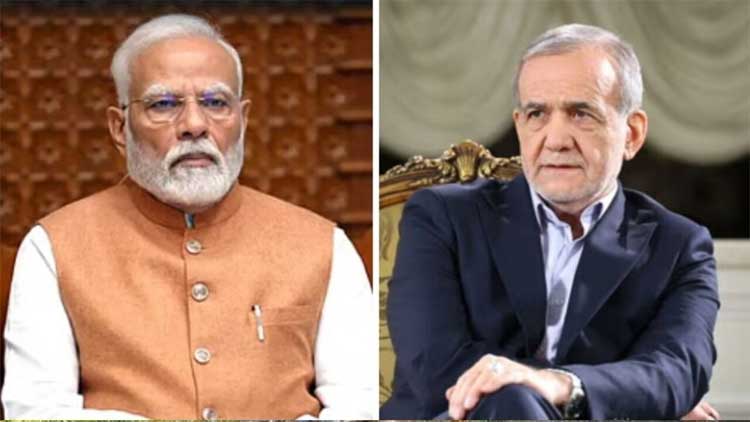
Prime Minister Narendra Modi and Iranian President Masoud Pezeshkian on Tuesday discussed the need for continued efforts to maintain peace and stability in West Asia, while emphasising the importance of protecting freedom of navigation and global commerce.
The phone conversation took place amid renewed concerns over a fragile ceasefire in the region following fresh attacks involving the United States and Iran in recent days. The call also came shortly after Pezeshkian invited Modi to attend the funeral programme of former Iranian Supreme Leader Ali Khamenei.
“Welcomed the progress made in the negotiations and expressed hope that continued efforts will lead to lasting peace in the region. Reiterated the importance of freedom of navigation in the Hormuz Strait for India and the world,” Modi said in a social media post.
According to a statement from the Indian government, Modi underlined the need for “continued efforts to ensure lasting peace and stability in the region” and for safeguarding freedom of navigation and commerce.
The Prime Minister also welcomed the understanding reached between Iran and the US, reiterating India’s position that all issues should be resolved through “dialogue and diplomacy”.
India has closely monitored developments around the Strait of Hormuz, a key global shipping route. Restrictions on the waterway had earlier raised concerns over supplies of oil, gas and fertilisers, though the easing of restrictions has allowed movement of vessels carrying these essential commodities in recent days.
During the call, Pezeshkian briefed Modi on the latest developments in West Asia and discussed the “way forward”, according to the government readout.
India likely to send delegation for Khamenei funeral
While New Delhi has not officially announced its representation at the funeral programme of late Supreme Leader Ali Khamenei, sources said Minister of State for External Affairs Pabitra Margherita and Bihar Governor Lt Gen (Retd) Syed Ata Hasnain are likely to attend the event on behalf of India.
Pezeshkian had invited Modi last week for the six-day funeral programme, which will be held across three Iranian cities, including Tehran, where the main event is scheduled on July 4.
India’s response after Khamenei’s death
Khamenei, 86, was killed on February 28, the first day of the West Asia conflict that began after Israeli and US strikes on Iran. He died in an airstrike targeting the compound in Tehran where his office was located.
India had initially maintained silence on the strikes that killed Khamenei. Later, Foreign Secretary Vikram Misri visited the Iranian embassy on March 5 to sign the condolence book on behalf of the Indian government.
Comments are closed, but trackbacks and pingbacks are open.