
Passport is travel document, not citizenship proof: MEA highlights security features of new e-passports

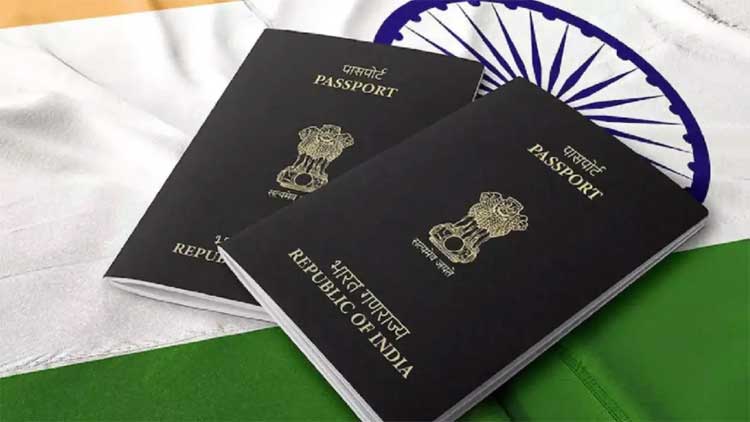
The passport is a travel document and not a document of citizenship, officials from the Ministry of External Affairs (MEA) said on Wednesday, while highlighting the security upgrades introduced through new chip-based e-passports.
Speaking on Passport Seva Divas, observed on June 24 to mark the enactment of the Passports Act in 1967, MEA officials said the new e-passports are designed to improve global acceptance, strengthen identity verification and reduce the risk of fraud.
“A passport is issued after a lot of due diligence, and it is based on documents from several government agencies,” an official said, adding that the document serves as proof of nationality for Indians while travelling abroad.
Since the rollout of e-passports last year under the revamped Passport Seva Programme, around 14.7 million chip-enabled passports have been issued, officials said. These currently account for nearly 10% of all passports, with all newly issued passports now being e-passports.
The new passports contain an embedded antenna and a Radio Frequency Identification (RFID) chip carrying personal details and biometric information. Officials said the technology makes unauthorised access, data tampering and fraudulent passport creation more difficult.
“It is more difficult to generate fake passports, and the e-passports offer greater reassurance to immigration authorities abroad and make clearances faster,” an official said.
The chips used in Indian e-passports are sourced through the India Security Press in Nashik, with the press procuring them from overseas suppliers. Officials said global best practices were studied while developing the system, and further improvements in document security are being explored.
While Tata Consultancy Services (TCS) serves as the technology and service provider for the Passport Seva Project, all passport-related data remains stored on Ministry of External Affairs servers, officials said.
The ministry also announced that it will organise a two-day Human Resource Mobility Forum on June 30 and July 1, aimed at promoting legal migration pathways and connecting Indian job seekers with foreign employers. Denmark, Germany, Italy, Japan and Russia will be the focus countries for the event.
Officials said the initiative is aimed at preventing exploitation of workers travelling abroad and ensuring better training, awareness and recruitment practices. The move comes amid concerns over cases of Indians being misled into joining foreign military-related roles, including recruitment into the Russian armed forces.
“Ethical employers have to be matched with the aspirants, who have to be told what to watch out for,” an official said.
The MEA is also working to expand visa-free travel and visa-on-arrival options for Indians. Currently, 27 countries offer visa-free travel to Indian nationals, up from 16 in 2019, while 47 countries provide visa-on-arrival facilities and 66 offer e-visas.
India has also signed migration and mobility agreements with 25 countries, mainly in Europe, to create legal migration routes and address irregular migration.
Officials said passport processing time has improved, with applications now being processed in an average of five to six days. There are currently 544 Passport Seva Kendras and Post Office Passport Seva Kendras across the country, compared with 77 a decade ago.
Efforts are also underway to reduce police verification time, with the ministry aiming to replicate states where verification has been completed within two to three days.
Comments are closed, but trackbacks and pingbacks are open.