
Mumbai To Ahmedabad In 90 Minutes: Bullet Train Trials Set For May-June 2027

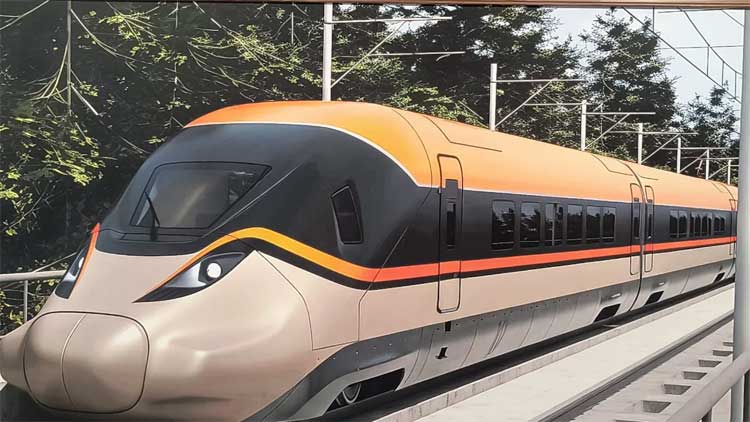
India’s ambitious bullet train project has moved closer to reality, with Railway Minister Ashwini Vaishnaw announcing that the country’s first indigenous high-speed train is expected to begin track trials in May or June 2027. The testing will initially take place on a section of the Mumbai-Ahmedabad High-Speed Rail Corridor where construction is nearing completion.
The announcement marks a major milestone for India’s high-speed rail programme and comes as work on the 508-km Mumbai-Ahmedabad corridor gathers pace. The first body frame of the indigenous bullet train has been completed and sent for a squeeze test, which is designed to assess the structural strength of the coach body.
When will bullet train trials begin?
Speaking at the ‘NaMo for Viksit Bharat’ event in Vadodara, Vaishnaw said the indigenous bullet train would be on the tracks for testing by May-June 2027.
The trial phase is expected to last around two to four months. If testing and regulatory clearances proceed as planned, passenger operations could begin after the trial period.
Mumbai-Ahmedabad travel time to fall sharply
The high-speed rail service is expected to dramatically reduce travel time between major cities along the corridor. Vaishnaw said a journey from Vadodara to Mumbai could take around 90 minutes on the new service.
The full Mumbai-Ahmedabad corridor will eventually connect 12 stations, including Mumbai, Thane, Virar, Boisar, Vapi, Bilimora, Surat, Bharuch, Vadodara, Anand, Ahmedabad and Sabarmati.
Bullet train service to open in phases
The project is expected to become operational in stages rather than opening the entire corridor at once.
The Surat-Bilimora section is planned as the first stretch to open, followed by the Vapi-Surat section. The service will then be extended towards Ahmedabad, with the Ahmedabad-Thane stretch and finally the Mumbai section to follow.
The Surat-Vapi section is expected to be completed by December 2026, according to the latest update from the Railway Minister.
India’s push for indigenous high-speed rail
The upcoming train is significant not only because of its speed but also because it represents India’s effort to develop high-speed rail technology domestically. The indigenous train is being developed and manufactured by state-owned BEML.
The Mumbai-Ahmedabad project, launched with its foundation stone in 2017, is designed to improve connectivity between some of India’s major commercial and industrial centres while bringing high-speed rail technology to the country.
If the planned schedule stays on track, 2027 could mark the beginning of a new era in India’s passenger rail travel, with the first indigenous bullet train moving from testing towards commercial operations.
Comments are closed, but trackbacks and pingbacks are open.