
Crossing 1.5°C Is Not the End — But It Is a Warning We Cannot Ignore

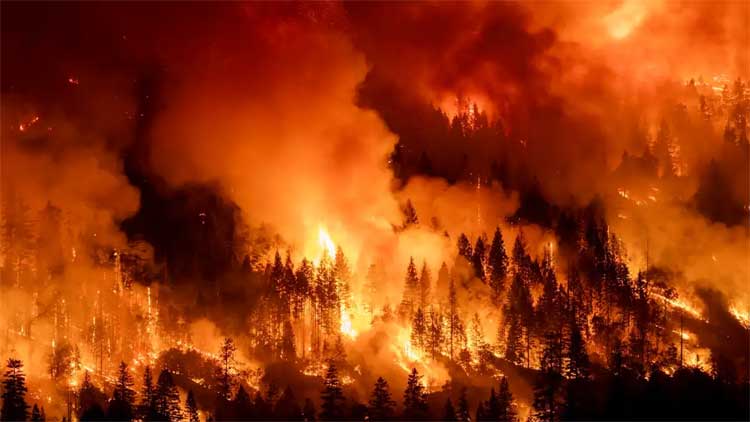
The latest findings highlighted in a United Nations climate report have renewed concerns that the world is on course to exceed the 1.5°C global warming threshold set as an aspiration under the 2015 Paris Agreement. The prospect has triggered fresh debate over what crossing that level of warming could mean for humanity and the planet.
For climate scientists who have studied the Earth’s carbon cycle and long-term changes in the climate system, however, the warning is hardly unexpected. The world has been moving towards this milestone for decades.
Climate change can sometimes appear unpredictable because extreme weather events can emerge suddenly. Heatwaves, floods, wildfires and powerful storms can develop rapidly, creating the impression that the climate itself is capable of sudden shifts.
But global warming operates differently. It is more like a massive freight train: slow to change direction, but difficult to stop once it gathers momentum.
That momentum is largely linked to the enormous amount of heat absorbed by the world’s oceans and the atmosphere’s response to rising carbon dioxide levels. Once carbon dioxide is released, some is absorbed by oceans and vegetation, but a significant amount remains in the atmosphere for a long time. As greenhouse gas concentrations rise, the planet continues to accumulate heat.
Unlike daily weather, this process does not suddenly reverse. Its trajectory is largely determined by the amount of greenhouse gases humans continue to emit.
The 1.5°C threshold was never a cliff
The approach towards 1.5°C has been visible for years. What is particularly concerning is that global emissions have not declined rapidly enough to prevent the world from moving beyond the threshold.
However, crossing 1.5°C does not mean that the planet has suddenly reached a point of no return.
The 1.5°C figure was selected in the Paris Agreement because climate science indicated that limiting warming to this level would significantly reduce the risks associated with climate change. But it was never a magical boundary separating a safe world from a dangerous one.
Instead, every additional fraction of warming increases risks.
A world that warms by 2°C would face greater climate risks than one that warms by 1.5°C, while 3°C would be more dangerous still. The further temperatures rise, the greater the threat to ecosystems, human health, food security, water supplies and the planet’s natural systems.
The worst consequences can still be avoided
Claims that crossing 1.5°C means the worst impacts of climate change are now unavoidable are misleading.
Some climate changes are already effectively irreversible on human timescales. We cannot simply restore the planet to the climate conditions of the 19th century.
But that does not mean humanity has lost the ability to influence what happens next.
The amount of future warming still depends heavily on how quickly the world cuts greenhouse gas emissions. Every fraction of a degree that can be avoided matters.
If humanity were to continue exploiting vast quantities of accessible fossil fuels, temperatures could rise far beyond current levels, creating conditions that would fundamentally transform the planet and make many regions extremely difficult to inhabit.
That catastrophic scenario is not inevitable.
Fossil fuels remain at the heart of the problem
The closer the world gets to higher levels of warming, the more urgently emissions need to be reduced.
There is no known environmental cliff that suddenly appears at exactly 1.5°C. Instead, the climate system becomes progressively more hazardous as warming increases.
The UN describes the current situation in terms of climate “overshoot” and focuses on limiting both the duration and peak level of warming. Its central message is clear: every fraction of a degree matters.
The most reliable way to stop further global warming is to rapidly reduce and ultimately end the burning of coal, oil and natural gas.
That requires a fundamental transformation of the global energy system — one that can support economic development and human well-being while replacing fossil fuels with cleaner sources of energy.
Can carbon removal reverse warming?
Once fossil-fuel emissions are brought down dramatically, removing some carbon dioxide from the atmosphere could potentially help lower global temperatures.
But carbon removal remains uncertain at the scale required.
Natural approaches such as planting forests can absorb carbon, but forests themselves face growing threats from wildfires, droughts and other climate-related changes. Technological methods of carbon removal are also still developing and can be expensive.
For these reasons, carbon removal cannot be treated as a substitute for cutting fossil-fuel emissions.
1.5°C should be a warning, not a surrender
Crossing the 1.5°C threshold should not become an excuse for giving up on climate action. Instead, it should serve as a powerful warning that the world needs to move faster.
The climate crisis has never been about reaching one single number and suddenly crossing into an irreversible catastrophe. It is about how much warming humanity ultimately allows.
The further the planet moves beyond 1.5°C, the greater the risks become. That makes rapid emissions cuts more important than ever.
The message is therefore not to surrender, but to hit the brakes harder and sooner — by accelerating the transition away from coal, oil and gas and building a cleaner, more resilient energy system.
The world may be approaching a major climate milestone, but the most devastating outcomes are not predetermined. Every fraction of a degree of warming avoided today can make the future safer.
Comments are closed.