
Man convicted on federal terrorism charges for 2022 stabbing of Salman Rushdie

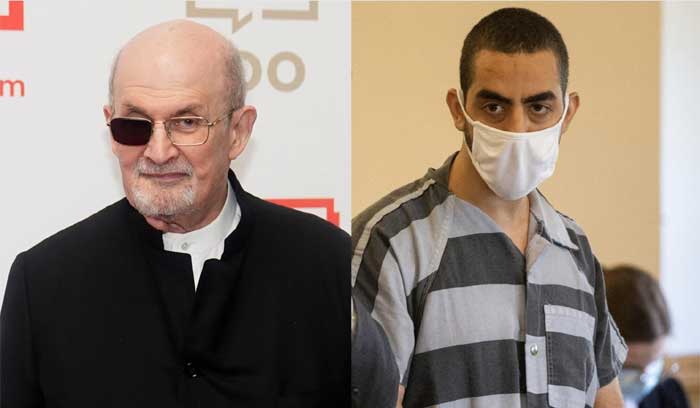
A US federal jury on Wednesday convicted Hadi Matar of terrorism-related charges for the 2022 stabbing of acclaimed author Salman Rushdie, finding him guilty of attempting to carry out an act of transnational terrorism inspired by a decades-old Iranian fatwa.
After only a few hours of deliberations, jurors found the 28-year-old guilty on all counts, including engaging in an act of transnational terrorism. Matar had already been sentenced to 25 years in prison by a New York state court after being convicted of attempted murder. He now faces a possible life sentence at his federal sentencing on November 3.
Rushdie was attacked on stage at New York’s Chautauqua Institution in August 2022 while preparing to speak about writers’ safety. He was stabbed 15 times, suffering life-threatening injuries and permanently losing sight in his right eye.
Federal prosecutors argued that Matar was motivated by the 1989 fatwa issued by Iran’s former Supreme Leader Ruhollah Khomeini, who called for Rushdie’s death following the publication of his controversial novel The Satanic Verses. Iran has denied any involvement in the attack.
Assistant Attorney General John Eisenberg said the verdict demonstrated that “justice has been done,” describing the assault as a reminder of “the global reach of Iranian terrorism.”
During the trial, Matar’s defense argued prosecutors failed to prove his intent, while Matar declined to testify. Rushdie told jurors he could not know his attacker’s motive but said the knife wounds were inflicted across his body.
Prosecutors presented encrypted messages in which Matar allegedly praised the fatwa, accused Rushdie of insulting Islam, and discussed killing the author. They said he spent months tracking Rushdie’s movements before identifying his scheduled appearance in August 2022.
Investigators also presented evidence linking Matar to support for Hezbollah, which the United States designates as a terrorist organization. Born in the US and also a Lebanese citizen, Matar allegedly possessed photographs and materials expressing support for the group.
Rushdie, who won the Booker Prize for Midnight’s Children, spent years in hiding after The Satanic Verses sparked protests across the Muslim world. The novel was accused of blasphemy by some Muslims, leading to deadly riots, attacks on translators and publishers, and a multimillion-dollar bounty that remains in place despite Iran distancing itself from the fatwa in 1998.
Since surviving the attack, Rushdie has returned to writing, publishing a 2024 memoir about the stabbing before releasing his latest novel, The Eleventh Hour, last year. He was also honored with the Dayton Literary Peace Prize for lifetime achievement.
Comments are closed.