
Ishan Kishan’s Comeback: The Road to India’s 2027 ODI World Cup Squad

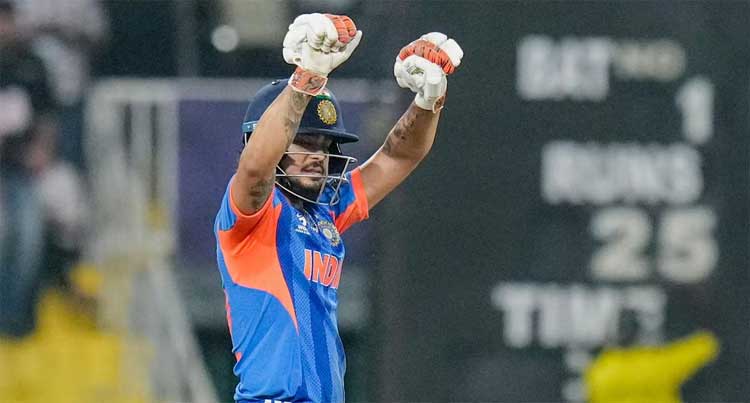
A year ago, Ishan Kishan was on the fringes of Indian cricket, having last represented the country towards the end of 2023.
Now, he is back in the ODI setup and preparing to serve as Shreyas Iyer’s vice-captain for the fourth and fifth matches of the series against New Zealand at Bay Oval in Mount Maunganui. With Shubman Gill and KL Rahul leaving for Test preparations, Iyer taking over the captaincy and India looking to seal the five-match series, Kishan has an opportunity to make a strong impression. He will also be among India’s wicketkeeping options alongside Kumar Kushagra.
Kishan’s return has been built on performances in domestic cricket. A productive run for Jharkhand last year earned him a recall to India’s T20I squad, while consistent scores in the shortest format helped him work his way back into ODI contention. His biggest advantage is his ability to adapt to different batting positions, having delivered impactful performances both as an opener and in the middle order.
Explosive potential at the top of the order
Kishan’s 210 off 131 balls against Bangladesh in Chattogram in 2022 remains his most compelling statement as an opener. The innings was the fastest double-century in men’s ODI cricket at the time and made him the youngest batter to achieve the milestone, aged 24.
Although India had already lost the series 2-1, Kishan made the most of the dead rubber, smashing 24 fours and 10 sixes in a 227-run victory. His innings was a combination of patience and calculated aggression. He took 49 balls to reach his first fifty and another 36 to complete his century before accelerating dramatically, scoring the next 50 runs in just 18 deliveries.
His ability to play the pull shot, punish deliveries outside off stump, use his feet against spinners and employ the sweep made him particularly difficult to contain. Once he found his rhythm, the Bangladesh bowlers struggled to find answers as India finished with 409/8.
These qualities could be useful against New Zealand’s pace attack, featuring Matt Henry, Jacob Duffy and Kyle Jamieson in the fourth ODI.
The opening position could also offer Kishan an opportunity. When Gill was unavailable against South Africa last year, Yashasvi Jaiswal partnered Rohit Sharma at the top. The combination was used again in the final two ODIs against Afghanistan in June. India’s preference for a left-right opening combination could work in Kishan’s favour.
With Jaiswal not part of the squad, Kishan could get an opportunity to open alongside Rohit. A strong performance in that role would strengthen his prospects of remaining part of India’s ODI plans for future assignments.
Middle-order adaptability adds another dimension
Kishan’s credentials are not restricted to opening the innings. His performance against Pakistan in the 2023 Asia Cup at Pallekele demonstrated his ability to handle pressure in the middle order.
India were struggling at 48/3 when Kishan walked in, with Rohit Sharma, Shubman Gill and Virat Kohli already dismissed. Rather than immediately looking to attack, he showed composure against the fast bowlers, played the ball late, rotated the strike and waited for opportunities against spin.
His 82 off 81 deliveries, which came in a crucial 138-run partnership with Hardik Pandya, helped India recover from a difficult position. The innings highlighted his ability to put the team’s requirements ahead of his natural attacking instincts.
Former Pakistan captain Wasim Akram also recognised the importance of that performance.
“That innings will give Ishan Kishan the confidence that he can bat anywhere in the batting order,” Akram said on Star Sports.
Kishan demonstrated the same versatility against Afghanistan in Lucknow in June, producing an even more aggressive performance at No. 4.
He took 52 deliveries to reach his first half-century against Rashid Khan and the other Afghan spinners. Once settled, however, he shifted gears spectacularly. His second fifty came off just 19 balls, while he reached his century in 71 deliveries.
Kishan eventually scored 125 off 79 balls, including 14 fours and seven sixes, ending a three-year wait for an ODI century. It was his second hundred in the format, following his historic 210 against Bangladesh.
His ability to reach the pitch of the ball, create room to play through the off side and punish deliveries on his pads was particularly impressive. He also combined aggression with intelligent shot selection, sweeping the spinners and hitting straight whenever they missed their lengths.
A 224-run partnership with Gill for the third wicket helped India post 402 before securing a comprehensive 170-run victory.
Those skills could once again come in handy against New Zealand’s spin options, including Mitchell Santner, Michael Bracewell and Dean Foxcroft.
2027 ODI World Cup ambitions in focus
The Afghanistan century also made Kishan the fourth-fastest Indian batter to reach 1,000 ODI runs. In 32 matches, he has accumulated 1,107 runs at an average of 42.57 and a strike rate of 107.05.
Beyond the statistics, his ability to handle both the new and old ball, adapt to different batting positions and accelerate against pace and spin makes him a valuable option for India.
The two matches against New Zealand provide an immediate opportunity to reinforce those credentials. With the 2027 ODI World Cup on the horizon, his performances over the coming months could play an important role in determining whether he becomes part of India’s plans for the tournament.
Kishan has already demonstrated that he can succeed at the top of the order and in the middle. The challenge now is to translate that versatility into consistent performances. Returning to the national setup was the first step. Establishing himself as a regular in India’s ODI side is the bigger challenge that lies ahead.
Comments are closed.