
India-US Trade Deal Nears Finish Line, Jaishankar Says; Border Infrastructure With China Strengthened

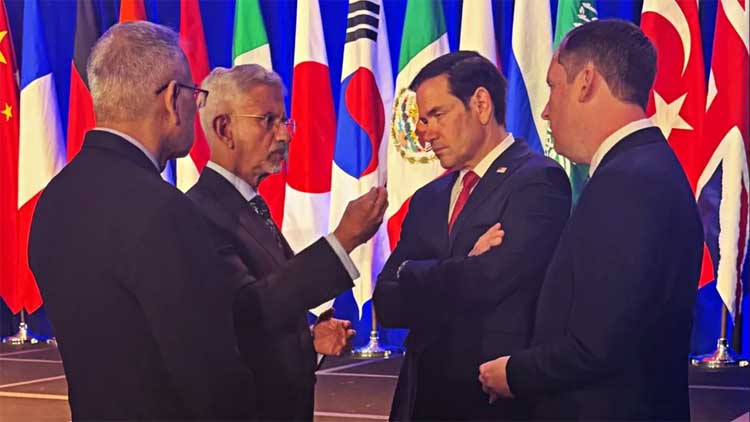
External Affairs Minister S Jaishankar said on Saturday that India and the United States have resolved most outstanding issues concerning their proposed trade agreement, including tariff-related matters, and expressed hope that the deal could be finalised soon as negotiations enter their final stage.
Speaking at the Hindustan Times Leadership Summit 2026, Jaishankar said both countries had completed much of the difficult groundwork, although a few concerns remained to be addressed. He indicated that several of the outstanding issues were now related to changes on the American side rather than India’s position.
“It’s certainly our hope and, in many ways, anticipation that we are at the last stretch. That’s not a secret,” he said during an interactive session.
The minister explained that negotiations had involved detailed discussions on individual tariff lines, a process requiring considerable time because of its implications for businesses, employment and people’s livelihoods.
He stressed that India was seeking a trade agreement that would be beneficial and balanced while giving Indian exporters a competitive advantage over comparable economies.
Jaishankar described the United States as India’s biggest market and said an agreement with the world’s largest economy would offer significant opportunities for both countries. However, he noted that the challenge was to find an acceptable balance between their respective economic interests.
He added that US President Donald Trump was pursuing bilateral trade agreements with several countries to improve market access for American businesses.
The minister declined to specify a deadline for concluding negotiations but urged patience, saying the two sides had invested considerable effort in resolving the outstanding issues.
India-China Border Requires Sustained Military Deployment
Addressing India’s security challenges, Jaishankar said the country’s border with China had become increasingly active and required a significantly greater and sustained deployment of troops.
He highlighted the improvements in border infrastructure over the past decade, including the construction of roads, bridges, tunnels and airfields, which have strengthened India’s ability to maintain military personnel in difficult and remote areas.
The minister said border infrastructure had been neglected for decades, despite earlier discussions and plans to improve connectivity in strategically important regions.
According to him, the situation has changed considerably over the past decade, with greater attention, financial resources and policy support directed towards developing border infrastructure.
“How often do you now read — a new tunnel has been built, some new bridge has been built, another airfield has been commissioned,” he said, pointing to the increasing pace of infrastructure development.
Jaishankar added that these improvements had enabled India to sustain a larger military presence along the border and would help maintain that capability in the future.
Referring to the 2020 Galwan Valley clash and the subsequent military standoff, he said India’s ability to deploy and sustain troops along the Line of Actual Control (LAC) had improved significantly.
He maintained that infrastructure development was essential not only for military preparedness but also for ensuring India’s long-term ability to respond to changing security requirements along the frontier.
Jaishankar Sees Bipartisan Support for India-US Ties
In his first comments on the outcome of the US midterm elections, Jaishankar acknowledged that the results would have implications for American domestic politics and its engagement with other countries.
However, he pointed to a bipartisan political consensus in Washington on maintaining and strengthening cooperation with India in areas such as defence, security and technology.
He suggested that despite political differences between the two major American parties, important elements of the India-US strategic partnership enjoyed support across party lines.
Jaishankar indicated that India would continue to engage with the US administration on issues such as trade, while recognising the broader institutional support for bilateral cooperation.
He also acknowledged that changes in the US political landscape could influence several aspects of the relationship.
“I am normally chary about commenting on the domestic politics of other countries in public. That’s your job, it’s not my job. Will it change something? Of course, it would change something. It would change many things,” he said.
US-China Rivalry and Changing Global Landscape
Jaishankar also discussed the growing competition between Washington and Beijing, describing it as a major factor contributing to uncertainty and volatility in international affairs.
However, he cautioned against attributing all global changes to the US-China rivalry, noting that several other developments were also reshaping the international order.
He highlighted the importance of strengthening India’s economic and technological capabilities to respond to the changing global environment.
Drawing a comparison between India and China, the minister noted that the two economies had been of broadly comparable size in the late 1980s, but China subsequently moved ahead through sustained modernisation, industrialisation and investment in manufacturing.
He said India had missed important opportunities during previous decades, particularly in building domestic industrial capacity and developing sectors such as electronics and semiconductors.
Referring to India’s expanding manufacturing ambitions, he questioned why the country had not developed a stronger mobile phone manufacturing industry earlier and why its semiconductor capabilities had not expanded despite having facilities dating back to the 1990s.
Jaishankar argued that India could not catch up with China simply by following the same development path and would need to make significant technological advances.
He also described the challenge of narrowing the gap with China in artificial intelligence as more complex than simply increasing access to semiconductors, energy and computing power.
At the same time, he said India’s adoption of digital technologies and digital public infrastructure had advanced considerably over the past decade, creating important advantages for the country.
The minister’s remarks come amid continuing efforts by New Delhi and Washington to strengthen economic and strategic cooperation, while India seeks to expand its manufacturing base, improve border preparedness and navigate intensifying competition among major global powers.
Comments are closed, but trackbacks and pingbacks are open.