
How US undercover agents infiltrated Bishnoi, Bhagwanpuria, Dhanda gangs in Operation Hard Ball

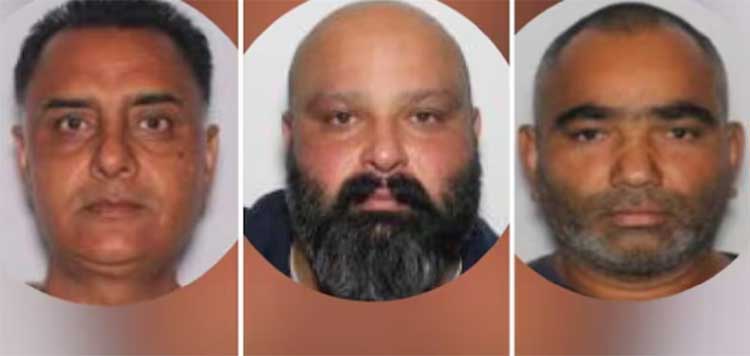
Confidential informants and undercover operatives played a pivotal role in the multi-year US investigation that culminated in the arrest of 24 alleged members of the Lawrence Bishnoi, Bhagwanpuria and Ravinder Singh Dhanda organised crime networks, according to three indictments unsealed by the US Department of Justice.
The operation, codenamed Operation Hard Ball, relied on covert meetings, controlled drug deals, fake cocaine shipments and undercover extortion stings to build evidence against the transnational criminal groups.
Drug trafficking probe began with Dhanda network
The earliest investigation targeted Canada-based drug trafficker Ravinder Singh Dhanda, accused of coordinating large-scale cocaine and methamphetamine trafficking across the US, Canada and Mexico.
In July 2023, Dhanda unknowingly contacted a confidential informant (identified as CI-1) while arranging a cocaine delivery in Los Angeles. Believing CI-1 to be a trusted logistics coordinator, Dhanda shared details of drug shipments and later met the informant in Blaine, Washington, to discuss cross-border smuggling operations.
Over the next two years, CI-1 became deeply embedded in Dhanda’s network, helping facilitate multiple cocaine and meth deliveries, verifying shipments and attending in-person meetings before Dhanda was eventually arrested by Canadian authorities.
Bhagwanpuria gang trapped through fake drug, arms deals
US investigators employed a similar strategy against the Punjab-based Bhagwanpuria gang.
Beginning in June 2024, gang members sold five kilograms of cocaine to a buyer they believed was a criminal associate but who was actually CI-1, receiving $45,000 in the transaction.
The relationship expanded over the following months as the gang allegedly offered assault rifles, pistols, ammunition and grenades for sale. CI-1 carried out several controlled purchases throughout 2025, allowing investigators to document the group’s alleged weapons trafficking activities.
The sting reached its climax in February 2026, when gang members attempted to move what they believed was a 20-kilogram cocaine shipment from the US to Canada. The consignment was a law enforcement decoy and was seized before reaching its destination, prompting gang members to accuse CI-1 of planting tracking devices.
Bishnoi gang caught in undercover extortion sting
The investigation into the Lawrence Bishnoi gang relied on both a confidential informant (CI-1) and an undercover law enforcement officer (UC-1).
According to the indictment, in January 2025, alleged gang member Sukraj Singh Kang agreed to recover an alleged debt of up to $200,000 on behalf of CI-1 in exchange for a $16,000 fee.
Gang members then began threatening UC-1, whom they believed to be the debtor, demanding payment and allegedly issuing repeated death threats if the money was not paid.
Throughout 2025, investigators documented multiple conversations and extortion attempts, with UC-1 making partial payments to maintain the operation while gathering evidence against the network.
Operation Hard Ball culminates in sweeping arrests
The evidence collected through the undercover operations formed the basis of three separate indictments returned by US grand juries between June 23 and July 1.
Those indictments paved the way for Operation Hard Ball, under which US authorities announced the arrests of 24 individuals allegedly linked to the Bishnoi, Bhagwanpuria and Dhanda organised crime syndicates, exposing the extensive use of undercover agents and confidential informants to dismantle the transnational networks.
Comments are closed.