
For Akali Dal, ‘Reunion’ With BJP Is Less About Politics, More About Survival

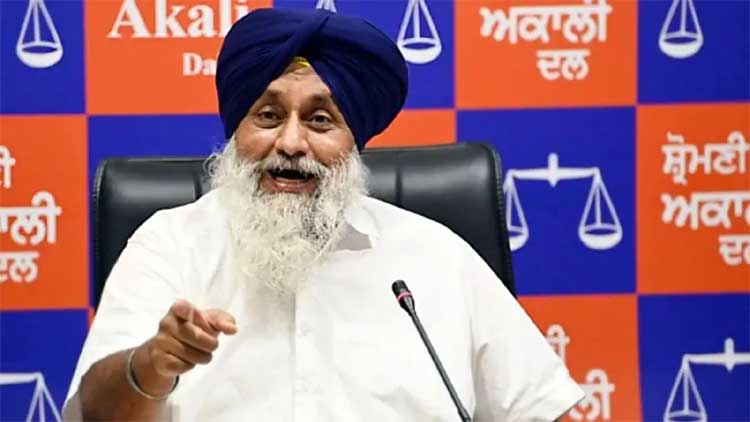
With its traditional support base shrinking, internal divisions deepening and the 2027 Punjab Assembly elections approaching, the Shiromani Akali Dal is increasingly looking at its former ally as a possible political lifeline.
The renewed possibility of an alliance between the Shiromani Akali Dal (SAD) and the Bharatiya Janata Party (BJP) has brought an old political equation back into focus in Punjab. But beneath the talk of reconciliation lies a more pressing concern for the Akali Dal: its political survival.
For a party that once dominated Punjab politics, the electoral landscape has changed dramatically. The SAD is struggling to regain lost ground, facing competition from the Aam Aadmi Party (AAP), the Congress, the BJP and emerging Akali factions. With the 2027 Assembly elections approaching, a reunion with the BJP could offer the party an opportunity to rebuild its political strength.
The signals from both sides have become increasingly noticeable. SAD president Sukhbir Singh Badal has indicated that his party is open to alliances with ideologically compatible political forces, while senior BJP leaders have repeatedly raised the possibility of an NDA government in Punjab.
Badal’s meeting with Prime Minister Narendra Modi in August and subsequent political developments further fuelled speculation about a possible rapprochement.
Electoral decline puts SAD under pressure
The biggest reason behind the renewed interest in an alliance is the Akali Dal’s declining electoral performance.
The party, which governed Punjab for two consecutive terms between 2007 and 2017 alongside the BJP, has struggled to recover since losing power.
In the 2017 Assembly elections, the SAD won just 15 seats. Its position deteriorated further in 2022, when it managed only three seats in the 117-member Assembly.
The 2024 Lok Sabha elections offered little relief. The party secured only one of Punjab’s 13 parliamentary constituencies, with its vote share falling to 13.42 per cent.
The BJP, meanwhile, recorded a vote share of 18.56 per cent in the 2024 Lok Sabha elections, although it failed to win a single seat in the state.
The combined vote share of the two former allies stood at nearly 32 per cent, suggesting that an alliance could potentially improve their electoral prospects. However, vote consolidation alone does not guarantee victory.
The farm laws remain the biggest political hurdle
The SAD-BJP relationship broke down in September 2020 when the Akali Dal walked out of the National Democratic Alliance over the Centre’s controversial farm laws.
The decision came amid widespread opposition from Punjab’s farming community, which viewed the legislation as a threat to agricultural interests. The year-long farmers’ agitation eventually forced the Centre to repeal the three laws.
For the Akali Dal, leaving the NDA was an attempt to protect its traditional support among farmers and rural voters.
A return to the BJP fold, however, could revive uncomfortable questions about that decision. The party would have to explain to its supporters why it is willing to rebuild ties with a political partner it once abandoned over the farmers’ issue.
The AAP and Congress are also likely to use the proposed reunion to question the Akali Dal’s political consistency.
This makes the alliance more complicated than a simple electoral arrangement.
The party’s challenges are not limited to electoral losses. Internal rebellion and the emergence of rival Akali formations have further weakened its traditional political influence.
The rise of groups such as Akali Dal Waris Punjab De, associated with Amritpal Singh, and SAD (Punar Surjit), led by former Akal Takht Jathedar Giani Harpreet Singh, has created additional competition for the Akali Dal’s traditional Panthic support base.
Several prominent leaders have also moved away from the party, while others have joined the BJP.
For Sukhbir Badal, rebuilding the organisation and retaining the party’s traditional Sikh support base will be crucial ahead of the next Assembly elections.
A possible BJP alliance could provide access to a wider political network, additional organisational support and an opportunity to consolidate votes that are currently divided among several political formations.
The proposed reunion is not necessarily a one-sided arrangement. The BJP, too, has reasons to reconsider its former partnership.
Despite improving its vote share since the split, the party has struggled to convert that support into electoral victories in Punjab.
The previous alliance allowed the BJP to concentrate on urban constituencies while the Akali Dal maintained a stronger presence in rural areas and among Sikh voters.
Under the old seat-sharing arrangement, the SAD contested 94 Assembly constituencies, while the BJP fielded candidates in the remaining 23.
However, the political circumstances have changed. The BJP has expanded its organisational presence and is increasingly interested in establishing itself as an independent political force in Punjab.
Its state leadership has repeatedly maintained that the party is preparing to contest all 117 Assembly seats in 2027.
This raises an important question: Would the BJP be willing to return to an arrangement in which it once played the junior partner?
For the BJP, an alliance could offer an established regional network. But it may also demand a significantly larger share of seats and greater political influence than it enjoyed previously.
Seat-sharing and political credibility could determine the outcome
Even if both parties agree in principle to restore their relationship, reaching a final agreement may not be straightforward.
Seat-sharing is likely to emerge as one of the biggest points of disagreement. The BJP’s growing ambitions in Punjab could make it reluctant to accept the earlier arrangement.
There is also the question of political credibility. The Akali Dal must convince voters that its return to the BJP alliance is based on a coherent political programme rather than immediate electoral necessity.
Meanwhile, the BJP will have to consider whether partnering with a weakened regional party can deliver the electoral advantage it expects.
The political competition in Punjab has also become more complex, with the AAP and Congress maintaining substantial support bases and smaller regional formations competing for specific constituencies.
Ultimately, the renewed SAD-BJP alliance discussions reflect the changing realities of Punjab politics.
For the Akali Dal, the challenge is no longer simply to return to power. It is to prevent further erosion of its traditional support base, rebuild its organisational structure and remain a significant force in the state’s political landscape.
For the BJP, the opportunity lies in expanding its presence through a partner with an established history and regional network.
Yet, the biggest challenge for both parties may be winning back voters rather than simply bringing their leaderships together.
The 2027 Punjab Assembly elections will test whether an old political partnership can regain its relevance in a changed political environment.
For the Akali Dal, therefore, a reunion with the BJP may be less about reviving a successful political alliance and more about ensuring that the party does not become increasingly marginalised in the state it once dominated.
Comments are closed, but trackbacks and pingbacks are open.