
European Union ministers reject Vladimir Putin proposal for Gerhard Schroeder role in future security talks
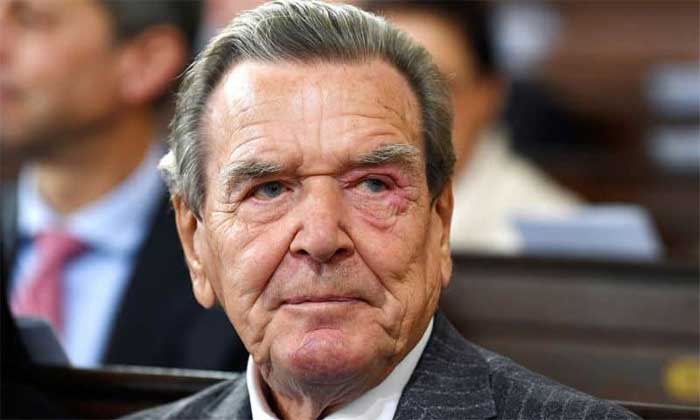
European leaders on Monday firmly rejected a suggestion by Vladimir Putin that former German chancellor Gerhard Schroeder could represent them in any future negotiations with Russia over European security and the war in Ukraine.
Putin had said over the weekend that he believed the conflict in Ukraine was nearing an end and signaled openness to talks on a new European security framework, naming Schroeder as his preferred interlocutor.
But European Union foreign ministers meeting in Brussels expressed deep skepticism over Moscow’s intentions and dismissed any possibility of Schroeder playing a mediating role.
“It’s clear why Putin wants him to be the person — so that actually he would be sitting on both sides of the table,” EU foreign policy chief Kaja Kallas told reporters.
Kallas argued that allowing Russia to influence Europe’s choice of negotiator would undermine the credibility of any diplomatic process.
“If we give the right to Russia to appoint a negotiator on our behalf, that would not be very wise,” said the former Estonian prime minister.
Asked whether she could personally participate in possible talks with Moscow, Kallas responded confidently, saying she believed she could “see through the traps that Russia is presenting.” She also stressed there was no indication that Russia was prepared to negotiate in good faith and said European governments must first define their own common objectives.
Germany’s Europe minister Gunther Krichbaum also rejected the idea of Schroeder serving as an intermediary, saying the former chancellor lacked the neutrality required for such a role.
“He is, and certainly has been, heavily influenced by Mr. Putin,” Krichbaum said.
Schroeder, who served as German chancellor from 1998 to 2005, has long faced criticism in Europe for his close ties to Putin and his work with Russian state-owned energy companies after leaving office.
Andrii Sybiha likewise dismissed a potential role for Schroeder but suggested Europe could still contribute to diplomatic efforts alongside ongoing US-led negotiations aimed at ending the war.
Sybiha said European involvement could focus on practical and “complementary” initiatives rather than broad peace settlements. According to a source familiar with the discussions, the Ukrainian minister proposed that EU countries help mediate an agreement to halt attacks on airports in both Russia and Ukraine — a more limited goal seen as potentially achievable amid stalled broader negotiations.
Europe weighs future talks with Moscow
The European Union has largely isolated Russia since Moscow launched its full-scale invasion of Ukraine in 2022, imposing sweeping sanctions and sharply limiting high-level diplomatic engagement.
However, with US-led peace efforts showing little progress and Washington increasingly focused on tensions involving Iran, some European officials have begun discussing whether the EU should establish its own direct communication channels with Moscow.
Antonio Costa said last week he had been consulting European leaders on how the bloc should prepare for potential future talks with Russia “when the right moment comes.”
Still, several ministers argued that increasing pressure on Moscow should remain the immediate priority.
“It’s not about choosing someone,” said Lithuanian Foreign Minister Kestutis Budrys. “We should get to the basics and the basics is to get our tools ready to pressure Russia.”
Austrian Foreign Minister Beate Meinl-Reisinger said the EU should eventually appoint its own negotiating team to engage Russia directly.
“But we will decide that — Russia won’t decide it,” she said.
Comments are closed.