
Ebola outbreak spreads across DR Congo’s northeast, death toll rises to 360

A deadly Ebola outbreak in the Democratic Republic of Congo has spread to a fourth province, putting the entire northeastern region of the country — home to nearly 15 million people — under threat.
The outbreak has killed 360 people among 1,274 confirmed cases, according to data from the World Health Organization. The DRC declared its 17th Ebola outbreak on May 15, caused this time by the Bundibugyo strain, for which there is currently no approved vaccine or specific treatment.
The WHO said clinical trials for possible treatments are expected to begin soon and has issued an international alert over the outbreak.
The conflict-affected province of Ituri remains the epicenter, with 1,165 cases and 301 deaths reported by health authorities. Experts and aid workers believe the actual figures could be higher.
The virus had previously spread to North Kivu and South Kivu provinces, while neighboring Uganda has reported 20 cases, including two deaths. Haut-Uele province, which borders South Sudan and the Central African Republic, has now become the fourth affected area.
Officials said a case was detected in Haut-Uele after an infected person traveled from Bunia, the capital of Ituri. The patient later died, and health authorities are working to trace contacts and identify the transmission chain.
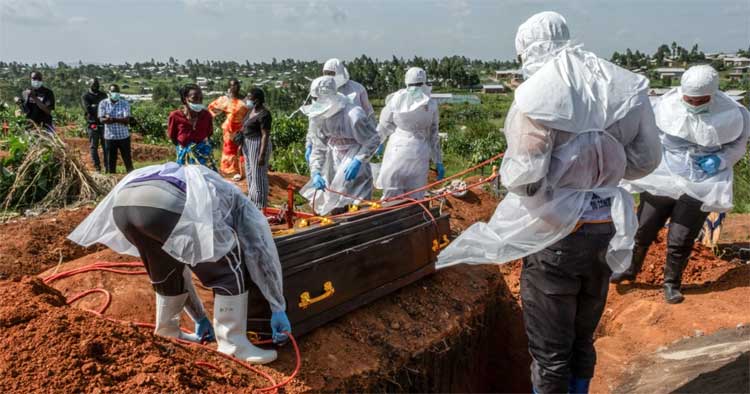
Health workers say funerals have played a major role in spreading the virus, as Ebola can transmit through contact with infected bodies. In many communities, traditional funeral practices involve family members touching the deceased, making safe burial efforts difficult.
Aid teams have faced resistance from some communities, with reports of confrontations when relatives demanded access to the bodies of loved ones.
The spread has been further complicated by heavy movement across borders in Ituri and Haut-Uele, regions already affected by years of conflict involving armed groups including the Allied Democratic Forces, which has links to Islamic State.
Insecurity has slowed the health response, while medical workers warn the virus may have circulated for months before the outbreak was officially identified. Some suspected cases reportedly date back to January.
Healthcare facilities in affected regions remain under pressure, with shortages of protective equipment and disinfectants. Ebola treatment centers supported by the WHO and aid organizations are operating beyond capacity, with the National Public Health Institute reporting occupancy levels above 138%.
The outbreak has also affected frontline workers, with 78 health workers infected and 18 deaths reported among medical staff.
Experts warn the outbreak may not have peaked yet and could continue for up to a year. Ebola, which spreads through contact with infected bodily fluids, has killed more than 15,000 people in Africa over the past five decades.
The deadliest Ebola outbreak in the DRC occurred from 2018 to 2020, when nearly 2,300 people died from around 3,500 cases.
Comments are closed.