
Construction flaws and fragile terrain fuel Venezuela’s deadly earthquake disaster

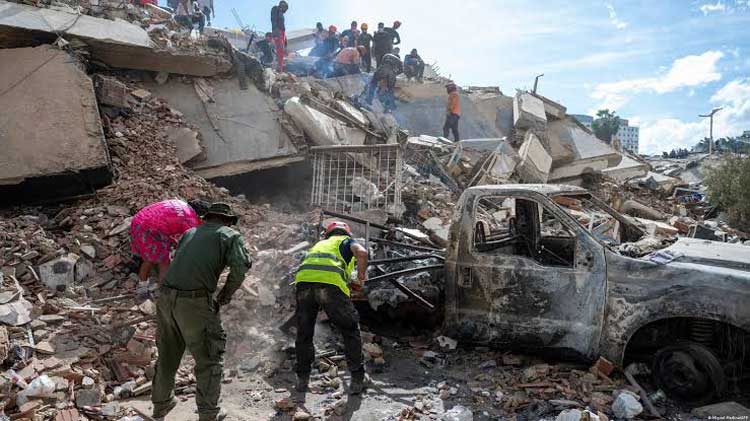
A coastal housing project built during the rule of late Venezuelan leader Hugo Chávez has become a symbol of the country’s growing concerns over construction quality after two powerful earthquakes destroyed parts of the 1,100-unit complex.
The development, known as “Los Cocos,” was created as part of Chávez’s socialist housing drive and had provided a new beginning for residents who lost homes in devastating floods years earlier. But after Wednesday’s back-to-back earthquakes, several buildings collapsed, leaving residents trapped and raising questions over the safety of similar government-built housing projects.
“I lost my whole apartment,” said Yelsa Rojas, a resident who survived only because she was away at a medical appointment when the quake struck. She said she feared many people living on the second floor of her building had died.
Engineers and construction experts said it was too early to determine the exact causes behind each collapse, but they warned that years of poor maintenance, weak enforcement of building regulations and questionable construction practices may have worsened the disaster.
Experts also highlighted the fragile soil conditions in La Guaira, the coastal state where Los Cocos is located, saying the area’s geography makes it highly vulnerable during earthquakes.
As rescue teams search through the rubble, civil engineers are urging the government to immediately inspect other public housing projects to determine whether residents are safe. While officials have met with engineering groups, full assessments have not yet begun, frustrating specialists.
“It’s criminal that the government is not taking up offers from engineers and universities more quickly,” said Enrique Larrañaga, an architect and urban planner at Simón Bolívar University.
The Venezuelan government has faced criticism over the delayed deployment of heavy equipment and rescue resources, with residents initially using their own hands, tools and ropes to search for missing relatives.
By Saturday, state television showed machinery clearing debris, while residents said international rescue teams had helped recover victims and called for additional support.
Experts say many housing developments built during Chávez and continued under Nicolás Maduro were constructed rapidly to meet political housing goals, while Venezuela’s economic crisis weakened engineering institutions and oversight.
Volunteer engineers conducting early assessments said some buildings appeared not to have followed required construction standards, though further studies are needed to understand why some structures survived while others completely collapsed.
La Guaira has faced repeated disasters, including the catastrophic 1999 mudslides that killed thousands. Engineers say the region’s steep mountains, narrow coastline and unstable ground increase the risks of landslides, flooding and earthquake damage.
Specialists explained that the loose soil in the area can amplify earthquake vibrations, making buildings more vulnerable. They also warned that older structures may not have been strengthened after Venezuela updated seismic construction standards following a major 1967 earthquake.
Engineers argue that Venezuela’s main problem is not a lack of building regulations but poor enforcement. They point to countries such as Chile, where strict earthquake-resistant construction rules helped limit deaths during major earthquakes.
A magnitude 8.8 earthquake in Chile in 2010 killed about 525 people, while a weaker 7.0-magnitude earthquake in Haiti the same year caused hundreds of thousands of deaths, a difference experts largely attribute to stronger construction standards and enforcement.
Architects and engineers say Venezuela’s public housing expansion helped many low-income families gain homes, but weak oversight, corruption allegations and lack of maintenance have left some developments facing serious safety concerns.
Comments are closed.