
Cuba Mocks US ‘Desperation’ as Rubio Urges CIA Ties and Trump Revives Military Threats

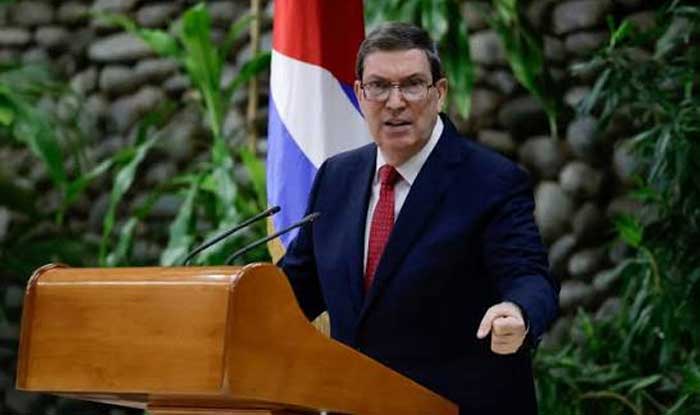
Cuba on Friday ridiculed what it described as US “desperation” after Secretary of State Marco Rubio urged Cubans seeking political change to establish discreet ties with the CIA, as President Donald Trump renewed suggestions of possible US military intervention on the communist-run island.
“Now the United States is resorting to public recruitment for the CIA,” Cuban Deputy Foreign Minister Carlos Fernandez de Cossio wrote on X.
“There must be a great deal of desperation or misery within the agency for it to be forced to sell its services like a tube of toothpaste,” he added.
Rubio issued his appeal in a social media post, urging Cubans dissatisfied with their government to seize what he described as an opportunity for change.
“To those who seek to create positive change in Cuba — now is the time,” Rubio wrote, pointing to what he called failed promises, corruption and the privileged lifestyles of a small elite.
He encouraged those seeking change to pursue a “discreet partnership with the CIA.”
The agency subsequently published a Spanish-language video on X explaining how individuals could submit information. It advised potential sources to visit an official US installation in person if it was safe to do so, or to contact the agency online using a secure internet connection, a private browser and a disposable email account.
The public appeal came hours after Trump revived the prospect of military intervention in Cuba during a rally in Florida.
Trump suggested that US warships returning from the conflict with Iran could stop off the Cuban coast before he sent Rubio to “finish up the deal.”
“Those beautiful (US military) ships will pass Cuba. We’ll have one of them stop about 50 yards off the coast,” Trump said. “They’ll raise up their hands. And then we’re going to send Marco Rubio in to finish up the deal.”
Trump has repeatedly raised the possibility of action against Cuba as his administration intensifies economic and political pressure on the island.
Cuban Foreign Minister Bruno Rodriguez dismissed the president’s remarks, warning that the country’s coastline would present dangers to anyone arriving with hostile intentions.
“Our coastline is full of beautiful beaches, but there are also razor-sharp limestone spikes, an inhospitable environment for those who make it to our shores with hostile purposes and lust for domination,” Rodriguez wrote on X.
Pressure mounts on Havana
Washington has adopted a tougher approach towards Cuba as efforts to improve bilateral relations have stalled. The Trump administration has imposed additional sanctions and maintained a de facto energy blockade introduced in January, threatening penalties against countries supplying fuel to the island, which has a population of about 9.4 million.
The latest escalation also follows legal action against former Cuban President Raul Castro, 95. Florida’s top prosecutor announced an arrest warrant this week on state murder charges linked to the 1996 shooting down of two civilian aircraft operated by Brothers to the Rescue, an organisation that assisted Cubans fleeing to the United States.
Castro was also indicted on federal charges related to the incident in May. The Cuban government has rejected the federal case, with President Miguel Diaz-Canel describing it as legally unfounded and accusing Washington of seeking to justify military aggression.
Trump previously cited US criminal charges against Venezuelan President Nicolas Maduro as part of the justification for the operation that toppled him. Maduro was a close ally of Havana.
The United States and Cuba have held talks in recent months, but Washington has expressed dissatisfaction with their progress. Trump has portrayed Cuba as a potential target for stronger action following the conflict with Iran, while Rubio has questioned whether a diplomatic settlement is possible under the island’s current leadership.
Cuba continues to grapple with a prolonged economic and energy crisis marked by power outages, shortages, inflation and emigration. The decades-old US embargo remains a major source of tension between the two countries.
Comments are closed, but trackbacks and pingbacks are open.