
UN Nuclear Watchdog Predicts Nuclear Power Could More Than Triple by 2060

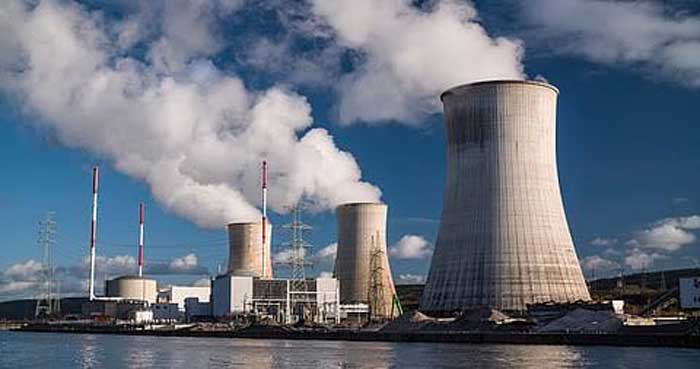
The use of nuclear power could more than triple by 2060, driven by rising electricity demand, artificial intelligence data centres and technology companies’ growing need for reliable, carbon-free energy, the head of the UN nuclear watchdog said on Friday.
Rafael Grossi, director-general of the International Atomic Energy Agency (IAEA), made the assessment in the agency’s annual report to the UN General Assembly, highlighting the growing role of nuclear energy in strengthening energy security and reducing carbon emissions.
Nuclear power is increasingly being viewed by countries as a key component of their energy strategies, Grossi said, describing it as comparable to solar energy and safer than other energy options.
“In 2025, more than 400 operating reactors in more than 30 countries produced 10 percent of global electricity and a quarter of its low-carbon electricity,” Grossi told the General Assembly. “More than 60 new reactors are under construction and the projections for future nuclear capacity have shifted dramatically upward.”
Beyond the expansion of civilian nuclear energy, Grossi addressed concerns surrounding Iran and North Korea’s nuclear programmes, the unprecedented threats to nuclear safety posed by the war in Ukraine, and reports that several unnamed countries were discussing the possibility of acquiring nuclear weapons.
Call for diplomatic solution on Iran
Regarding Iran, whose nuclear facilities were struck by the United States last year before Washington and Israel launched a war on February 28, Grossi said the technical groundwork needed for a diplomatic agreement had been completed.
“I call on the parties to redouble their efforts toward agreeing a diplomatic solution that includes the IAEA’s indispensable verification role, without which no agreement can be sustainable,” he said.
“IAEA inspectors must be able to return to Iran expeditiously. That requires a return to the negotiating table,” he added.
Grossi stressed that effective international monitoring would be essential to ensuring the credibility and durability of any agreement concerning Iran’s nuclear activities.
North Korea’s nuclear programme raises concerns
Grossi also warned about North Korea’s expanding nuclear programme, which continues without IAEA oversight under leader Kim Jong Un.
The programme, he said, “stands as a stark reminder of the consequences when red lines are crossed” in violation of UN Security Council resolutions prohibiting the country’s development of nuclear weapons.
His remarks underscored continuing international concerns over nuclear proliferation and the challenges facing efforts to enforce global non-proliferation commitments.
Nuclear safety risks in Ukraine
Turning to Ukraine, Grossi highlighted the precarious situation at the Zaporizhzhia nuclear power plant, Europe’s largest nuclear facility.
He warned that the plant continued to face frequent losses of external power, limited supplies of backup diesel fuel and military activity threatening both the facility and its personnel.
The situation represents an unprecedented challenge to nuclear safety, he said, reinforcing the need to protect nuclear installations during armed conflicts.
Progress in resolving Syria’s nuclear questions
Grossi also reported progress in clarifying outstanding questions about Syria’s past nuclear activities after nearly two decades of uncertainty.
He attributed the progress to engagement with the government of interim President Ahmad Al-Sharaa.
In September, Grossi reported that the government of former president Bashar Assad, which was ousted in December 2024 by opposition forces led by Al-Sharaa, had been constructing a nuclear reactor configured to produce fissile material that could potentially be used in nuclear weapons.
The latest developments, he said, reflected significant progress in addressing unresolved issues surrounding Syria’s nuclear activities.
Grossi’s report highlighted the dual challenge facing the international community: supporting the expansion of nuclear power as a low-carbon energy source while strengthening safeguards, preventing weapons proliferation and protecting nuclear facilities amid growing geopolitical tensions.
Comments are closed, but trackbacks and pingbacks are open.