
Can’t be helpless spectators’: Jaishankar pushes for dialogue amid two major wars

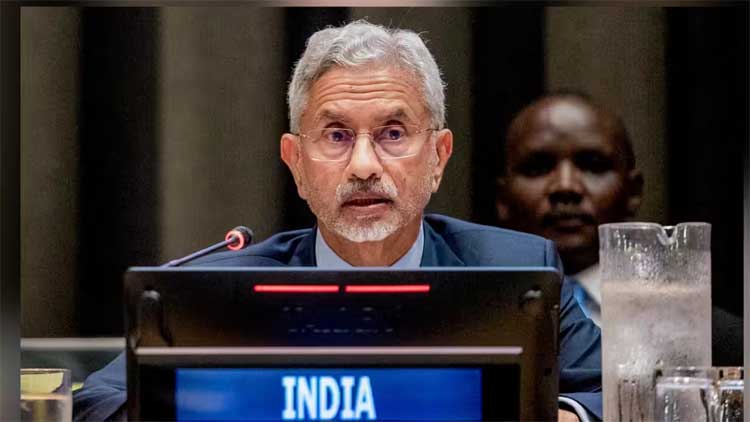
External Affairs Minister S. Jaishankar has called for sustained diplomatic efforts to address major global conflicts, warning that countries cannot remain passive as wars continue to disrupt international security, economic stability and global supply chains.
Speaking amid the Russia-Ukraine war and continuing conflicts in West Asia, Jaishankar stressed the importance of dialogue, diplomacy and international cooperation. He highlighted the far-reaching consequences of these conflicts, arguing that their impact extends well beyond the countries directly involved.
His remarks reflect India’s position that prolonged military confrontations cannot provide lasting solutions and that diplomatic engagement remains essential to reducing tensions and achieving peace.
Two major conflicts, global consequences
Jaishankar has pointed to the Russia-Ukraine war and the conflicts in West Asia as major challenges confronting the international community. Both have implications for global security, energy supplies, trade and economic development.
The Russia-Ukraine conflict, now in its fifth year, continues to raise concerns over civilian safety, regional stability and the wider economic costs of prolonged warfare. India has repeatedly called for dialogue and diplomacy to bring the conflict to an end.
In West Asia, continuing hostilities have heightened concerns about regional security, humanitarian conditions and the safety of commercial shipping. Disruptions to maritime routes can affect the movement of oil, gas and other essential commodities, with consequences for economies far removed from the conflict zone.
Jaishankar has emphasised that these developments demonstrate how interconnected the modern world has become, making international conflicts a concern for countries that are not directly involved.
India reiterates its support for dialogue and diplomacy
India’s approach to international conflicts has consistently emphasised negotiations as the preferred route to peace. New Delhi has maintained that military action alone cannot resolve complex political and security disputes.
During his engagements with Russian and Ukrainian leaders, Jaishankar has said India remains in contact with both sides and is willing to support efforts that could help reduce hostilities and bring the war to an end.
India has also backed diplomatic initiatives aimed at easing tensions in West Asia, while stressing the need to protect civilians and respect the sovereignty and territorial integrity of states in the region.
The government’s position is that meaningful negotiations, sustained diplomatic engagement and a willingness to address underlying concerns are necessary to achieve durable peace.
Economic fallout extends far beyond conflict zones
One of the central concerns highlighted by Jaishankar is the economic impact of wars on countries around the world.
Disruptions to energy supplies, maritime trade and international supply chains can increase costs for businesses and consumers. Countries dependent on imported fuel, food and fertilisers may face additional pressures when conflicts interfere with production or transportation.
Jaishankar has also drawn attention to the challenges confronting the Global South, where many developing economies face interconnected risks involving food, fuel, fertilisers and finance.
These pressures can complicate efforts to control inflation, maintain economic growth and protect vulnerable communities. The effects of conflict, therefore, extend beyond immediate military and humanitarian consequences to influence development priorities worldwide.
Protecting civilians and keeping trade routes open
India has called on parties involved in ongoing conflicts to exercise restraint, reduce tensions and ensure the protection of civilians.
The security of seafarers and commercial vessels has emerged as a particular concern amid tensions affecting maritime routes in and around the Gulf. India has stressed that attacks on commercial shipping and personnel operating in international waters are unacceptable.
Jaishankar has also highlighted the importance of maintaining uninterrupted flows of energy and commerce. For India, the issue is closely linked to energy security, economic stability and the welfare of its citizens working across West Asia.
New Delhi has reiterated its readiness to contribute to humanitarian assistance and efforts to address food and energy security challenges arising from the conflicts.
A call for stronger international cooperation
Jaishankar’s remarks underline India’s concern that prolonged conflicts risk weakening international institutions and undermining the principles of peaceful dispute resolution.
The United Nations was established to promote international peace and security, yet continuing wars demonstrate the difficulties of achieving collective action when countries have competing interests and strategic priorities.
India has argued that the international community must remain engaged in diplomatic efforts rather than accept continuing warfare as inevitable. Dialogue, de-escalation and cooperation are essential to limiting the consequences of conflict and creating conditions for lasting settlements.
Conclusion
Jaishankar’s call for dialogue amid two major wars highlights India’s emphasis on diplomacy as a means of addressing international crises. With the Russia-Ukraine conflict and hostilities in West Asia affecting security, trade and energy supplies, the consequences are being felt far beyond the immediate battlefields.
India’s position is that countries must continue to pursue diplomatic solutions, protect civilians and strengthen international cooperation. As conflicts persist, the challenge for the international community is to turn calls for dialogue into concrete efforts that reduce violence and establish a durable peace.
Comments are closed, but trackbacks and pingbacks are open.